Responsible Energy
by: Michael Laprade
Can We Finally Get Rid of Forever Chemicals?
"In the May 2026 edition of Thousand Islands Life, we published an essay by Lowell “Todd” Fitzsimmons entitled “What’s Coming Down the River.” It was a comprehensive look at PFAS—the wonderfully reassuring acronym for per- and polyfluoroalkyl substances, better known as “Forever Chemicals.” polyfluoroalkyl substances, better known as “Forever Chemicals.” "
Todd explained what these chemicals are, where they come from, and why they are a concern for all of us who live on, swim in, drink from, or generally spend far too much time playing around in the River.
This story is about what happens after we discover that we have created a chemical that apparently has no intention of ever leaving. Fortunately, there is a local company working on exactly that problem.
Downriver, Someone Is Doing Something About It
"Just downriver from Brockville, in Maitland Ontario, is “Responsible Energy”, headed by CEO Gordon Fraser."
Fraser is a marine engineer and industrial automation specialist who has had firsthand experience with PFAS through his work with the Royal Canadian Navy (RCN), including exposure to AFFF firefighting foam, and later worked at 3M, a company associated with PFAS. That experience gave him a rather personal interest in the problem.
Since 2007, Fraser, later joined by two others in 2010, who together with Fraser, would become the inventors of FRG™, has been working to develop a process that doesn't simply move PFAS from one place to another, bury it, store it, or give it a new address.
Their objective is considerably more ambitious: Destroy it.
Fraser's previous experience with companies such as 3M also gave him an inside look at how industrial byproducts have traditionally been handled. Sometimes “disposal” has meant little more than finding somewhere else for the problem to live.
Responsible Energy is trying to change that.
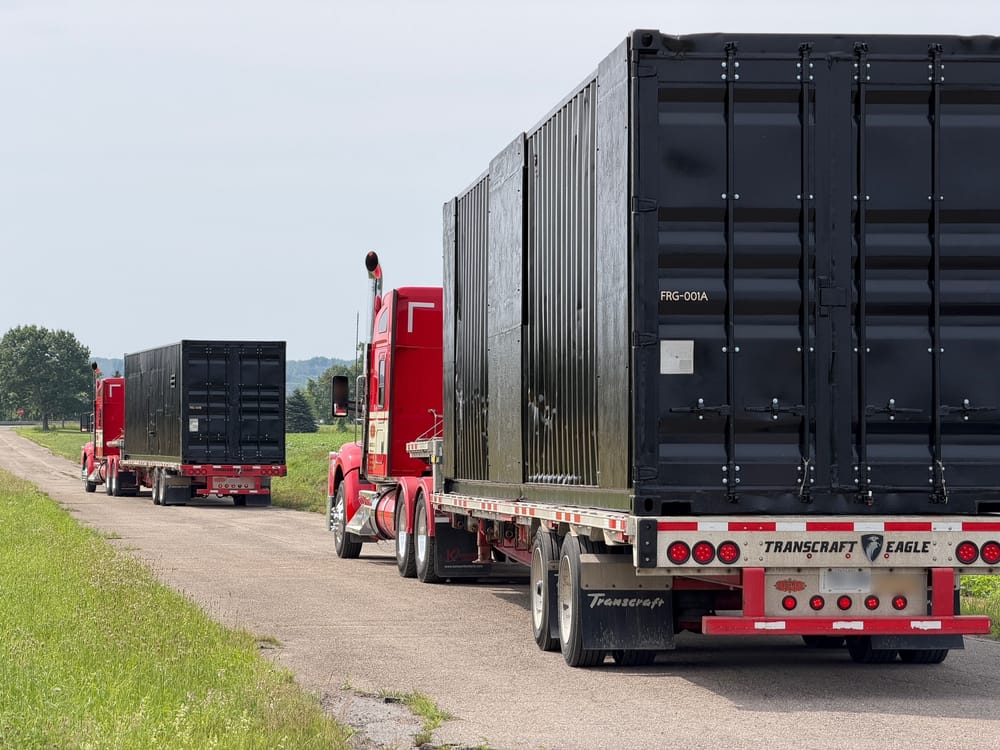
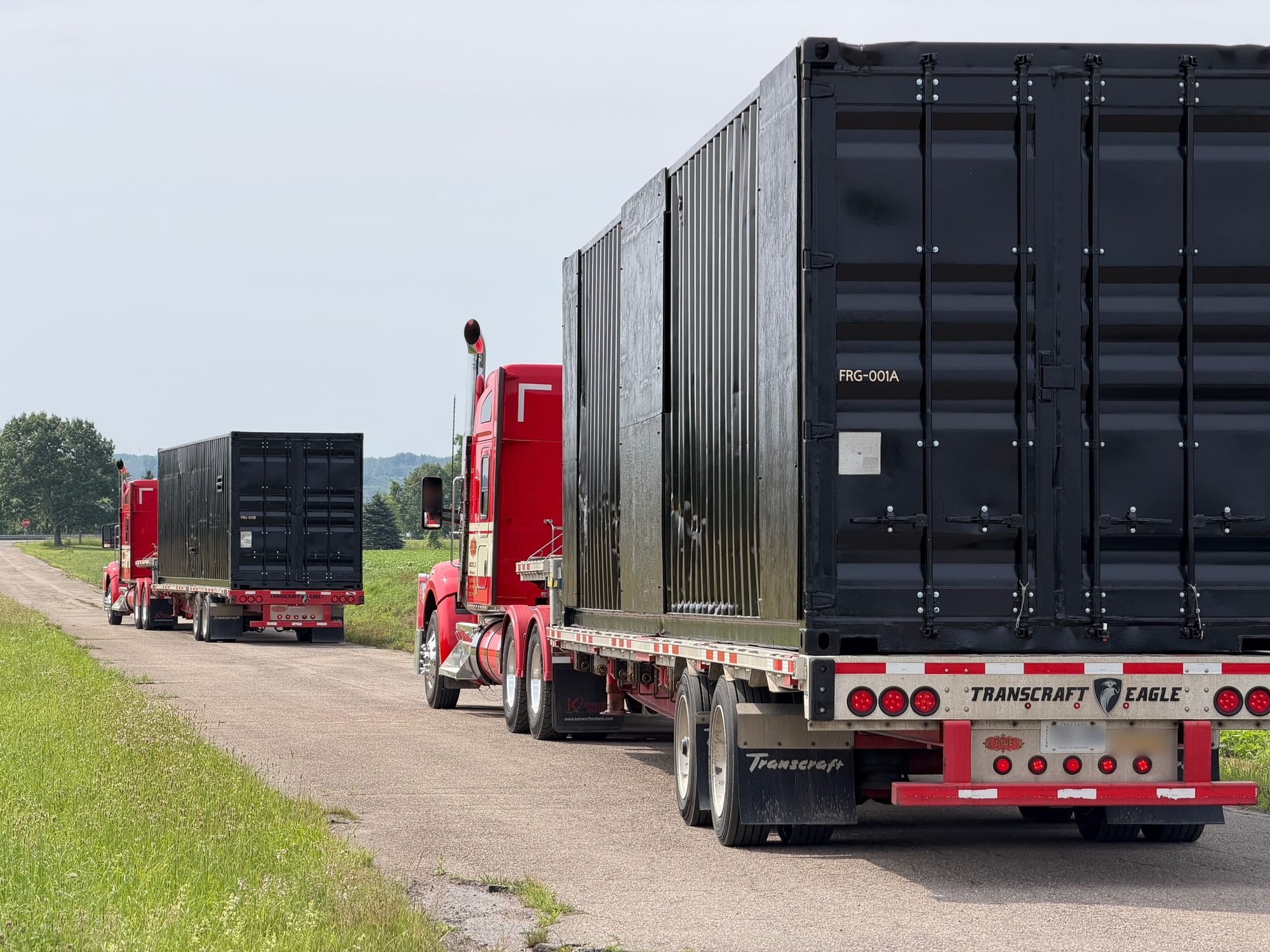
The company has developed a technology intended to permanently destroy PFAS and other difficult, persistent hazardous compounds. It has completed its fifth-generation commercial-scale system and is now moving toward commercial applications, including work with Tetra Tech and the U.S. military.
That's an impressive amount of brainpower being assembled in a town on the St. Lawrence River.
So, What Exactly Are PFAS?
PFAS are a large family of synthetic chemicals prized for their remarkable ability to resist water, grease, heat and chemical reactions. Unfortunately, that same durability is what makes them such a nuisance. They don't readily break down in the environment, and some can persist for very long periods in the human body. Hence the nickname “Forever Chemicals.”
Research has associated exposure to certain PFAS with a range of potential health effects, including effects on the immune system, liver, cholesterol, fertility and certain cancers. They can accumulate in the environment and in living organisms, including humans.
In other words, they are extraordinarily good at doing what we originally wanted them to do—not breaking down. We just didn't think far enough ahead about what would happen when we wanted them to go away.
The Problem Is Everywhere
PFAS have been used in an astonishing variety of products because they are so effective at resisting water, grease, heat and stains.
Non-stick cookware is probably the example most people recognize. While older examples have been phased out, some may still be in use. PFAS-related compounds have also been used in stain-resistant carpets and furniture fabrics, water-repellent outdoor clothing, and grease-resistant food packaging.
Paperboard and food packaging have historically received PFAS treatments to prevent grease from soaking through products such as fast-food wrappers, pizza boxes, and microwave popcorn bags. And then there are the really big applications.
Specialized firefighting foams used to extinguish fuel fires at airports, military installations and other facilities have been an especially important source of PFAS contamination. The protective clothing and equipment used in some of these environments can present additional challenges.
PFAS have also been used across industries including chemical manufacturing, petroleum, metal production, textiles, pharmaceuticals, electronics, pulp and paper, cosmetics, agriculture and automotive manufacturing.
The list is long.
Apparently, if something needed to resist water, grease, heat, or just about anything else, somebody eventually thought, “I know what we need.” PFAS.
Why Is This Such a Big Deal?
One of the things that makes PFAS particularly troublesome is the extraordinarily small concentrations at which some regulatory limits are measured.
To put that into perspective, Responsible Energy points to an analogy involving five drops of PFAS in five Olympic-sized swimming pools of drinking water being enough to exceed certain health standards.
Whether you find that reassuring or terrifying probably depends on how much you enjoy swimming. The point is that we are dealing with extremely persistent chemicals where very small concentrations can matter. And once they are in the environment, getting rid of them is a whole different problem.
The Problem With “Disposal”
Historically, the options for dealing with PFAS have often amounted to containment, treatment or transfer.
You must put contaminated material somewhere.
You can bury it.
You can filter it.
You can concentrate it.
You can ship it somewhere else.
But none of those approaches necessarily destroys the PFAS molecule. It can simply become somebody else's problem. Responsible Energy's approach is different.
Their goal is to destroy the chemical structure itself.
That sounds simple.
It isn't.
If it were, Gordon Fraser probably wouldn't have spent nearly two decades working on it.
The Solution: Free Radical Gasification
Responsible Energy's technology is called Free Radical Gasification, or FRGTM™
The process uses extremely high temperatures and carefully controlled reactive conditions to break apart complex chemical compounds at the molecular level.
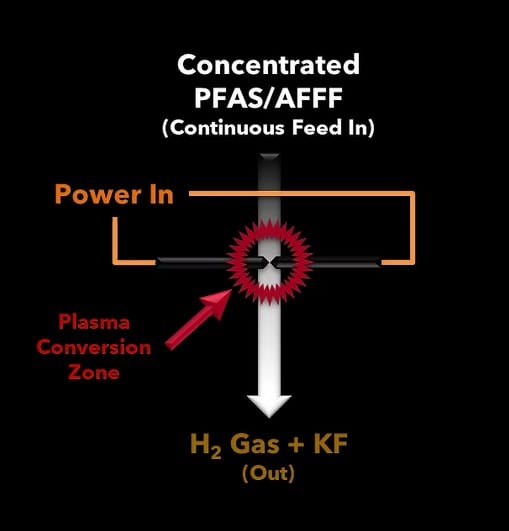
And when I say high temperatures, I mean really high temperatures. The process can reach approximately 5,000°C (9,000°F)—temperatures comparable to the surface of the sun.
At that point, this isn't exactly a backyard barbecue.
The extreme energy breaks molecular bonds and converts the incoming material into its basic components. The process is designed to produce two principal outputs:
A hydrogen-rich gas, and
Potassium fluoride, a stable inorganic salt.
Most importantly for the PFAS problem, the company reports that its process can destroy more than 99.9% of PFAS in a matter of seconds, with testing and validation determining performance for specific waste streams.
For those who enjoy the nuts and bolts, the controlled conversion process essentially takes complicated chemical compounds apart and separates their constituent elements. Those elements can then be recombined into useful products, including hydrogen-rich gas and stable inorganic compounds such as potassium fluoride.
In simpler terms: Instead of asking where we can put PFAS, Responsible Energy is asking how we can make PFAS cease to exist. That is a considerably better question.
Why This Matters to River People
For those of us living along the St. Lawrence and the Great Lakes, this isn't some abstract environmental issue happening thousands of miles away. We live downstream. Water moves. Chemicals move with it.
And unlike a bad neighbor, PFAS don't eventually get the hint and move away. The Thousand Islands are surrounded by one of the world's great freshwater systems. We drink it, swim in it, fish in it, boat on it and, occasionally, fall into it.
It’s worth paying attention to anything that provides a practical way to permanently destroy persistent contaminants before they reach our waterways.
From Problem to Possibility
What I found particularly interesting about Responsible Energy is that this isn't simply another company proposing a better way to store hazardous waste. They are attempting to create an entirely different model:
Take a persistent, hazardous compound and use extreme energy to break it down into useful gases and stable materials. The technology has already operated at commercial scale on hazardous liquid waste and could have applications far beyond PFAS.
This could include difficult industrial waste streams and other persistent or hazardous chemicals for which disposal is currently expensive, difficult, or environmentally challenging.
And that brings us back to where we started.
We River people have spent a lot of time worrying about what is coming down the River. It is encouraging to know that, just downriver from Brockville, someone is working on what we might eventually be able to take out of it. After all, we already have enough things in the Thousand Islands that are supposed to last forever: the islands, the River, the memories—and, apparently, PFAS. I only want to keep the first three.
By Michael Laprade
Michael Laprade and his wife Janice are retired Californians, who spend the summer at their “Honey Bee Island” property. It is located in the International Rift, between Blacksnake Passage at the mouth of Lake of the Isles and the stone span of the US / Canadian Customs Bridge. Michael is a former prison administrator, and also is a Professional Magician. In October 2013, Michael and Janice wrote Honey Bee Island’s Little Free Library for TI Life. Now Michael has joined our regular team of authors and I encourage you to see his past articles here and here. His articles are both interesting and fun!