Life on a Micro Island
by: Michael Laprade
In the Thousand Islands, there are two things locals agree on.
First: there are 1,865 islands.
Second: To qualify, an island must have at least 10 square feet of surface area, remain above the waterline 365 days a year, and have at least one living tree. Anything else is a shoal.
Like cottages, islands come in all sizes. I decided to visit some of the smaller islands and find out what motivates people to live on properties where the distinction between land and deck can become philosophical.
By no means a comprehensive survey, this is simply a sampling of some of the micro islands we encounter during our travels on the River—and the ingenious people who have figured out how to make them work.
Just Room Enough
Hub Island, known locally as Just Room Enough Island, sits west of Heart Island, home of the world-famous Boldt Castle, in the middle of Millionaire’s Row. The island was purchased by the Sizeland family in the 1950s as a holiday getaway. They built a cottage on it and the seasonal owner lives in Ogdensburg, NY.
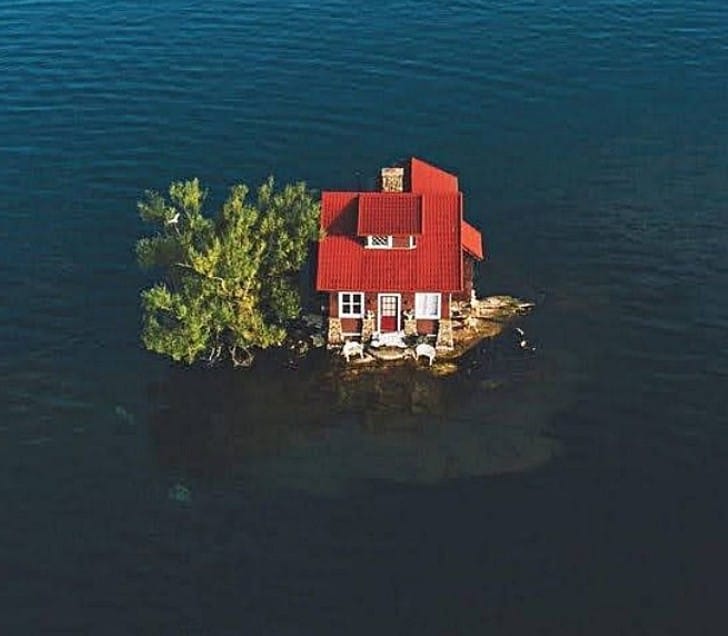
The Washington Post once described the experience succinctly: “One misstep and you’re swimming.” The French have an expression for waterfront property: ‘pied dans l’eau’—literally, “feet in the water.” It has been described by Wikipedia as the smallest inhabited island in the world. Tour boat operators jokingly refer to it as the ‘mother in laws’ room.
Bob's Island
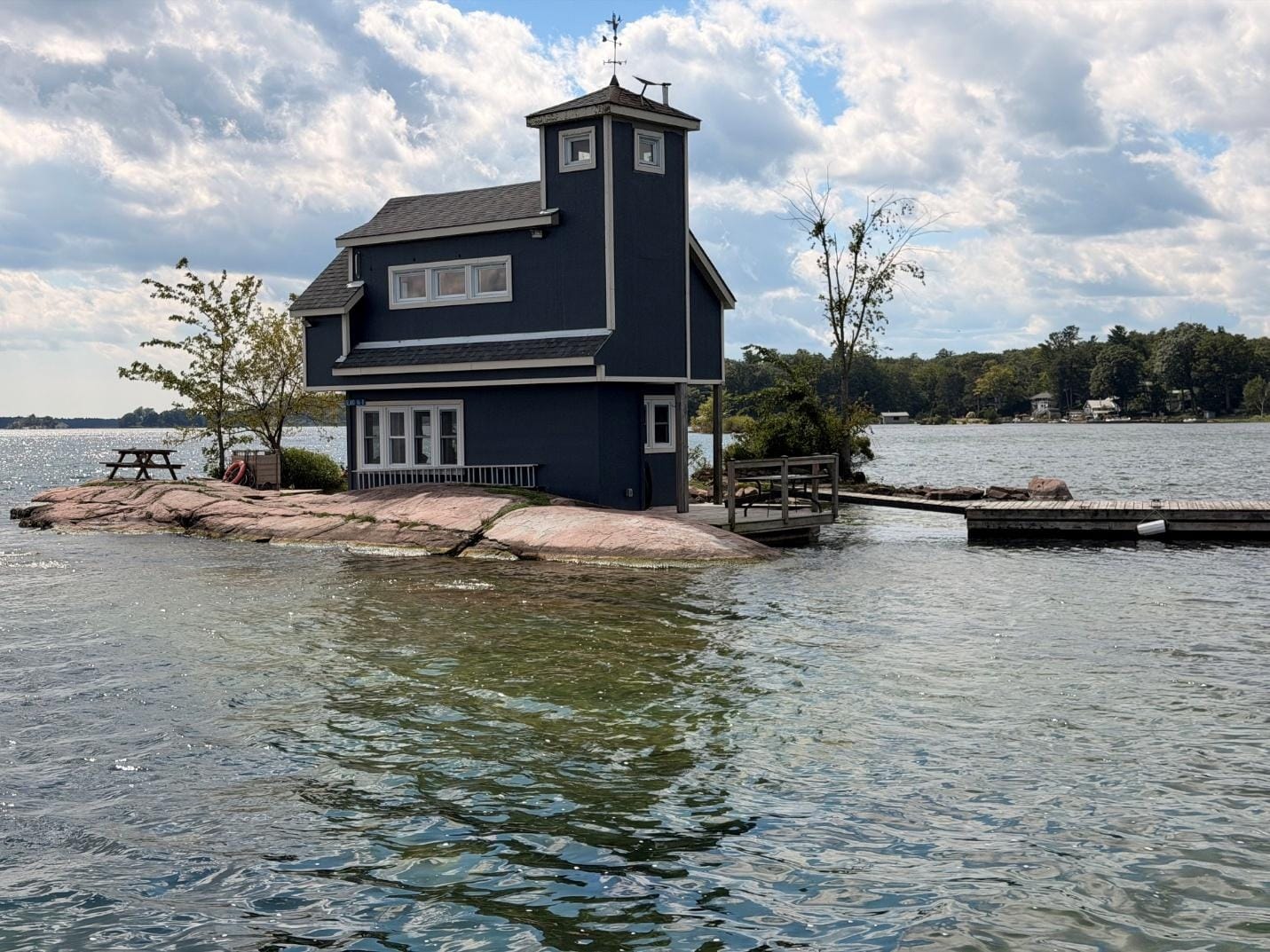
Located near Mallorytown Landing, Bob’s Island is an example of the Thousand Islands’ ability to turn a small patch of rock into private real estate.
Lone Tree Island
Located between Club and Hill islands, right along the Canadian Channel, Lone Tree Island occupies a particularly lively piece of the River as it receives a substantial wake from every passing tour boat. Kevin and Suzanne Skibinski, from the Syracuse area, bought the island 22 years ago. They spend May through October there before heading to Saba for the winter, a small volcanic island in the Caribbean with a population of 1,500. Apparently, once you've become accustomed to island living, one island just isn't enough.
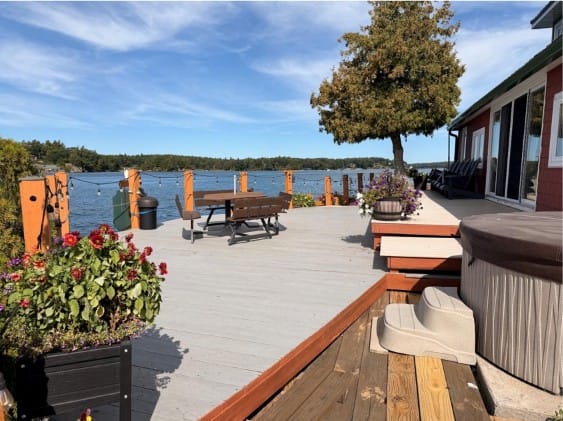
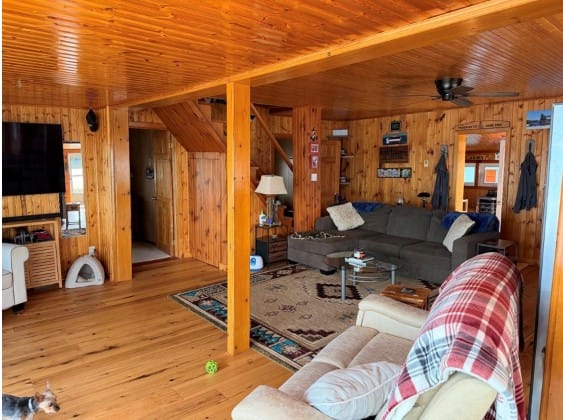
Lone Tree Island, [Photo by the Author]
Their cottage sits on what appears to be little more than a rocky shoal, but it is anything but primitive. The 1,500-square-foot home has all the amenities, surrounded by approximately 3,000 square feet of deck, much of it suspended over the water.
Yes, the cottage has more deck than island.
Island ???
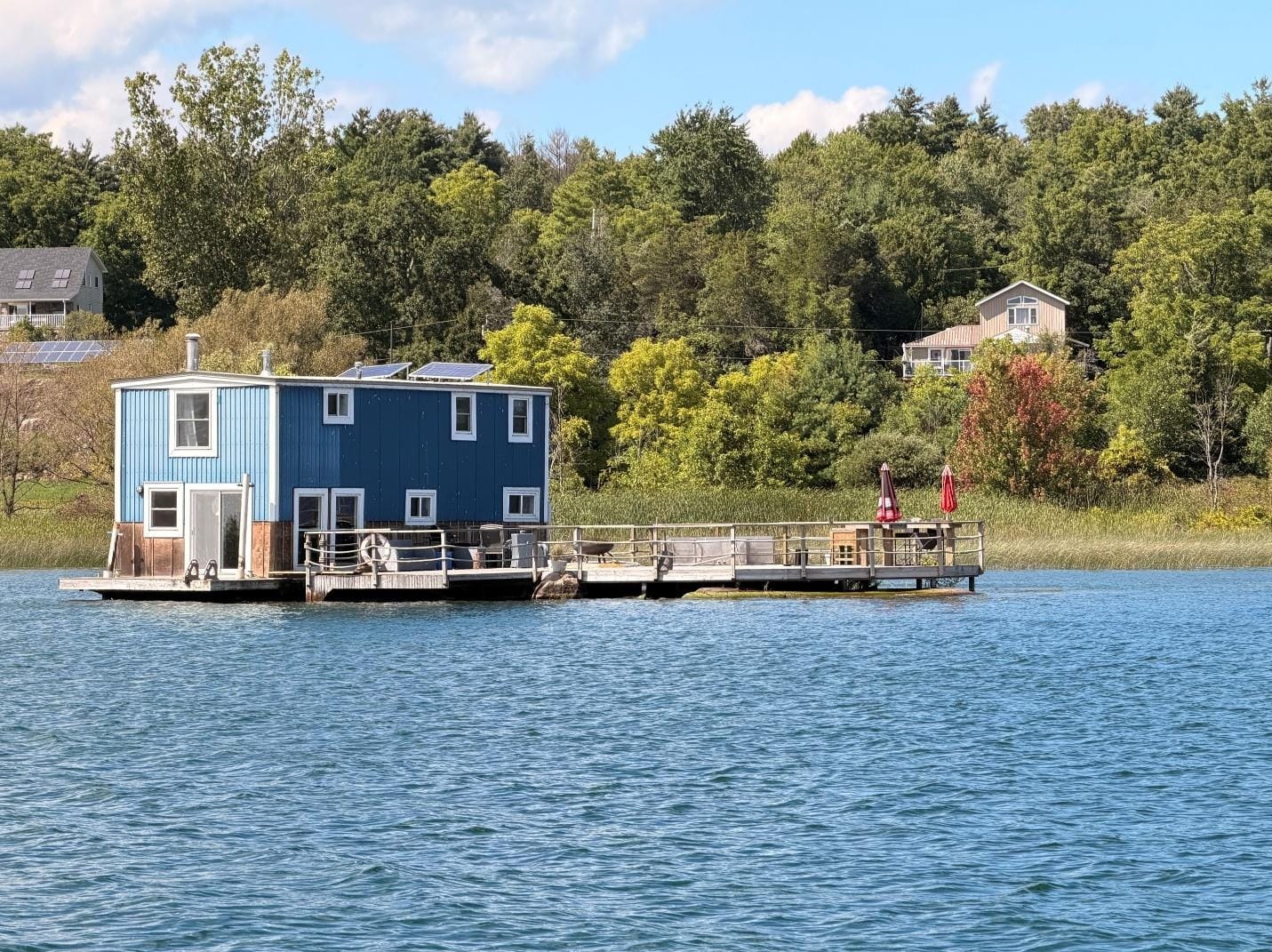
A neighbor of Bob's Island, also located near Mallorytown Landing.
Island 98L - Rock Bottom
Lone Tree Island's neighbor, located between Club Island and Hill Island, is Island L98. Ariadne and Randy Atkinson live in Fonthill, ON, but spend many weekends on their island.
From a distance, L98 looks barely large enough to support a cottage. But the owners have made efficient use of every available square foot. The 12-by-15-foot cottage is surrounded by decking. Inside, there is power, a refrigerator, full bathroom with both indoor and outdoor showers, and an outdoor covered dining area with BBQ.
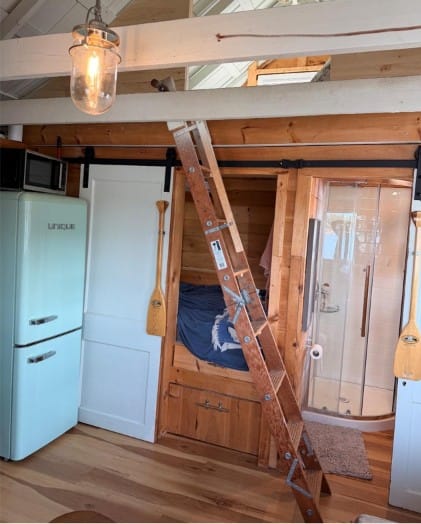
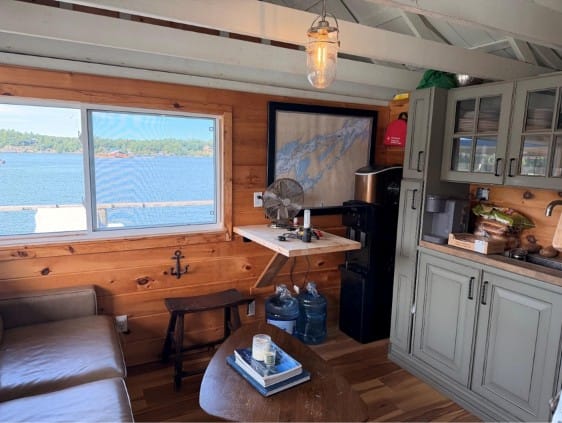
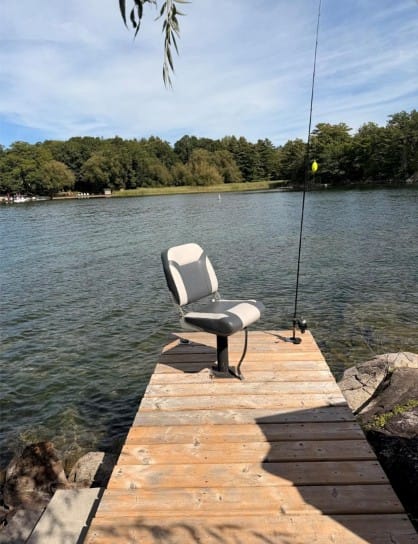
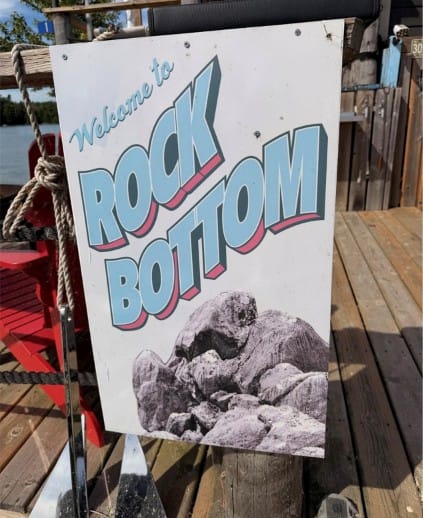
Island 98L - Rock Bottom [Photos by the author]
There is also a bedroom with a loft sleeping area and a compact galley kitchen. The layout has been carefully designed to squeeze the maximum amount of living space from the minimum amount of island.
The owners, displaying an appropriate sense of humor, call their island “Rock Bottom.”
The Sister Islands
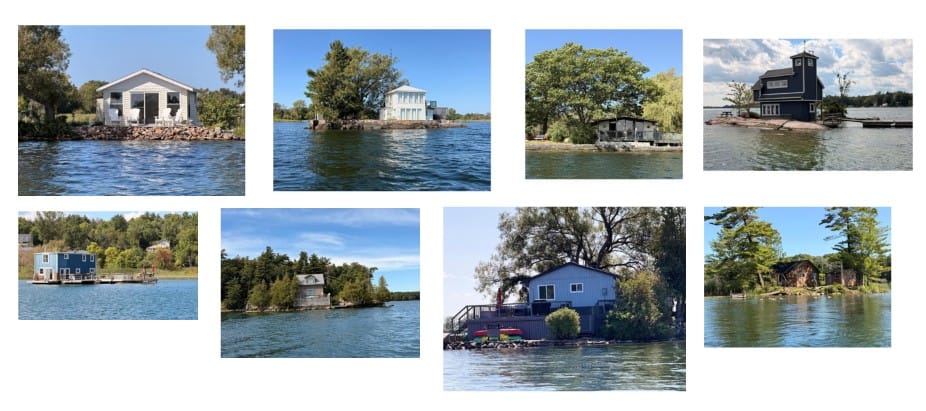
Just east of Gray's Beach, adjacent to the Thousand Island Parkway, are four little islands known as 33G, 33F, 33B, and 33D.
Together they are sometimes referred to as the Sister Islands.
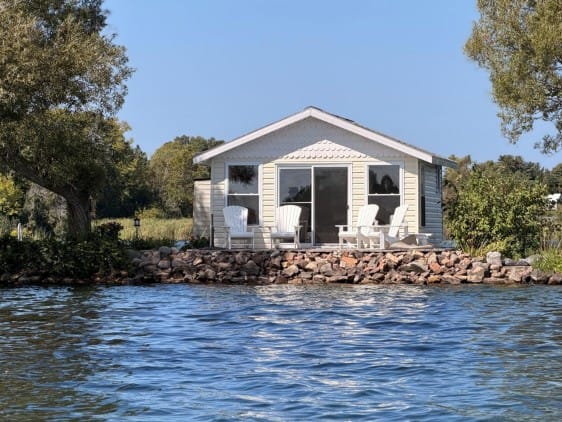
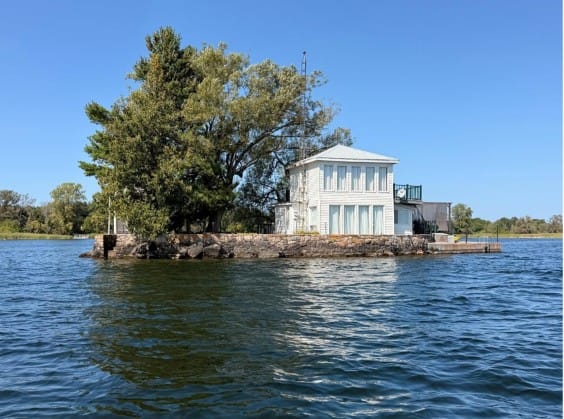
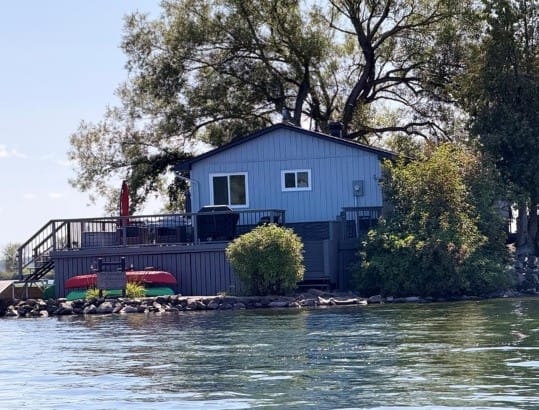
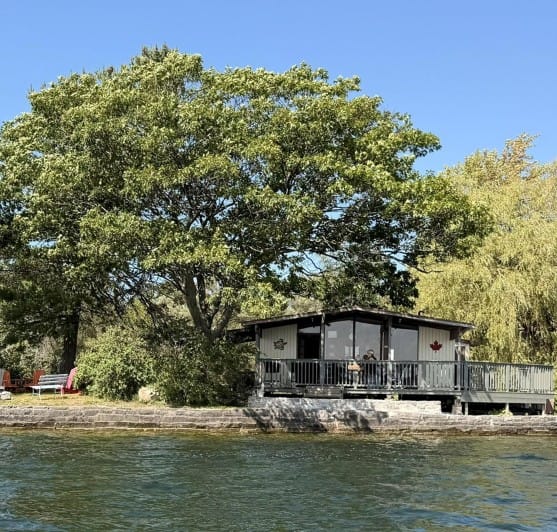
The Sister Islands [Photos by the author]
Perch Island
Just off Oak Point near Hammond, NY, and east of Singer Castle, is Perch Island. Stuart Weatherup, who lives in Syracuse, is the owner. His connection with the island goes back to childhood. In 1972, Stuart helped his father transform what was essentially a shoal into an actual island. They spent years hauling rocks out of the River and using them to enlarge the property. Then they did something that seems perfectly logical at the time.
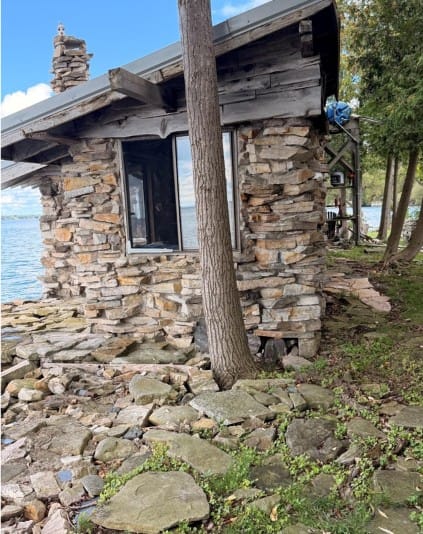
They built the cottage out of the rocks they had just pulled from the River. The island may be small, but it has character.
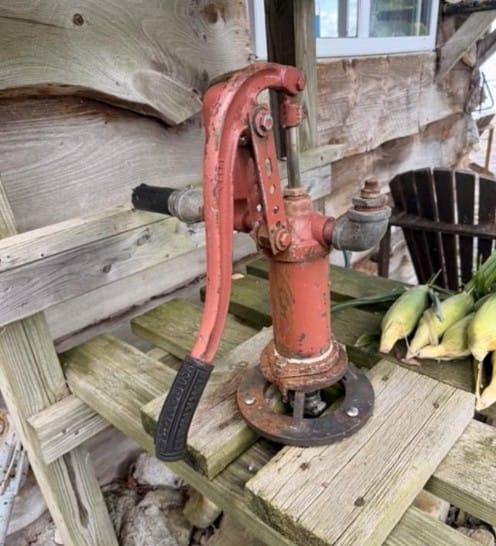
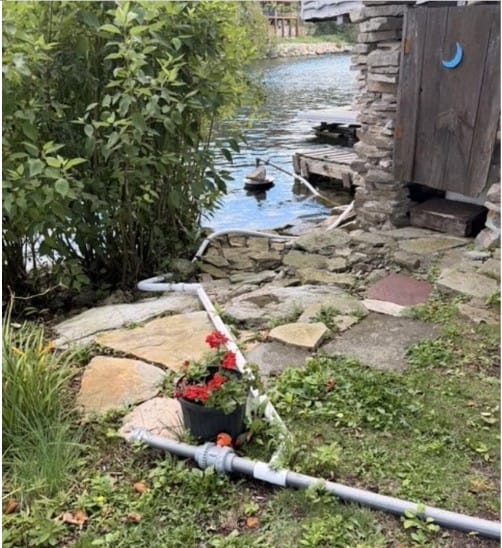
[Photos by the author]
There is no electrical service. Water was originally pumped by hand from the River into a holding tank at roof level. Today, an electric pump powered by a generator does the work. Water is heated with a small propane bottle. There is a small propane refrigerator, a composting toilet, and no television. Stuart cooks on an outdoor grill and takes an open-air shower. Plumbing runs along the surface at ground level and includes a grey-water system. There is a very attractive boathouse with an upper floor containing several beds. The main cabin has a bedroom, living room, and kitchen/dining area.
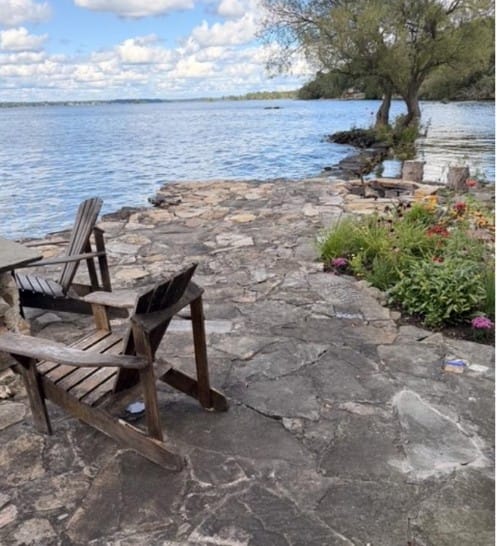
River flooding periodically rearranges the rocks, making it a challenge to keep the walking surfaces level. The rocks pulled from the River eventually doubled the size of the island.
“What If” Island
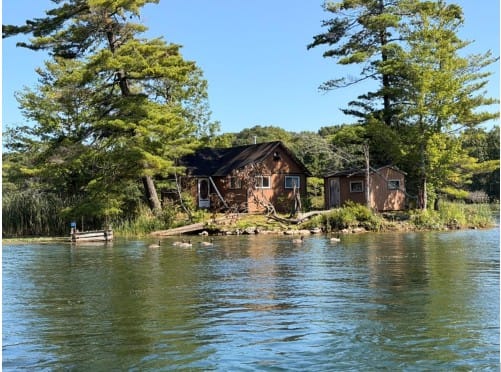
Located in Blacksnake Passage in the International Rift as you enter Lake of the Isles, "What If" Island has not been occupied for years. The island is showing the effects of neglect, a reminder that even a micro island requires maintenance.
Sentinel Island
Some islands are simply too small to build a conventional cottage on. Glen Murdock of Elizabethtown has owned Sentinel Island, in the narrows east of Lake of the Isles, since 1999. Unable to build a cottage, he built a marine storage shed.
The structure is officially for storing boating supplies—an outboard motor, oars, life jackets and other nautical necessities. Of course, his “marine storage shed” contains a number of necessities.
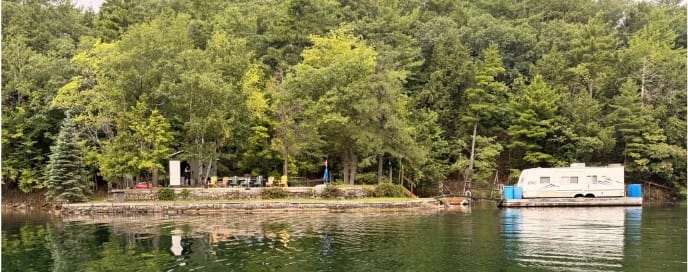
Such as two refrigerators, cooking supplies, and a composting toilet. Glen's stroke of genius was to place a trailer on what he had registered as a barge, giving him accommodations as well.
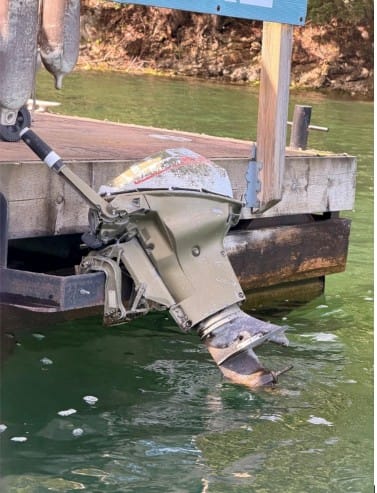
And because it's a barge, it can be moved. At a moment's notice . . . Almost.
Glen follows township regulations. Requesting permission to build a wooden deck, it was denied because wood decks are prohibited from being too close to the water. So, he leveled the area and covered it with paving blocks.
When an inspector balked at a sink next to his BBQ, Glen explained that it was for cleaning fish, which is permitted. Glen has also made a considerable effort to control erosion, installing large stone blocks around the perimeter of the island.
Island 105B
Located east of the tip of Little Grenadier, Island 105B is another little world unto itself.
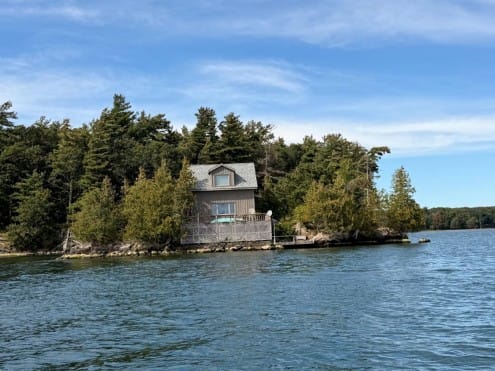
Like many micro islands, it raises the question: Why would anyone choose to live on a piece of land that is barely large enough to turn around on? The answer is the same reason people have always been drawn to islands.
You don't need much land when what you're really buying is privacy, water, and a view.
Size is relative.
And sometimes, small is not only enough—it is the whole point.
By Michael Laprade
Michael Laprade and his wife Janice are retired Californians, who spend the summer at their “Honey Bee Island” property. It is located in the International Rift, between Blacksnake Passage at the mouth of Lake of the Isles and the stone span of the US / Canadian Customs Bridge. Michael is a former prison administrator, and also is a Professional Magician. In October 2013, Michael and Janice wrote Honey Bee Island’s Little Free Library for TI Life. Now Michael has joined our regular team of authors- sometimes presenting two in a month. I encourage you to see his past articles here and here. They are both interesting and fun!