Building Boats for the U.S. Navy
by: Bonnie Wilkinson Mark
Editor’s Note: We thank author Bonnie Mark for suggesting that her research be published in TI Life. Receiving research such as this is what this editor considers GOLD. We are delighted to share her work in several articles over the coming months. Some may also be published in the TI SUN in the American Sector.
Each article may be slightly longer than our usual TI Life word count, but we believe that leaving them as they are will be appreciated by researchers and history buffs for years to come.
Building Boats for the U.S. Navy – Hutchinson Brothers and Hutchinson’s Boat Works, Inc.
In the summer of 2026, Clayton’s Antique Boat Museum mounted a popular exhibit called “Keeping the Fleet in Fighting Trim,” which documented the contributions of the local boat builders to the war effort, as part of the 250th anniversary of the founding of the United States. The following commentary illustrates how a local boat building firm contributed to both World War I and II war efforts.
World War I
Like L.E. Fry & Company in Clayton, NY, who had constructed Sub-Chasers during World War I, Hutchinson Brothers (Hutchinson Bros.) in Alexandria Bay, NY, pursued government contract work to build various types of boats, as part of the World War I war effort.
In March 1916, Hutchinson Bros. were notified that they were the second lowest bidder for five 36-foot motor life boats for the U.S. Coast Guard. Their bid was for $42,812 to be built in 780 days, while the lowest bidder, Canada Anchor-Rockland Machine Company of Camden, ME, bid $39,400 and 890 days [1]. It was clearly evident that price was more important than expediency. In May 1917, they submitted a bid for another government contract to construct four mine-laying vessels. The vessels were to be 67 feet long and were to be the distribution box type [2]. However, Hutchinson Bros. were not successful in obtaining this contract.
BUT the third bid to the government was a charm. On October 24, 1918, Hutchinson Bros. received a government contract to build four 1200-ton coal scows, which were to be used to carry coal to the larger ships that were unable to come to the docks. These four scows, or barges, which were numbered YC-594, YC-595, YC-596, and YC-597, were to be constructed at a cost of $124,000.00. The non self-propelled barges were to be wood, 115 feet overall with a 31-foot beam, and 15-feet depth. When empty, they were to draw 3-feet of water, when full they were to draw 12-feet. Individual barges were framed with 8 inch timbers with bulkheads that had 4 inch timbers and were planked with 150,000 feet of lumber [3]. Each barge was to have four hatches into which the coal was to be loaded [4]. As the U.S. Navy discontinued the use of coal, the barges were used for anything that could be carried in an open lighter. Many were converted to other uses. At the end of WW I, YC-596 and YC-597 were sold to unknown parties. It is unknown what happened to YC-594 and YC-595.
The scow/barge contract was the first government contract for Hutchinson Bros. as well as the first for a business in Alexandria Bay [5]. In order to complete the order, Hutchinson’s increased employment from approximately 20 to 100 men, which was welcomed over the winter of 1918-1919. By February 27, 1919, two of the barges had been completed and the frames for the remaining two barges were ready to be planked with material that was coming from Seattle, WA [6]. The third barge was completed on April 21, 1919, with the last barge completed on May 22, 1919 [7].
Upon completion and in order to be turned over to the U.S. Navy, the barges traveled via the St. Lawrence River to Lake Ontario, down to Oswego, where they entered the Erie Barge Canal to traverse the Hudson River to New York City. The firm didn’t receive any more contracts for vessels during WWI.
Five years after completion of these barges, the Hutchinson Bros. partnership was dissolved and James Herbert (Bert) Hutchinson retained the boat building business, while George Hutchinson became associated with the Thousand Islands Garage in Alexandria Bay. Bert Hutchinson incorporated the business in 1929 as Hutchinson’s Boat Works Inc. (Hutchinson’s) and became its president. The firm continued its regular pleasure boat construction business until the United States entered World War II.
World War II
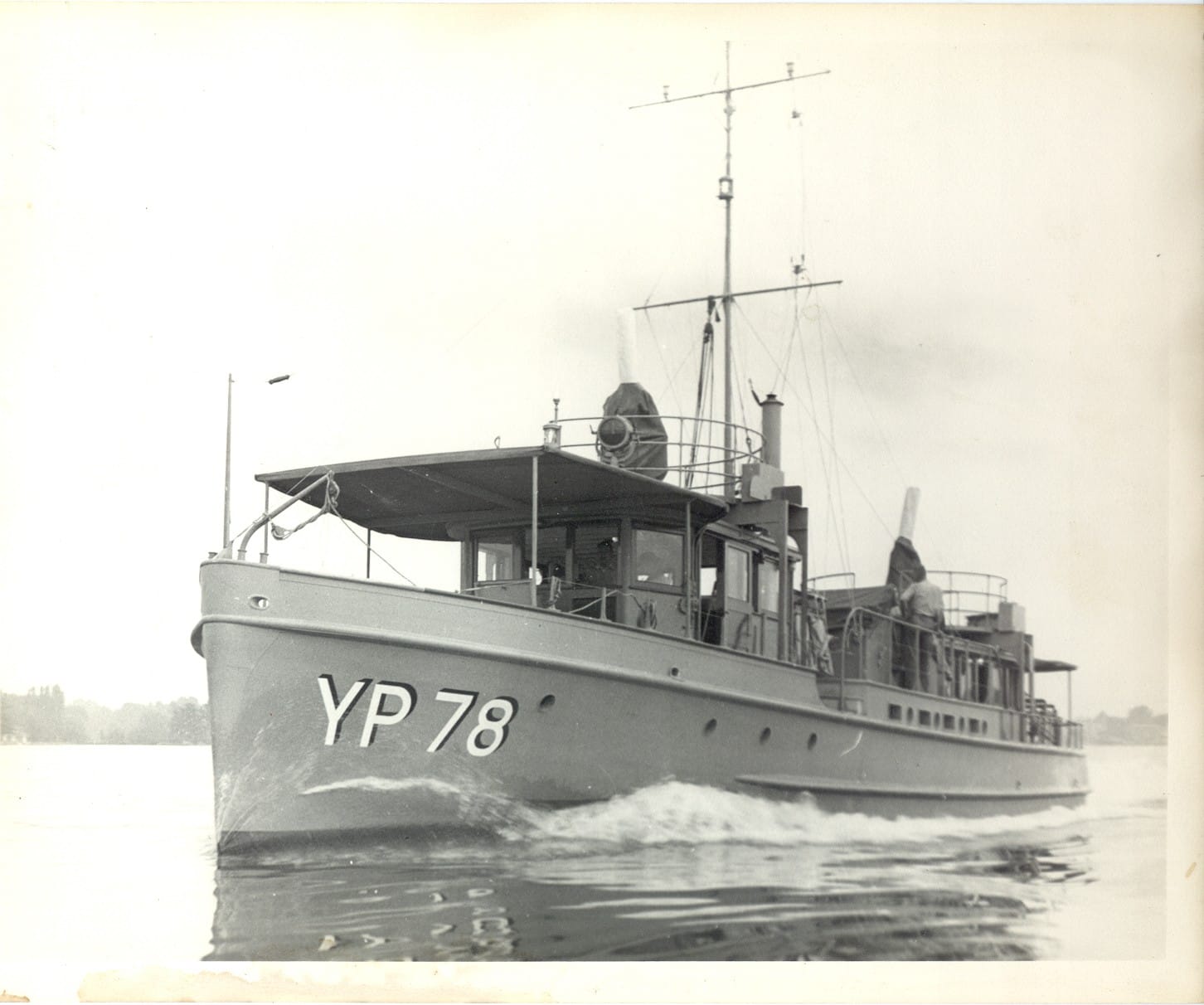
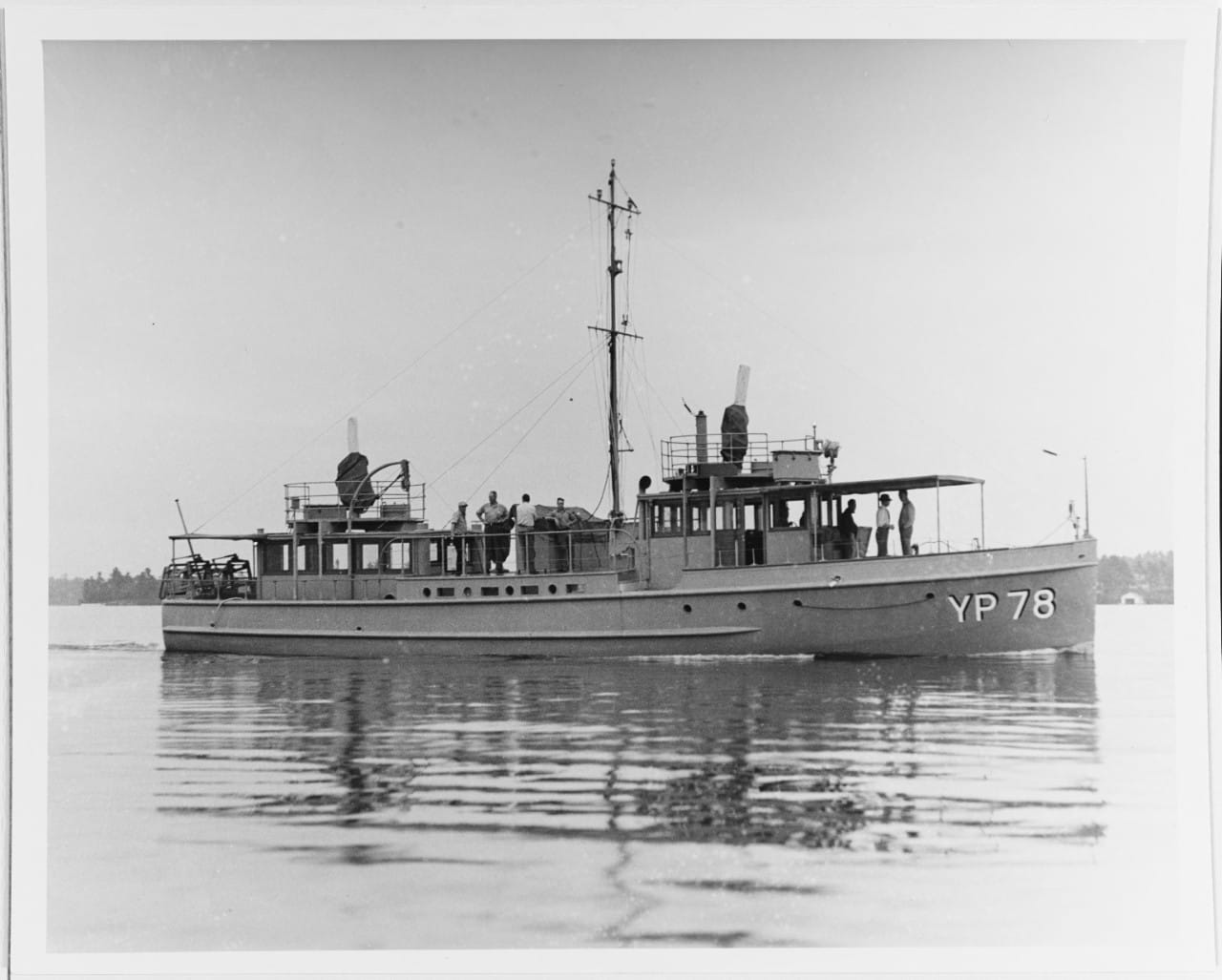
Hutchinson's temporarily halted their small craft and pleasure boat construction during World War II. In June 1941 they won the contract to build two "training ships," or Yard Patrol (YP) boats, for the U.S. Navy. Designated as YP 78 and YP 79, these two boats were to be used by the U.S. Navy for seamanship training and as research vessels. The YPs were intended to provide realistic at-sea training in navigation and seamanship for the midshipman at the U.S. Naval Academy, in Annapolis, MD. The contract price of $172,000.00 [8] required that the two boats be completed and delivered in 210 days. They were to be constructed of fir, be 75 feet long, 16 feet wide, and powered by two 200-235 hp diesel engines that provided a speed of 18-20 mph or between 15-18 knots [9]. Drawings were prepared and dated April 8, 1941, and September 7, 1941, by the Bureau of Ships, Navy Department, and by Glenn E. Furnace, naval architect, Alexandria Bay, NY, respectively.
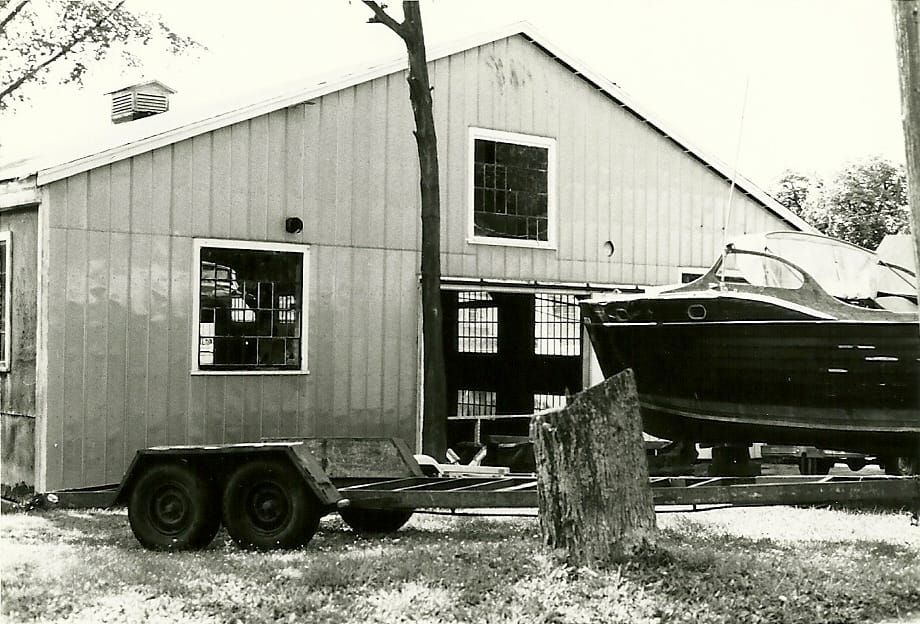
This contract with the federal government forced Hutchinson’s to modernize both their facilities and how they did business, particularly with government agencies. In order to construct these first two vessels, Hutchinson’s razed several old buildings and erected a special building on Crossmon St, which became known as the YP Shop. The new wood-framed building was situated left of the original Wood Shop and was 100 feet by 53 feet by 26 feet high and had a marine railway down the center of the building that provided access into the St. Lawrence River on its south elevation.
The east, south, and west exterior walls were covered with asbestos shingle siding with two-rows of 28-light, multi-light, wood windows that extended the entire length of the east and west elevations, which provided natural light into the interior. The south elevation that opened onto the St. Lawrence River had a large pair of wood doors that were hinged on the top and folded into the building. Two wood covered docks extended 40 to 50 feet out from either side of the south elevation door into the water. The building was covered with a gable roof that was supported by open wooden trusses on the interior. In between the trusses were metal industrial light fixtures. The wood-framed exterior walls were supported by a stepped concrete foundation that followed the slope of the land. The building was open throughout the interior and had gravel flooring.
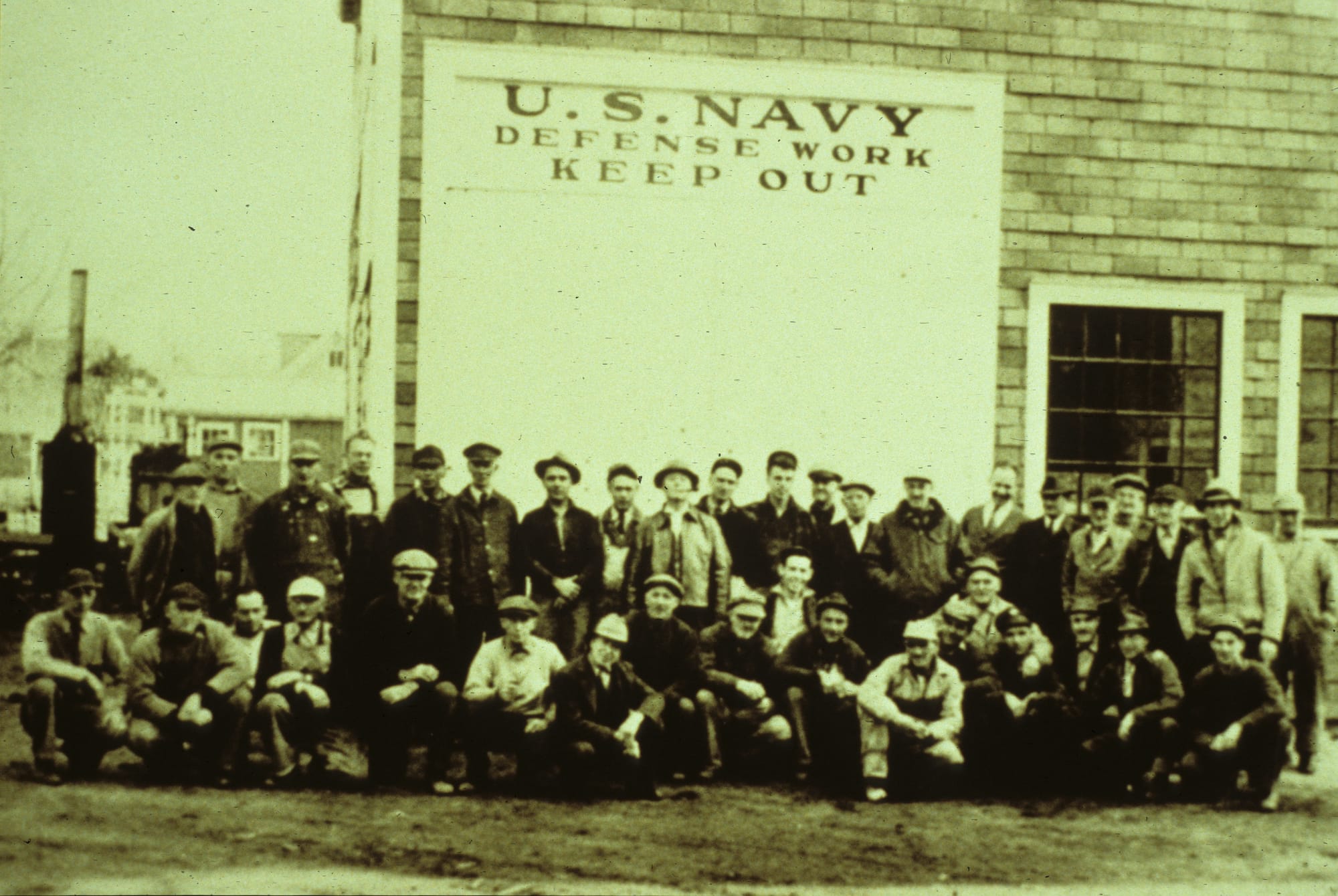
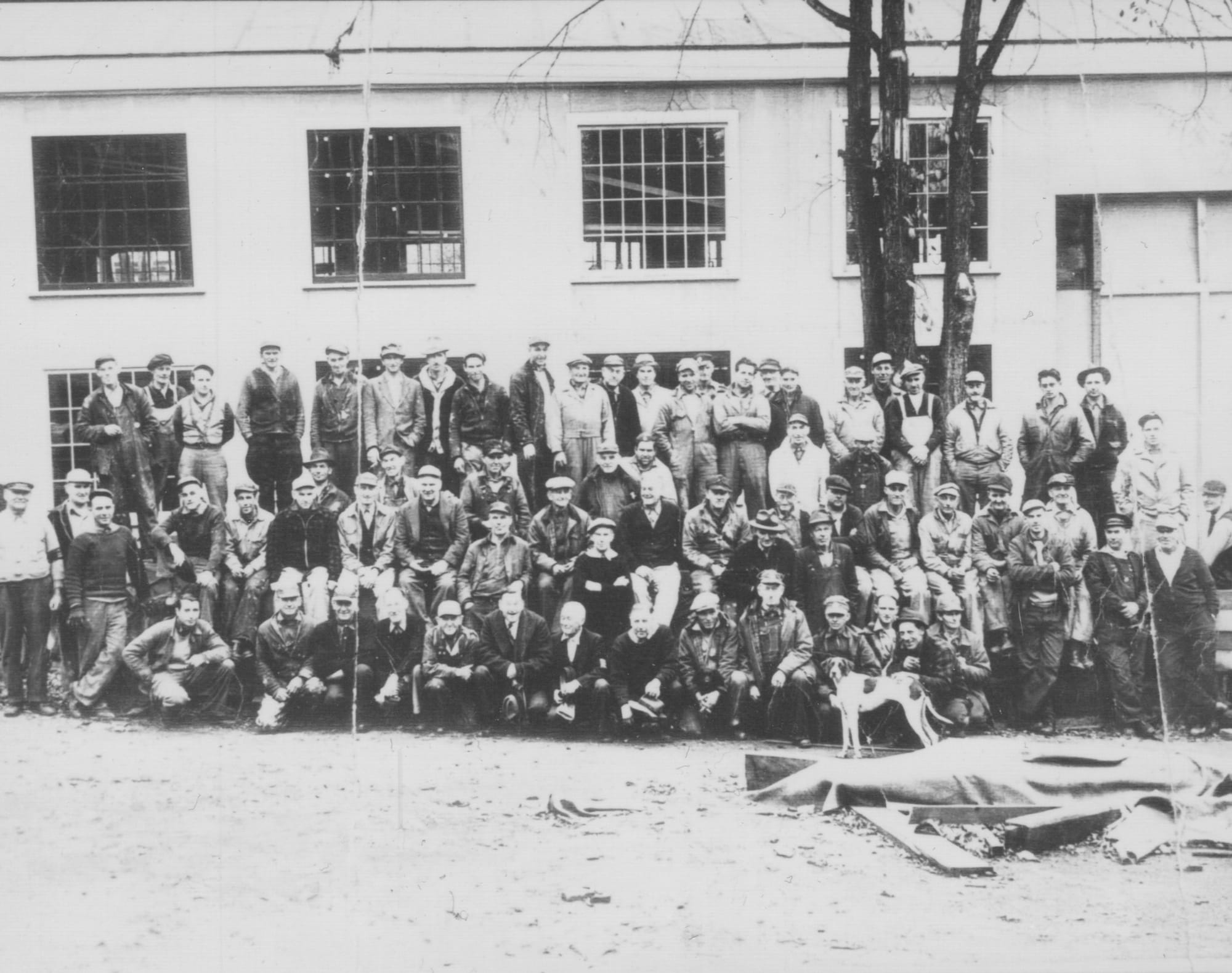
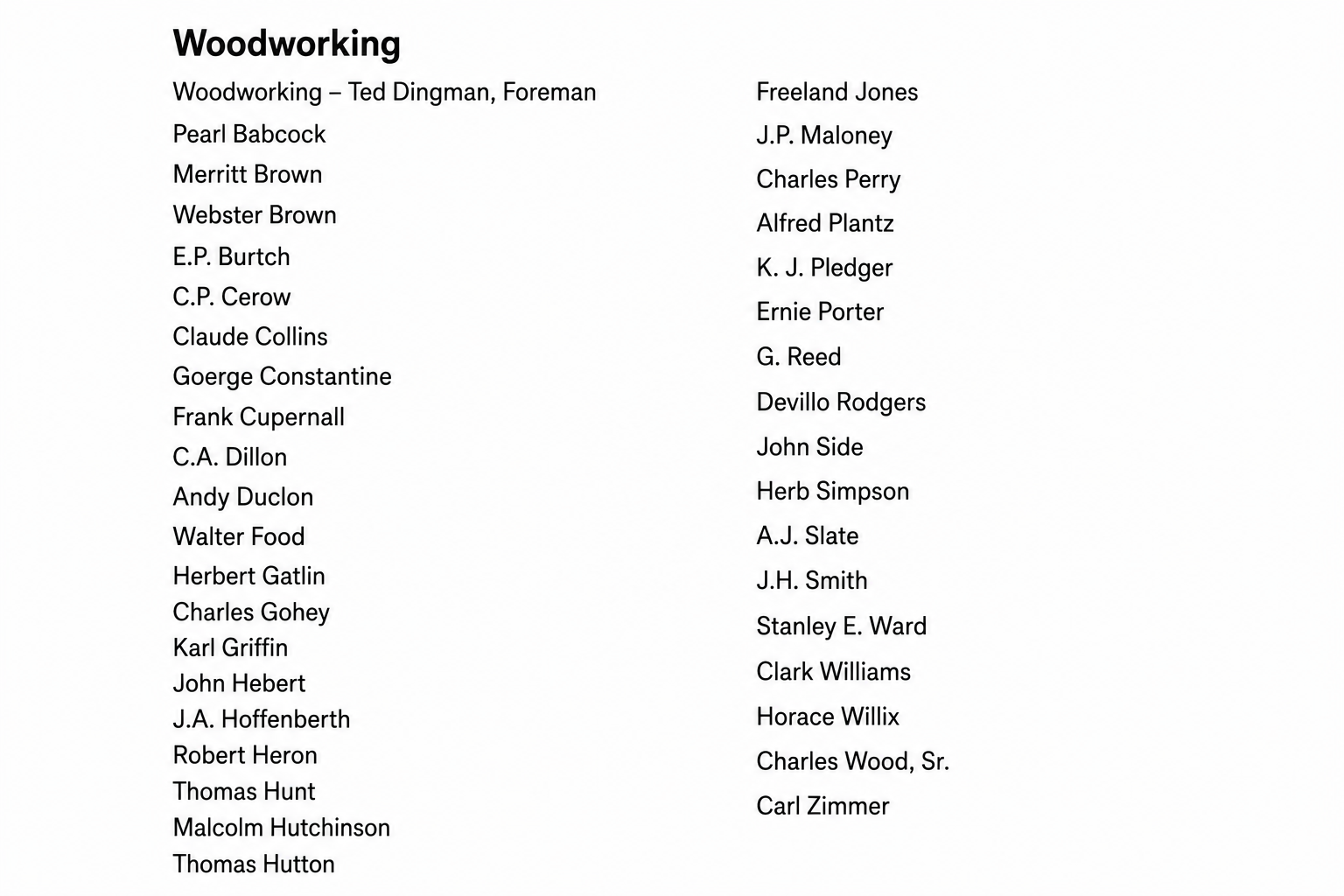
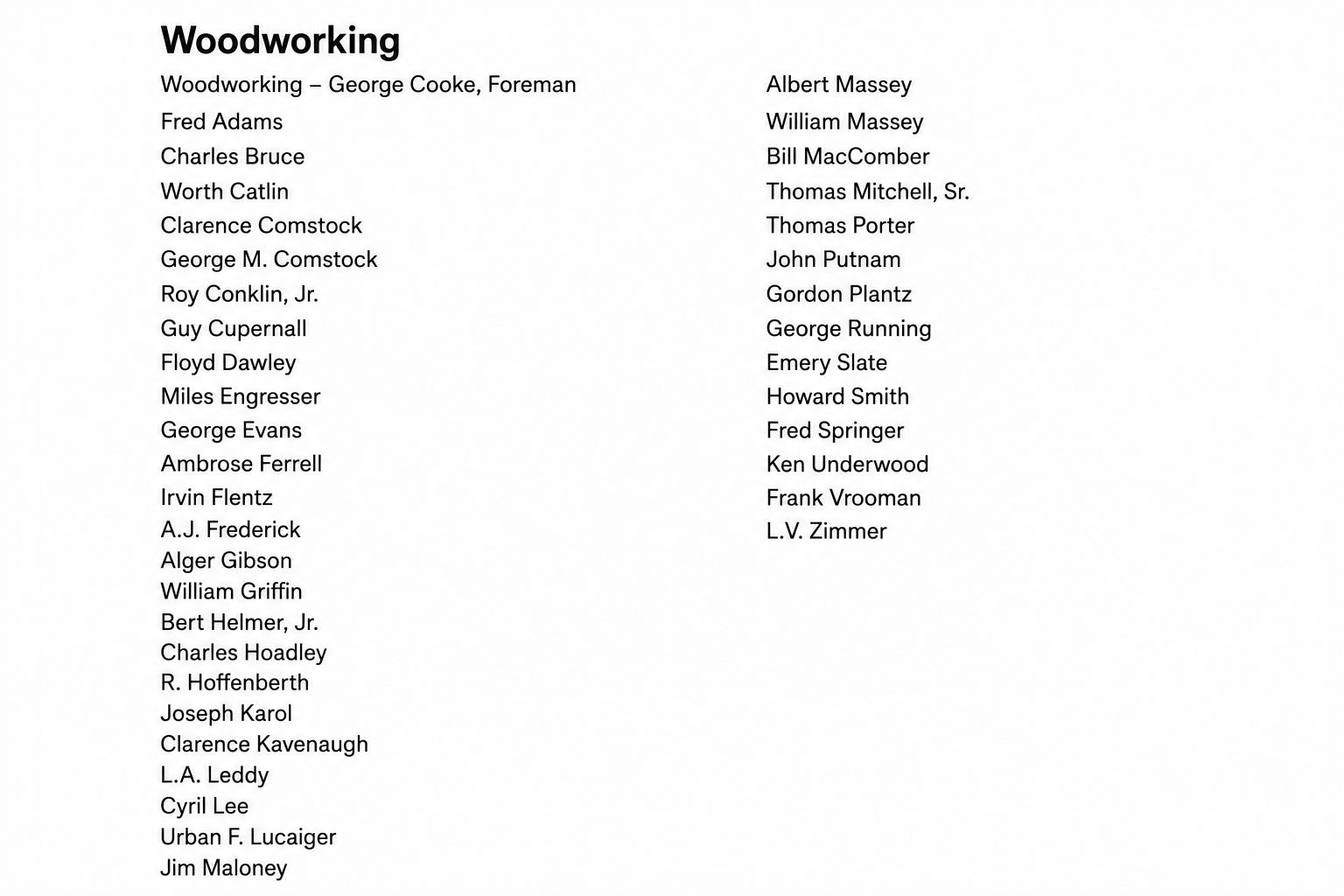
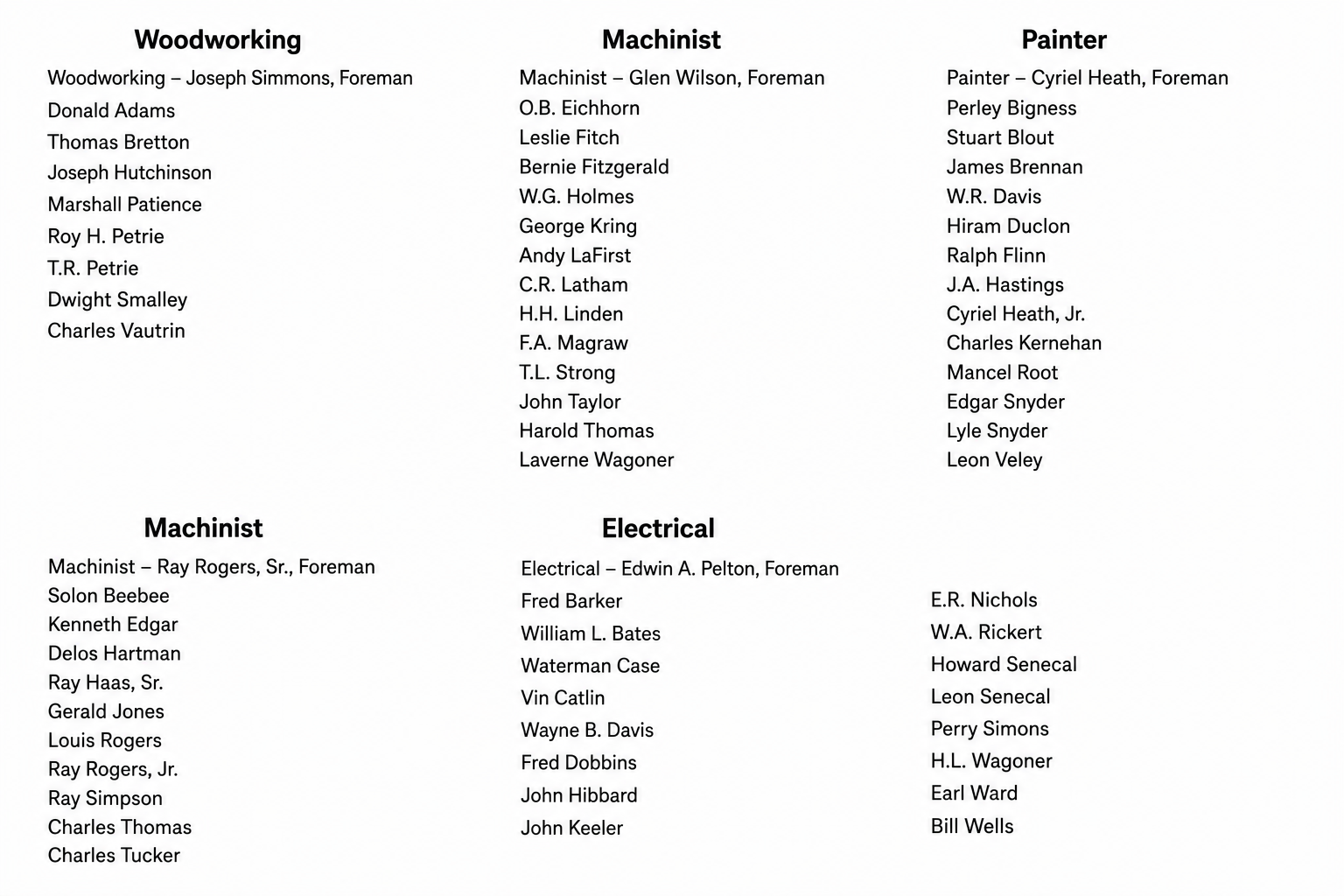
Hutchinson’s initially employed 50 to 60 men to build the YPs, but the number eventually grew to 142 men (See Appendix A). At the height of construction, there were up to 175 men working on the boats.
While the YPs were under construction, the unions started heckling the men and tried to get them to unionize. The men voted no to unionization, as Bert was generous in letting them have time off to fish and hunt [11]. The men were divided into seven teams: three teams of woodworkers, with George Cooke, Ted Dingman, and Joseph Simmons as the foremen for their respective Woodworking Teams. Two teams of machinists with Glen Wilson and Ray Rogers, Sr. as foremen of each separate Machinist Team. One team of electrical men with Edwin A. Pelton as the foreman, and one team of painters with Cyriel Heath as its foreman [12]. To avoid confusion and duplication of effort, Ted Dingman’s and George Cook's teams each had specific duties [13].
Many of these workers were also known boat builders in Alexandria Bay and Clayton, who had left their own businesses to contribute to the war effort (such as Fred Adams, Andy Duclon, Bernie Fitzgerald, and the Cupernalls) or were brothers or cousins (such as the Comstocks, Cupernalls, Masseys, Slates, and Senacals. to name a few). They even employed Ross Hudson, a high school student during the summer of 1943, to do small odd jobs such as sharpening wood planes and inserting sealing material into the caulked joints of the canvas covered engine hatches [14]. Weekly meetings were held between the foreman, management, and naval personnel to make sure that all the activities were coordinated and that there was no duplication.
As the boats were intended to be used as seamanship training vessels, they included features that were normally found on larger boats. The boats were designed to have two deck houses. The one forward, which the workers referred to as the pilothouse (or bridge) and the one aft, which was the charthouse cabin [15]. Within the charthouse were two banks of drawers, which ran the full length of the port and starboard sides of the cabin. The chart tables were covered with mahogany and were large enough to spread several charts. The drawers underneath the tables all had mahogany facings as did the ports, which were all framed in mahogany. The overhead frames of both cabins were edged with a mahogany strip “which gave the interior of the cabins a finished look. [16]” A 50-caliber machine gun, which was to be manufactured by Frink Sno-plow, Clayton, NY, was mounted on each cabin roof [17]. Below decks were a galley, sleeping quarters for four men, and a small stateroom. Between the bunks and following the keel line, was a table that was about five feet long with folding sides that were tapered from fore to aft to match the configuration of the space in which it was located.
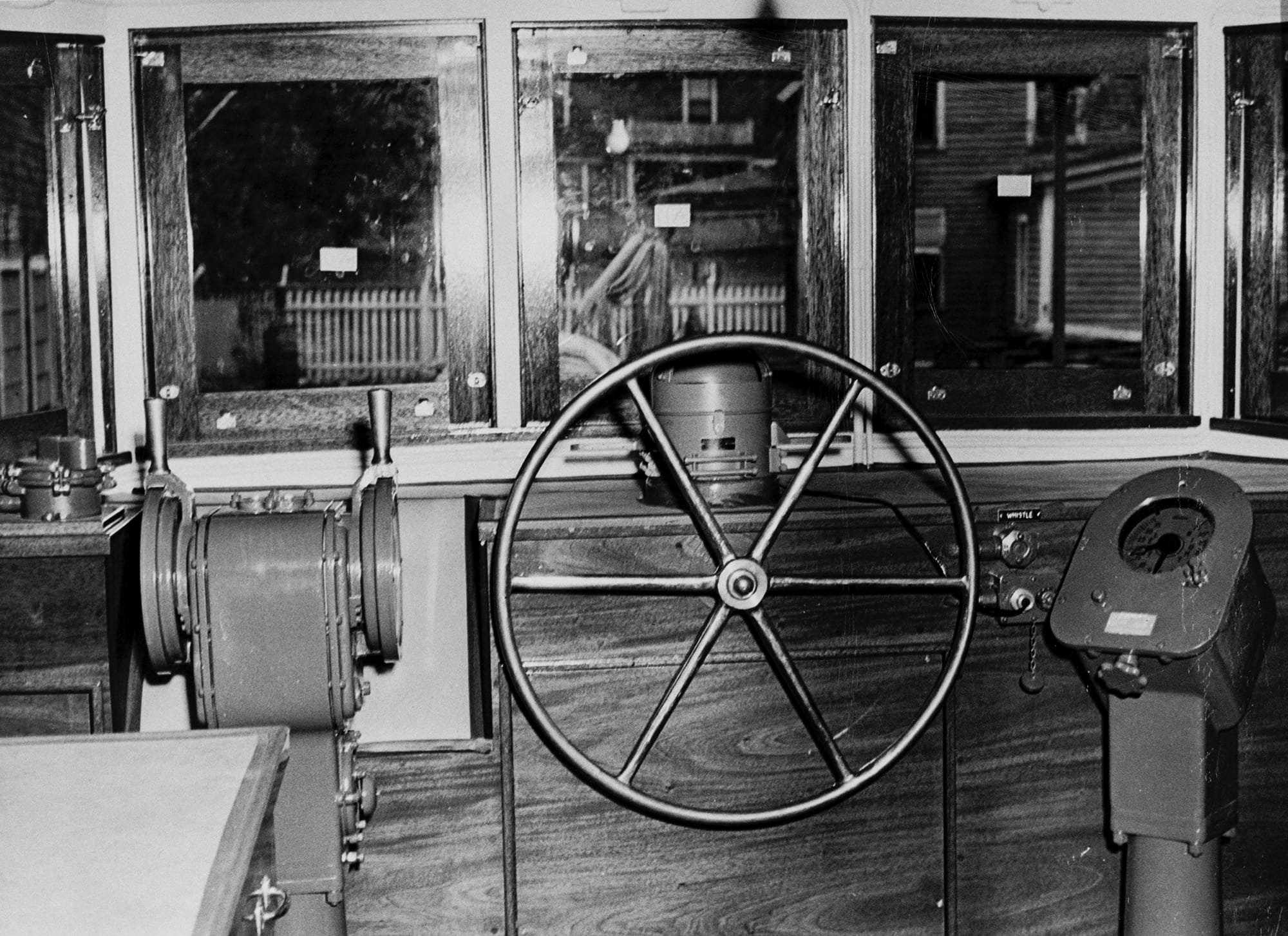
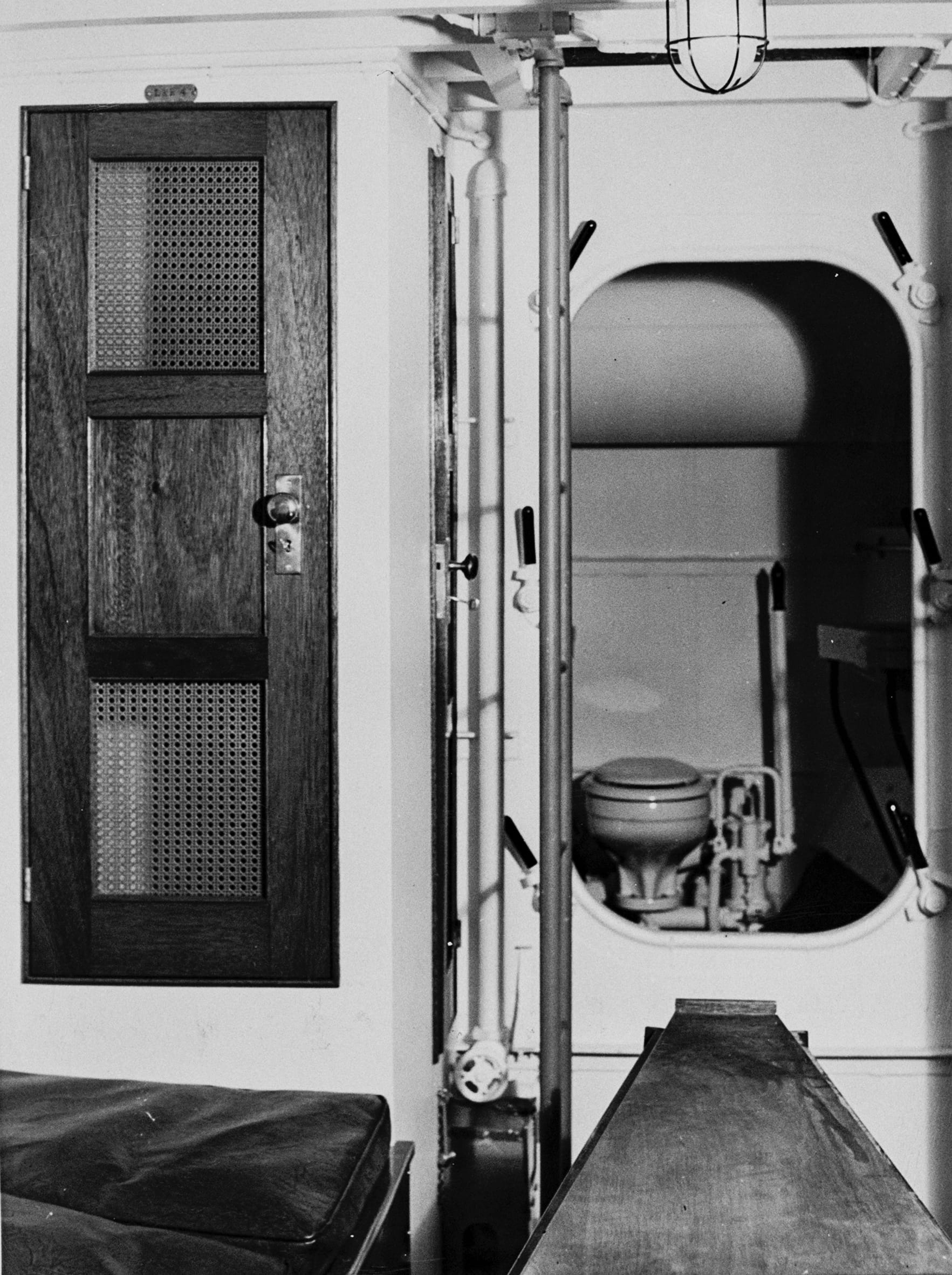
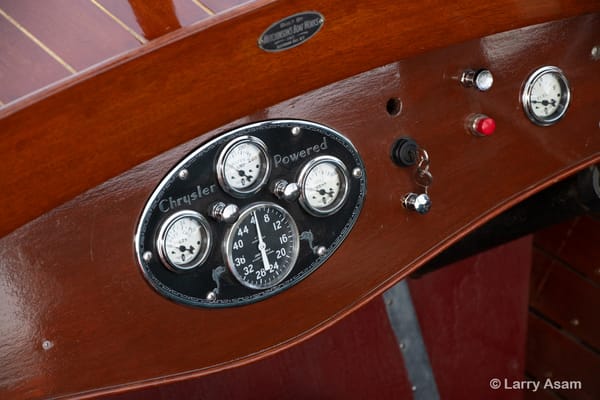
Interior of YP 242, n.d. Above is the Pilothouse or bridge, while right is a cabin interior and head. [Source: Ross C. Hudson, Watertown Power Squadron]
According to George Houghton, a local 12-year old boy who lived near the Hutchinson’s Shop, while the YPs were being constructed, he was allowed by Hutchinson staff to “check” the ongoing work after school. He noted:
I passed through the gate with a wave to the security guard and was climbing up the scaffold, which ran completely around the hull at various levels, when I ran face to face up against a “new” man. The man turned out to be the new Navy Inspector. He looked completely astonished and after collecting his wits ordered me off the scaffold and out of the yard stating that this was a restricted area. Needless to say I was most upset and immediately went to the owners of the yard and got things straightened out. After the Inspector was convinced that I wasn’t a saboteur we became good friends [18].
While construction was underway, Bert’s three granddaughters also visited the shop, but they did not suffer this same scrutiny. When they got to the shop, they would go to the office and tell the staff that they were there, and nobody would bother them. Bert’s eldest granddaughter, Bonnie Jean Laidlaw Wilkinson, observed that “as a 7 to 10 year old, while the boats were being constructed, they were overwhelming. [19]”
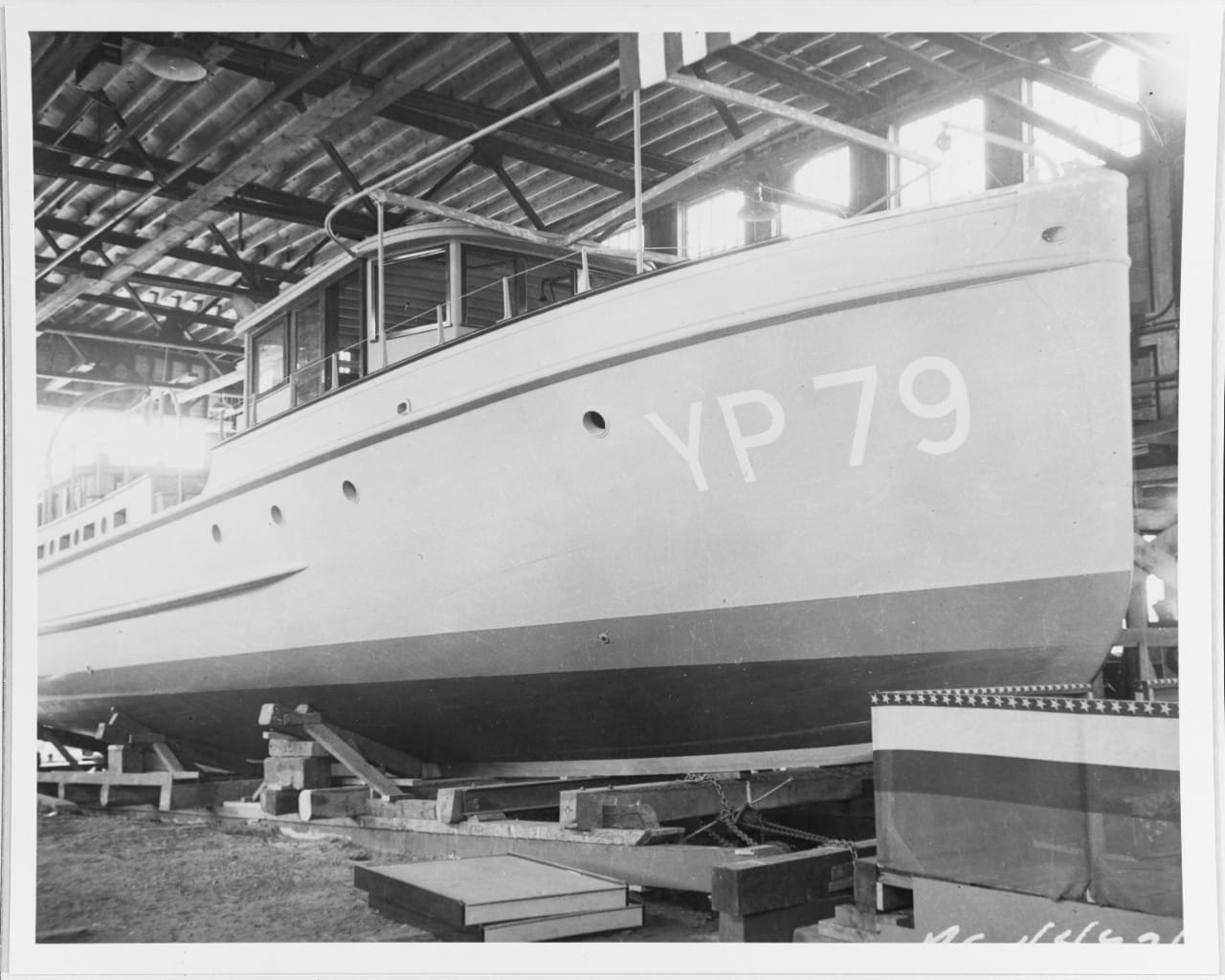
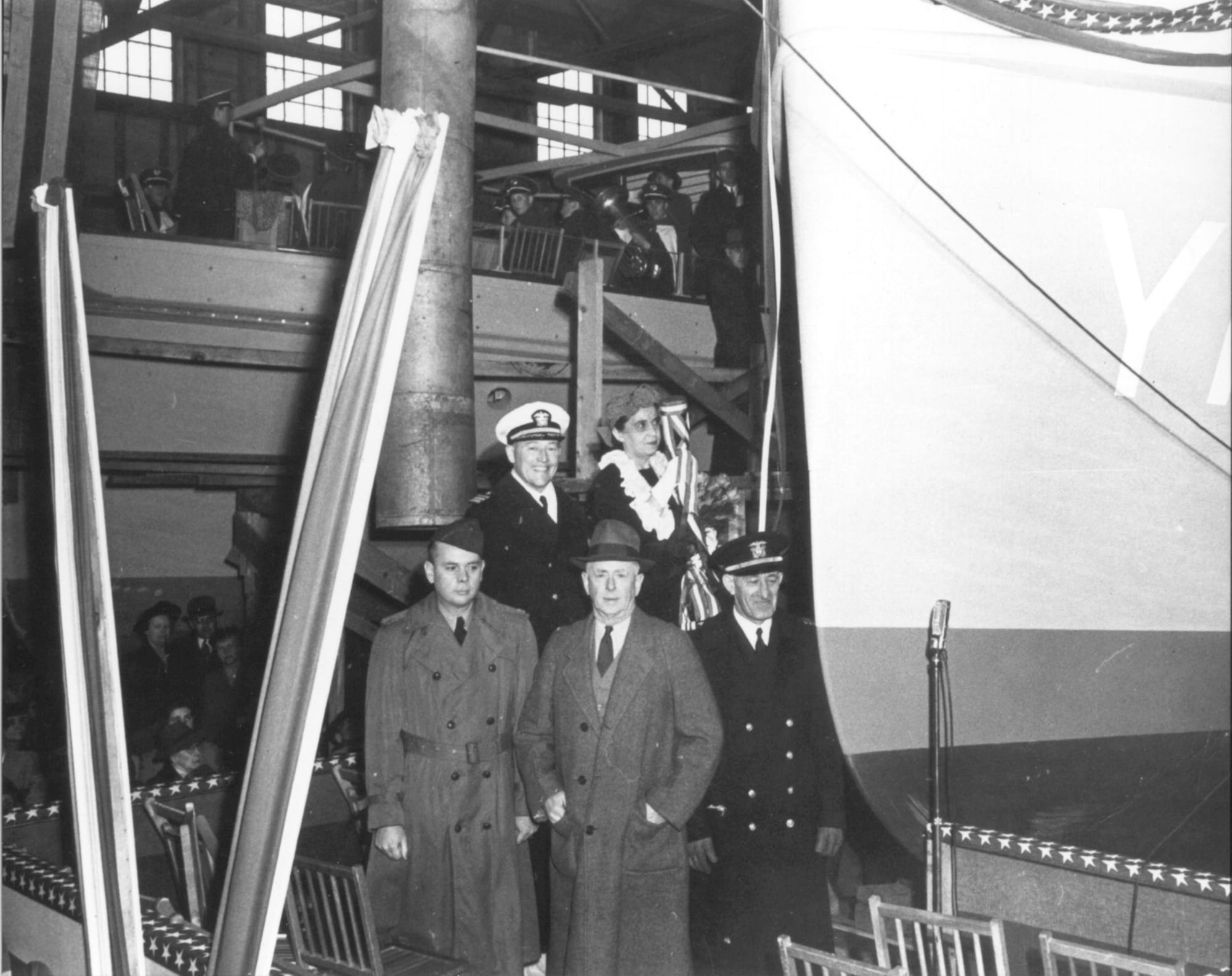
The construction on YP 78 was finished on April 20, 1942, with Mrs. J. Hubert Hunt, wife of the Office Manager, breaking a bottle of champagne across her bow [20]. Then two weeks later, YP 79 was launched with Mrs. W. Grant Mitchell christening the craft. Both christenings had dignitaries from the U.S. Navy, the U.S. Naval Academy, and the U.S. Army from Pine Camp, Watertown, NY. Once completed, both boats were sent to the U.S. Naval Academy via the inland waterway fell under the Severn River Naval Command in Annapolis, MD.
The completion of the two craft marked the completion of $218,887.42 worth of work for the Hutchinson’s Boat Works, Inc., but the completion came with a loss of $27,898.05 to the firm. Part of the loss was attributed to premium time required for labor and part of the loss was due to the lack of streamlining construction practices.
Hutchinson’s went from an $80,000 income that employed 10-20 men in 1942 to a $218,000 income that supported the 130 men who were needed to construct the two boats for the U.S. government. In order to streamline work and continue to construct additional boats for the U.S. Navy, Hutchinson’s hired E.A. Pelton, PE, to be their General Manager. As an electrical engineer, it was under his guidance that Hutchinson’s instituted Safety Meetings, Forman’s Meetings and Training, and updated accounting practices [21].
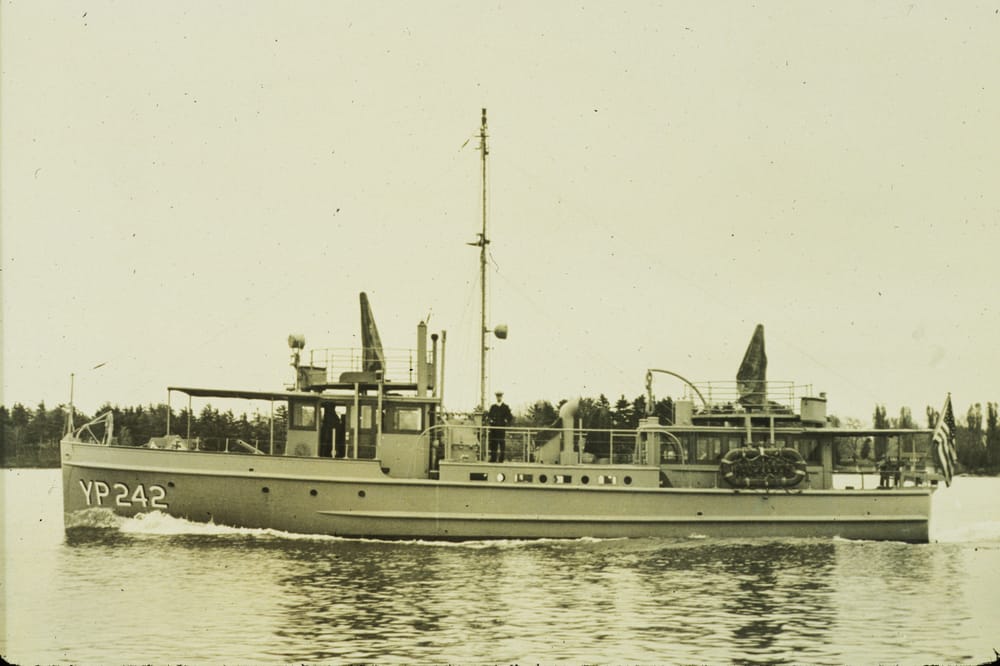
After the completion of the two YP boats, Hutchinson’s received an additional contract to construct five 38 foot Buoy Boats (C-8184-4255 to C-8189-4255) for a contract price of $45,900. The boats were to be 11 feet wide and were powered by Red Wing motors [22]. Then in October 1942, they received a third and final contract to construct 13 additional YP boats, YP 242-246 and YP 583-591. The first five new YPs, 242 to 246, were finished between September and November 1943. Then YP numbers 583 to 591 were finished between May 1943 and June 1944 [23], with the last of the YPs leaving the Hutchinson’s shop on June 17, 1944 [24]. There were problems completing the last of the YPs due to availability of parts.
In order to build these additional craft (YP 583-591), Hutchinson's bought the Westcot property that was south of the first building and erected a new 200 foot by 55 foot structure, which was perpendicular to the YP Shop, so that the combined building was a 5,200 square foot, L-shaped building.
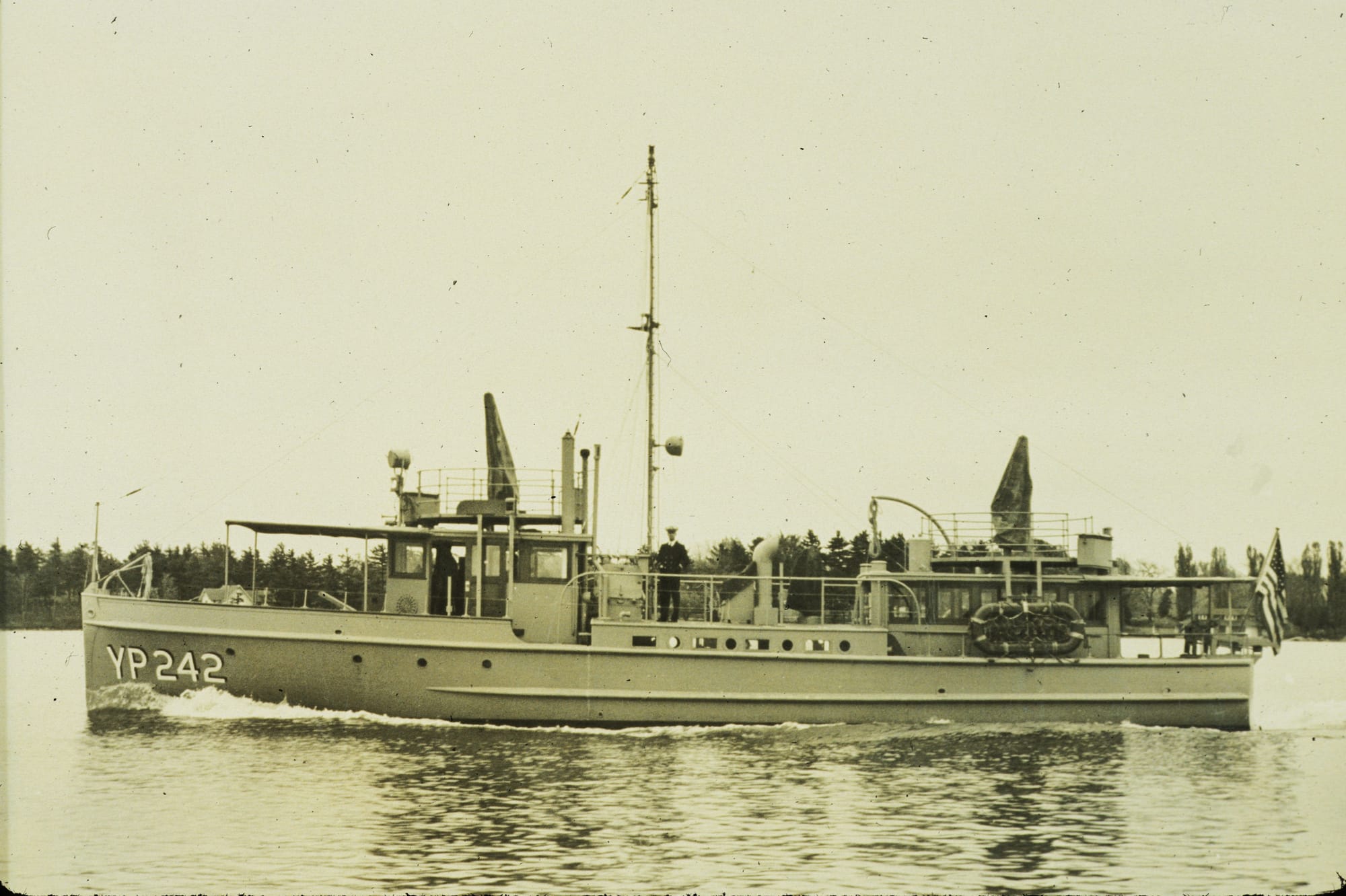
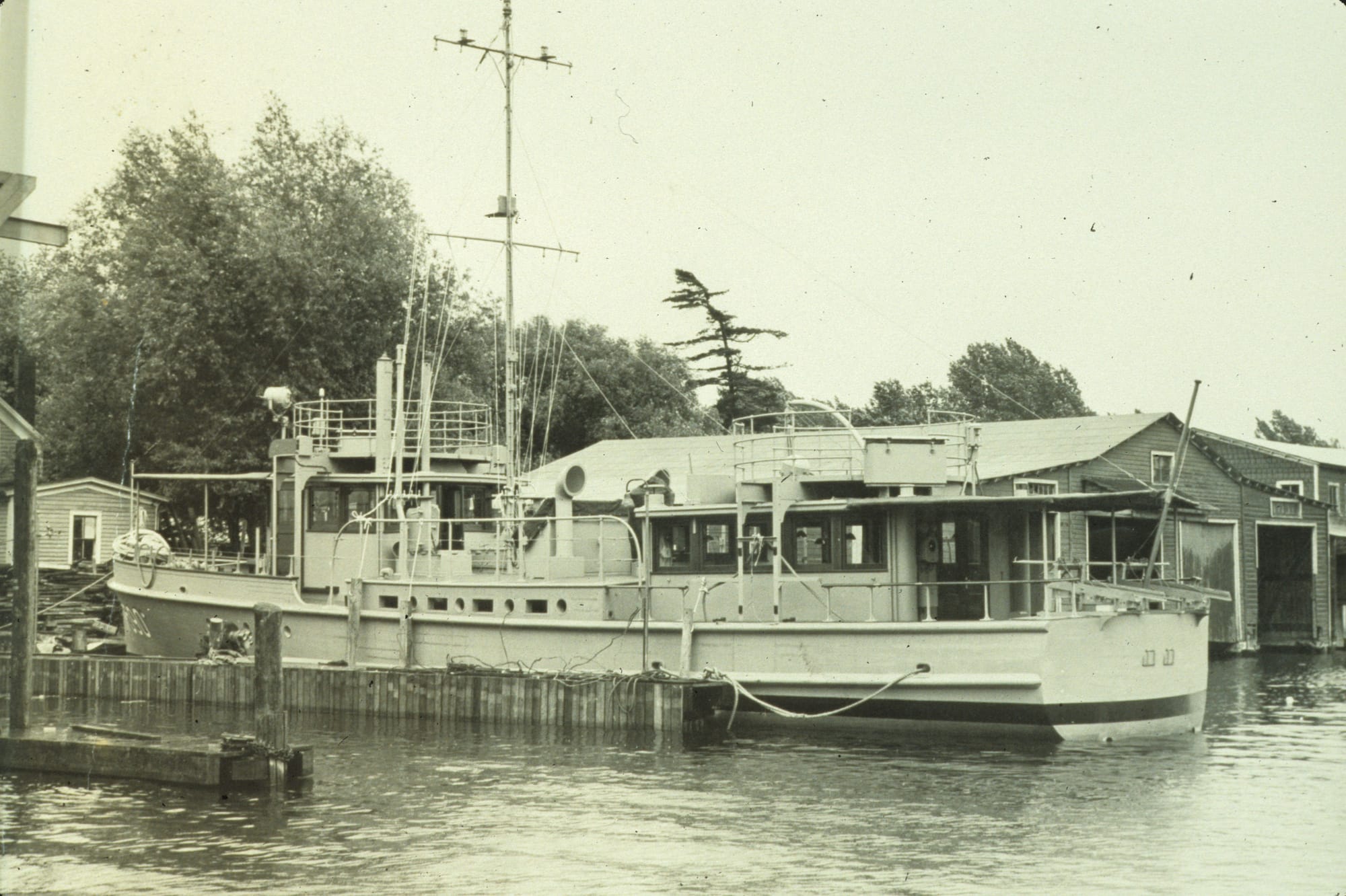
L: YP 242 on her shake-down cruise, September – November 1943. [Source: Ross C. Hudson, Watertown Power Squadron]; R: YP 590 at the Hutchinson docks, May-June 1944. [Source: Ross C. Hudson, Watertown Power Squadron]
The Navy was very particular about the condition of the craft when they were accepted. A story is told that during the summer of 1943, the Navy took one of the YPs out for a shake-down cruise. When it returned, there were beverage marks, scratches, and other damage on the varnish work in the cabins. Of course, the Navy would not accept this YP until the damage was repaired by Hutchinson’s. After that incident, all the varnish work was covered with red resin paper and masking tape before a shake-down cruise occurred [25].
As a result of this government work, a total of $1.8 million dollars was injected into the local Alexandria Bay economy, of which $427,671.98 was invested in labor, $867,540.00 was spent on materials, $22,269.93 was spent on miscellaneous items (insurance, storage, towing, and delivery), and $215,944.90 was spent on overhead, with a gross profit of $256,254.62. The distribution of remaining profit was spent on stock and material for new pleasure boats; permanent improvements that included real estate, new building construction, floating and permanent docks, a railroad hoist, and large tools; corporate taxes; and cash in the bank.
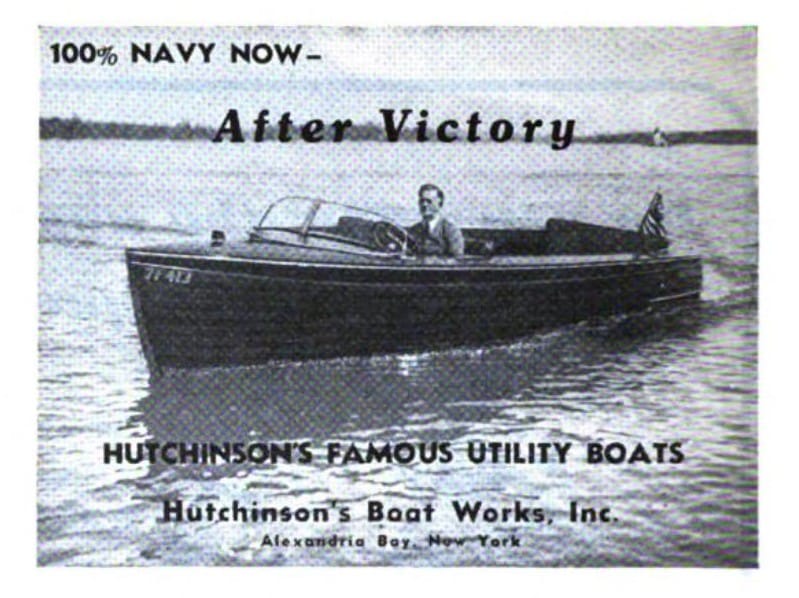
After serving in WW II, the 16 YP boats that were constructed by Hutchinson’s Boat Work, Inc. were either sold by the U.S. Navy to a foreign company, scrapped, were struck by another vessel, or were decommissioned. In one case, YP587 continued to be used as a training vessel from 1942 to 1974 by the U.S. Naval Cadet Corp. She was sold in 1977 to become a museum at an unknown location and later sank and was scrapped. The disposition of three of the YPs is unknown.
At the end of the construction of the YP’s in June 1944, Hutchinson’s had a 1/8 page advertisement in Motor Boating magazine, letting the public know that they were involved in the war effort and that after the war ended, they would return to constructing their famous 22 foot and 26 foot utility boats.
After completion of the YP boats, Hutchinson’s continued to pursue U.S. Navy contracts to supplement their regular pleasure boat construction, but no additional contracts were secured. In the interim, the YP Shop was reused as winter storage for wooden and larger boats. The firm continued to construct their well-known 22 foot and 26 foot utility boats.
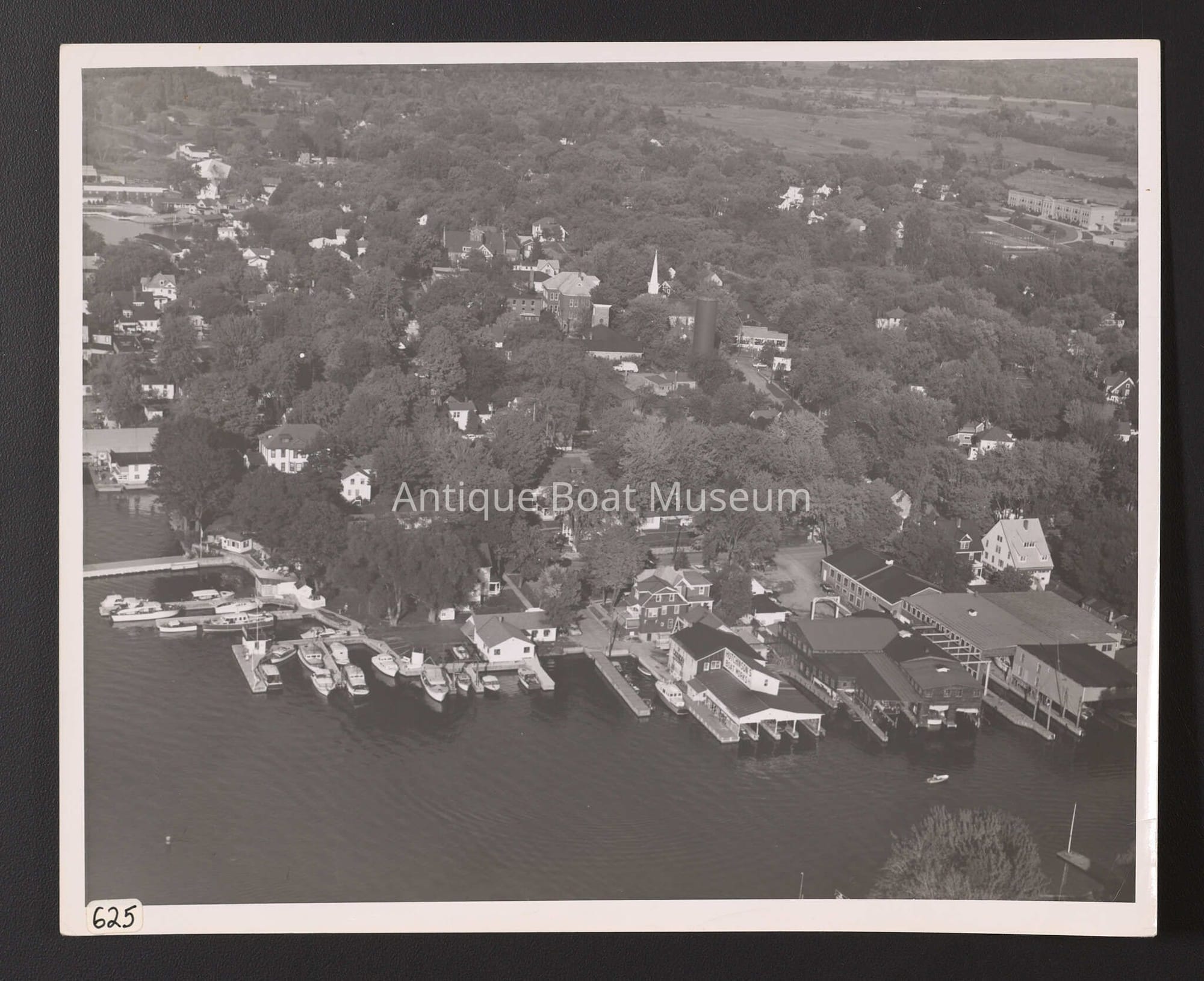
In the early morning hours of April 8, 1992, at 4:44 am, a catastrophic fire was discovered in the YP Shop, which was later determined to be arson. The fire was fueled by exploding gas tanks as the boats were stored with full tanks of gas to reduce condensation within the gas tanks themselves [26]. The fire was so hot that it melted the boats’ bronze propellers and the building’s metal frames that supported the roof [27]. Destroyed within the shop were woodworking machinery, and 33 antique and classic boats that included a 1909 30 foot Huck long deck runabout; two 22 foot Hutchinson Utilities; and the remaining fiberglas boats that included Lymans, Chris Crafts, and Pacemakers [28]. Also damaged in the fire was an adjacent boat house that housed three antique tour boats, which belonged to Uncle Sam Boat Tours and included the Uncle Sam, the Uncle Sam VI, and the Shamrock. To date, the arsonist has not been caught, though there continue to be several persons of interest. The ruins were demolished and a new metal building was constructed in 1993.
The YP boat construction had a huge impact on the Alexandria Bay economy by employing workers from the entire region, particularly throughout the winter months between 1941 and 1944. The men and their families took pride in what had been constructed, and everyone celebrated at the christenings of YP 78 and 79. Each of the men listed in Appendix A and those who had left, contributed to the war effort. While they didn’t serve in combat, their talents led to the construction of these 15 yard patrol boats that contributed to the training of the cadets at the U.S. Naval Academy, and they should be commended.
Appendix A
The following is a list of Hutchinson’s Boat Works Inc. employees who were involved with the YP construction. This list is based on documentation from Edwin A. Pelton, PE, who was General Manager at Hutchinson’s during construction of YPs. Other workers may have been employed.
Endnotes
- Thousand Island Sun, March 30, 1916.
- Cape Vincent Eagle, May 31, 1917.
- “Big Barge Launched At Alexandria Bay”, Ogdensburg Republican Journal, April 22, 1919.
- “Jefferson County”, Sandy Creek News, March 6, 1919. Unfortunately, no photographs remain of these craft. YC is the designation for coal barge. In checking for the official listing of the craft, it appears that 5 coal barrages may
have been constructed as Hutchinson Bros. are credited with YC-598. - “Hutchinson Brothers Receive Government Contract”, Thousand Island Sun, October 24, 1918.
- Thousand Island Sun, February 27, 1919.
- “Navy Barge Contract Completed by Hutchinson Brothers”, Thousand Island Sun, May 22, 1919.
- U.S. Government Contract 88242 - $172,800.00 with $14,797.93 (extras) for a total of $187,597.93. It is unknown the date of the original contract. Extras were handled on a case by case basis with US Navy, Bureau of
Ships. - Thousand Islands Sun, June 12, 1941.
- From the records of Edwin A. Pelton, collection of the author. Pelton was hired on June 20, 1942, to administer
the government contracts. When the work was completed as of October 1, 1944, his services were no longer required, and his employment was terminated. See Appendix A for a comprehensive listing of the workers within each team. - Interview with Bonnie Jean Laidlaw Wilkinson on February 14, 2024. She was the eldest granddaughter of James Herbert (Bert) Hutchinson.
- Ibid.
- Ibid.
- Letter from Ross C. Hudson, Jr. to the author dated March 15, 1992. Mr. Hudson later became the Commander, Watertown Power Squadron.
- George K. Houghton, “Building Yippies at the Thousand Islands”, Inland Seas, Vol. XXVIII, pp. 198.
- Ibid.
- Frink Sno-Plows, located at the eastern end of Riverside Drive, went out of business in ca. 2000. The site was declared as superfund site, remediated, and was later redeveloped as the 1000 Islands Harbor House Hotel.
- Houghton. The Houghton’s later purchased an island near Fisher’s Landing and owned a 26’ Hutchinson guide
boat named FIJI. - Interview with Bonnie Jean Laidlaw Wilkinson.
- “One of Two Training Ships is Launched in Alexandria Bay”, Watertown Daily Times, April 20, 1942.
- Memorandum dated May 25, 1943, from E.A. Pelton, PE, to Admiral Irish, Superintendent of Shipbuilding, United States Navy. Pelton graduated from Clarkson College, Potsdam, New York, and was an executive at Niagara Hudson Power Corporation, the precursor to Niagara Mohawk, which became National Grid plc in 2000.
- “New Contract Held by Firm”, Watertown Daily Times, May 7, 1942. Contract NXs-3139 designated these craft as C8184-4255, C8185-4255, C8186-4255, C8187-4255, and C8188-4255, with the C being the Government Classification for Buoy Boats.
- Ships Data, U. S. Naval Vessels, Vol. III (Washington D.C.: United States Government Printing Office, 1946), p. 562, and p. 564; Ordinance Vessel Register, United States Navy, March 25, 1945. For more of a complete description of the YP's see George K. Houghton, "Building Yippies in Thousand Islands," Inland Seas, Vol. XXVIII, pp. 196-201.
- Thousand Islands Sun, June 22, 1944.
- Hudson Letter.
- “Vintage Boats Burn”, Thousand Islands Sun, April 15, 1992.
- “Arsonist hits boatyard,” Soundings, June 1992, page 82.
- “Motive Crucial in Bay Arson,” Thousand Islands Sun, April 24, 1992.
By Bonnie Wilkinson Mark
Bonnie Wilkinson Mark is an architectural historian and the Great-Granddaughter of James Herbert (Bert) Hutchinson, founder and former president of Hutchinson's Boat Works Inc. She spent her early summers at Point Vivian and later in Fineview, Wellesley Island. She currently lives in Hershey, PA with her husband Charlie.
Comments:
I've always had an interest in the boat building business for the war efforts. What about the PT boats Our President John F Kennedy was in? Did they build those here? I've seen parts of articles they did, but it was kind of kept secret. Do you have any information on this? The article was well written and researched, thank you. Mary Politis former cottage owner