The Birdhouses of Thousand Island Park
by: Allison Burchell-Robinson
Thousand Island Park History
It all began back in 1875 when Reverend J.F. Dayan established the Thousand Island Park as a Methodist camp meeting ground, the "Chautauqua of the North." It is located in the northern part of Orleans, at the southwest end of Wellesley Island. It is surrounded by water on three sides and by the Wellesley Island State Park on the fourth. The 2020 census recorded the population was 96.
There are approximately 325 houses on the site and the community was listed as a national historic district on the National Register of Historic Places in 1982. The Community features distinctive Victorian and gingerbread-style wooden cottages, many of which evolved from early American tents.
Initially, the campers leased lots and set up their tents, which soon grew from a tent city to a permanent village of summer residents. They arrived daily, but never on a Sunday; they found most of the conveniences of the city, but never the vices. The summer camp colony expanded quickly and in 1883 The Thousand Island Park Hotel opened.
This dynamic summer community had a library, yacht club, golf course, croque courts, annual tennis tournaments, daily concerts, an art school, a printer, a needlecraft shop, fishing guides and their boats, a photographer, and Sunday services. The Camp, the forerunner of Thousand Island Park, was non-secretarian but its activities embraced religious thought and an inflexible observance of the rules of the Sabbath. Idle minds were the “devil’s workshop,” hence revival meetings, sermons, and public services were in abundance.
By 1890, the Park had a more relaxed policy on curfews, card playing, and alcohol, which led to a more resort character and the era of grand hotels. In addition to the Columbia Hotel, the Wellesley Hotel, and other “hotels” (which were more a collection of cottages), such as the Geneva, the Pratt House, and the Rochester, led to the height of resort life.
A major threat to these wooden resorts – fire – struck in 1890, when the Thousand Island Park Hotel burned down. The largest fire occurred in 1912, when the Columbian Hotel and many cottages were burned down.
During the mid-century, the Thousand Island Park declined, along with tourism and an increased number of unoccupied cottages. Only twelve businesses remained and most of the hotels and many of the cottages were torn down. By the mid-fifties, instead of the 600 cottages that had existed in the late 1800s, only 320 remained.
Twenty years later, the park’s Centennial Celebration was a catalyst for renewal and strength, where the architectural charm and setting were once again appreciated. It remains a peaceful haven where families come to enjoy natural beauty. The Centennial Year Celebration in 1976 inspired the formation of the Landmark Society and became the path that led the park to regain its architectural character and integrity.
The Thousand Island Park Corporation, formed in 1953, is now the governing body and community stewardship organization for Thousand Island Park. From the Park Corporation's website, the mission of the Thousand Island Park Corporation is:
to exercise community stewardship over our safe, secure, family-oriented environment, unique architectural heritage, and priceless riverfront resources; and
to protect, preserve, and enhance these assets, and ensure their long-term sustainability and accessibility for the enjoyment of all our present and future residents and visitors.
The park is essentially a pedestrian and electric golf cart community, meant to be strolled through at a leisurely pace, to wonder at and enjoy the unique and varied colorful cottages and buildings from the Victorian era.
Kathy Grajko's Contributions
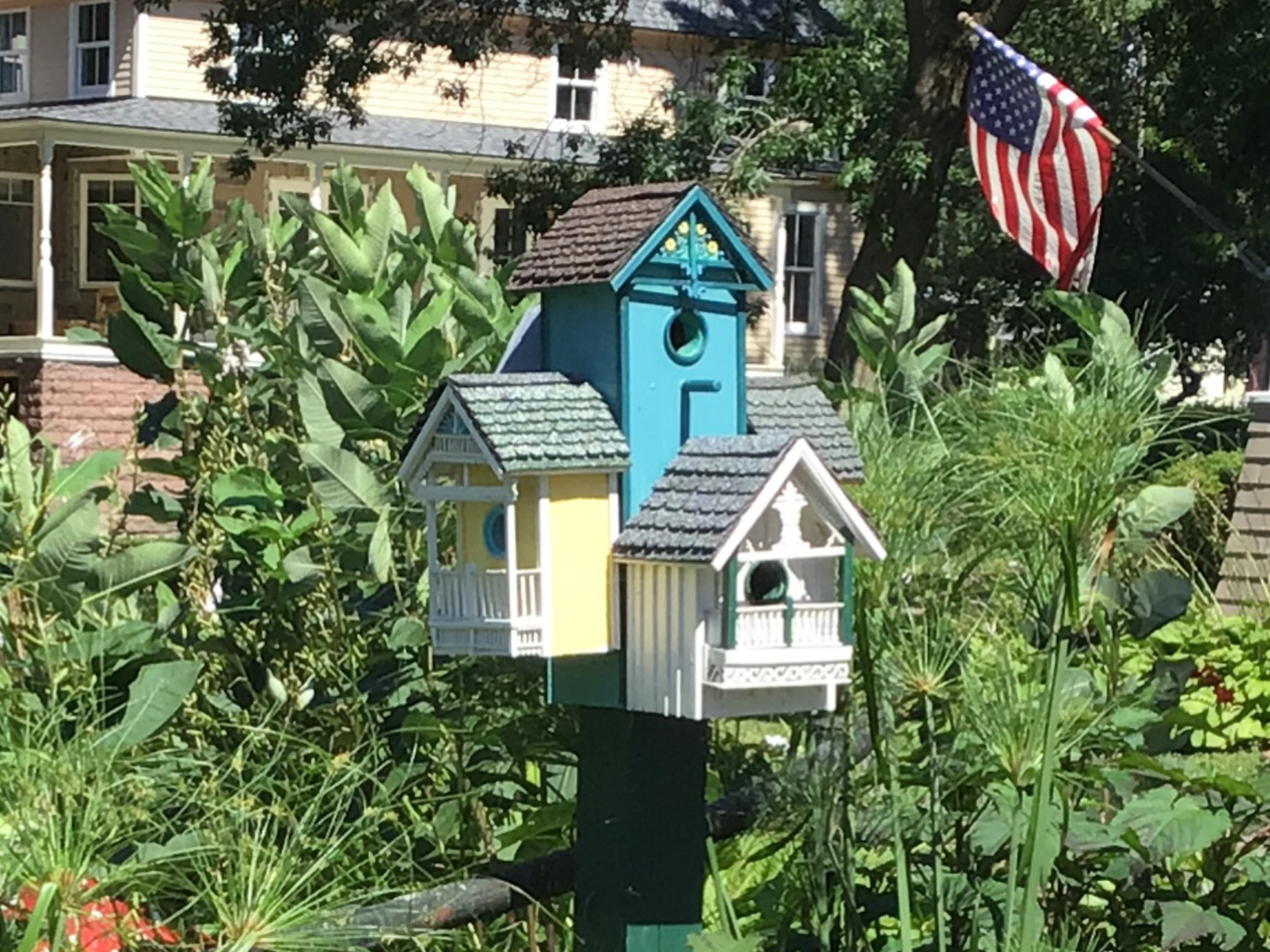
Capturing these and several other cottages and porches is Kathy Grajko who, with her husband Walt, has been a resident of Thousand Island Park for more than 40 years. It is she who has captured and captivated the many who have seen her exceptional, ornate, and miniscule birdhouses throughout the Park. Built entirely of bare wood, popsicle sticks, tongue depressors, glue, and love, these eleven birdhouses are found throughout the park, with more to come. Kathy says she usually builds one a year, devoting January and February to the task, but this coming year she may turn out two. She builds them, installs them, takes them down, and stores them for the winter months. Kathy is also the resident gardener of the park, with the help of a few others. But before you ask, no, the birdhouses are not for sale.
Kathy does not consider herself to be an artist, although I think there are those (many of them!), who would disagree. In her own words:
“Just to be clear, I do not consider myself an artist. The birdhouses celebrate the artistry of our century old cottages and our community’s efforts to preserve their originality. I am fortunate to centerpiece them in colorful, pollinator, bird friendly gardens throughout the Park.”
Tabernacle Birdhouse
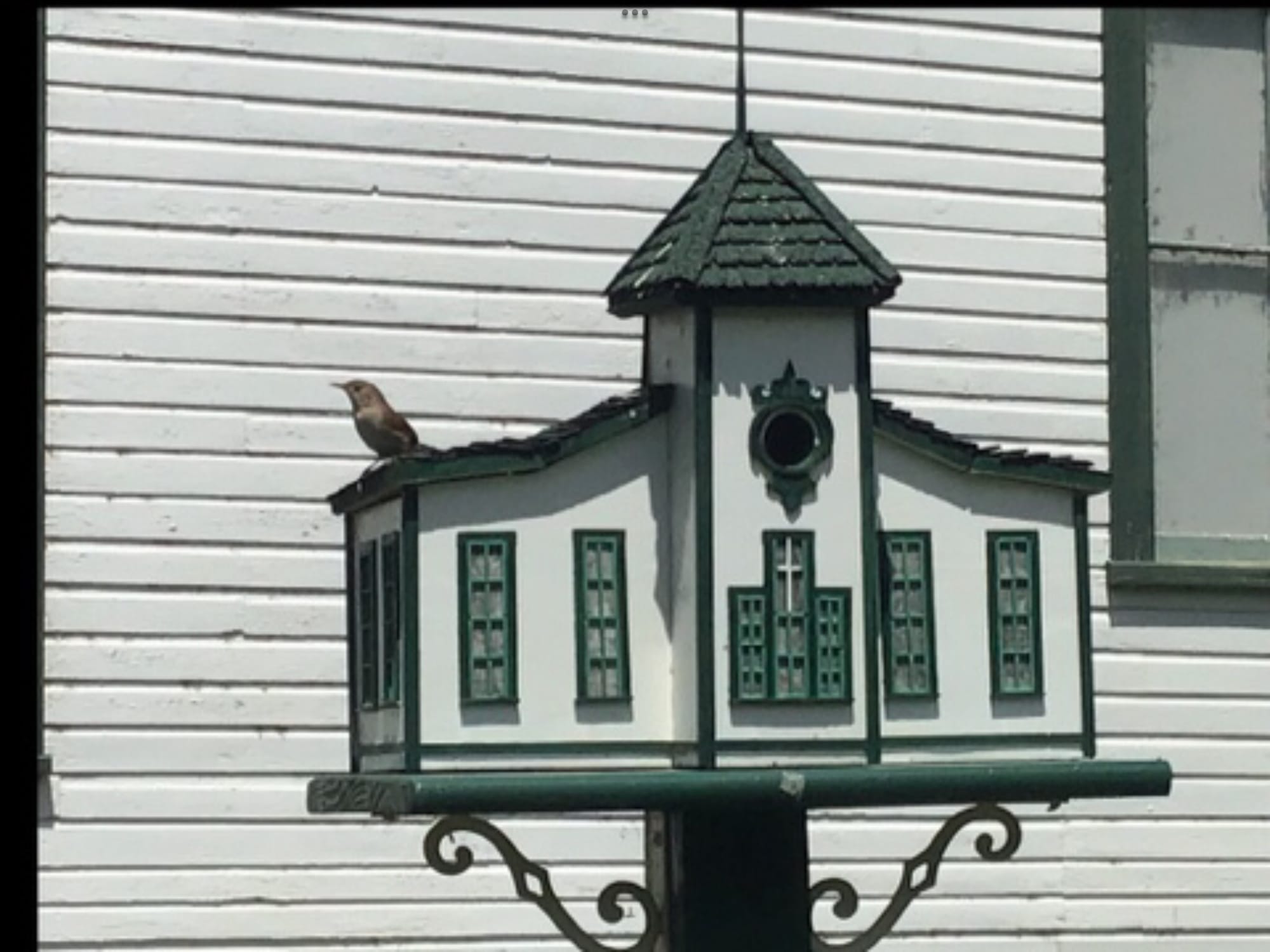
In the park’s beginning, all roads led to the Tabernacle, the center for socialization and participation in Chautauqua-like programs, which included religious studies, Sunday school institutes, outdoor recreation, travel lectures, and discussions of social reforms. The “Tabernacle Birdhouse” was built in 2021 as an historical version of the original building with its center tower.
The Pavilion
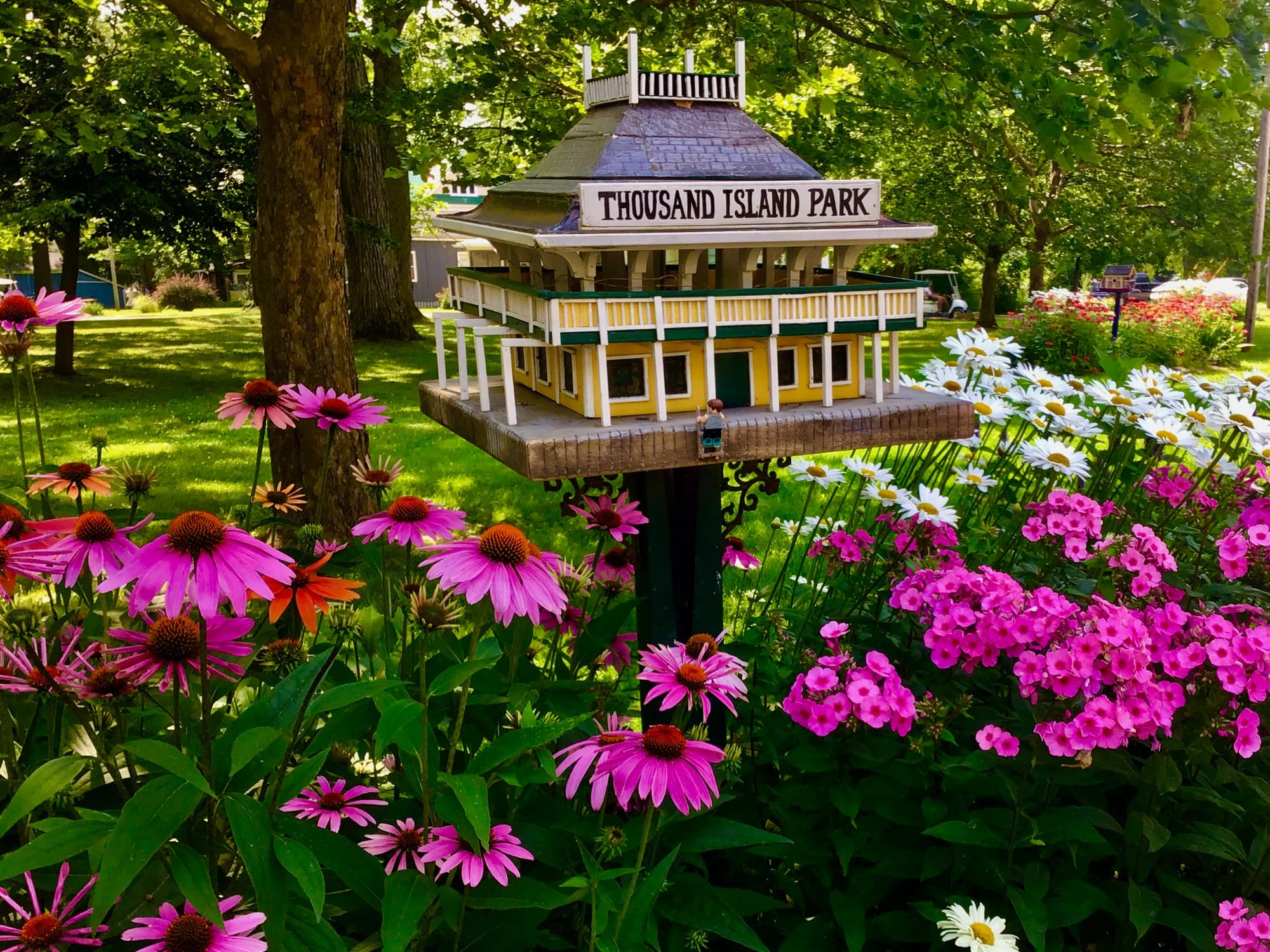
The Pavilion was the main entrance to this Methodist retreat at a time when all travel to Wellesley Island was by water. The larger Pavilion accommodated the landing of steamships, allowing hundreds of visitors. “The Pavilion Birdhouse” was built in 2026.
The Guzzle
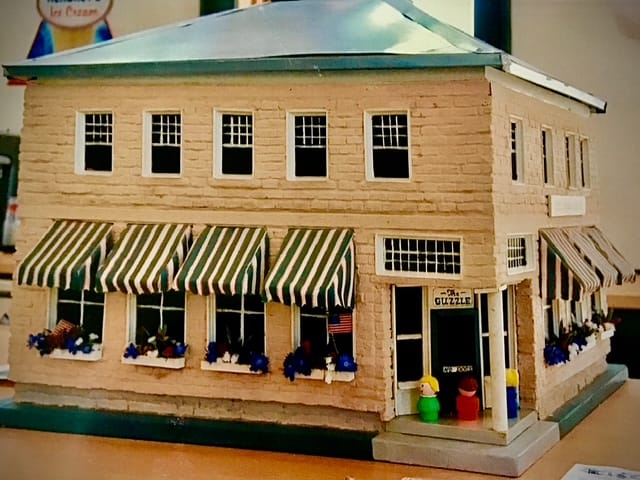
“The Guzzle” is a building in the center of the town. It once contained the Post Office, a grocery store, and the fire department, before it burned to the ground in 2014. It has since been rebuilt as a popular ice cream and soda fountain shop. Kathy say hers, built in 2015, is too big to be a birdhouse but it still evokes happy memories as it sits in the new Guzzle.
"Boathouse Pavillion Row"
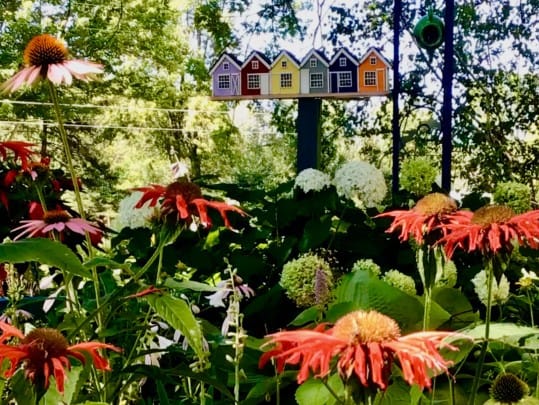
“Boathouse Pavilion Row,” built in 2017, was Kathy’s first attempt to add a colorful birdhouse to a garden, just to make people smile as they walked by. “Sweetheart Cottage” came in 2018 as an iconic, romantic, beautiful cottage, followed by the “Centennial” in 2019, a colorful, patriotic cottage built in 1876.
Iron Cottage, Big Lift, A Wren Cottage
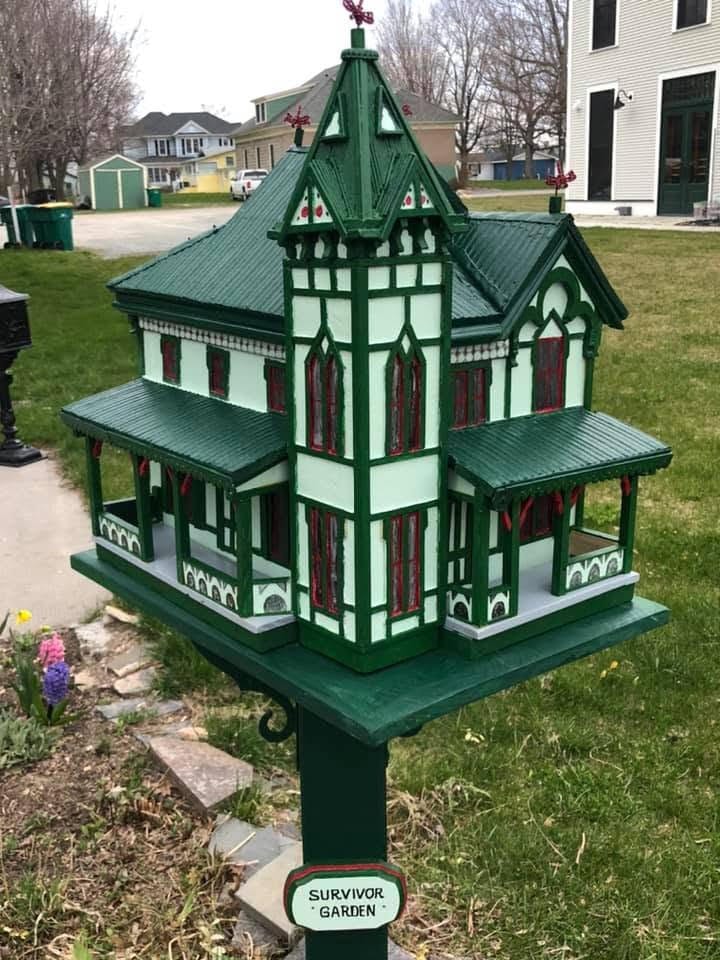
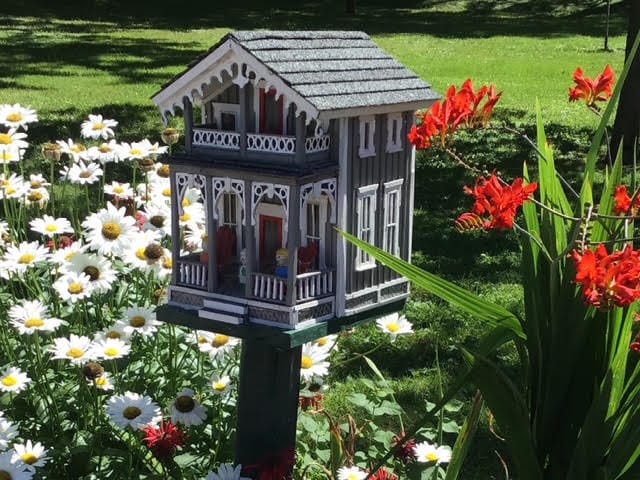
L: The Iron Cottage; M: Big Lift; R: A Wren Cottage. [Photos by Walt Grajko]
The summer of 2020 brough two more birdhouses to grace the Park. “Iron Cottage” survived the Columbian Hotel Fire in 1912 and its replica sits in the garden of flowers that survived the Guzzle fire in 2014. “A Wren Cottage” came in 2022. Wren was the name of a family who owned and operated a group of boarding houses in the park, known to this day as Wren cottages. This Wren cottage is located on Outlook Ave.
Big Lift Shipping Boat
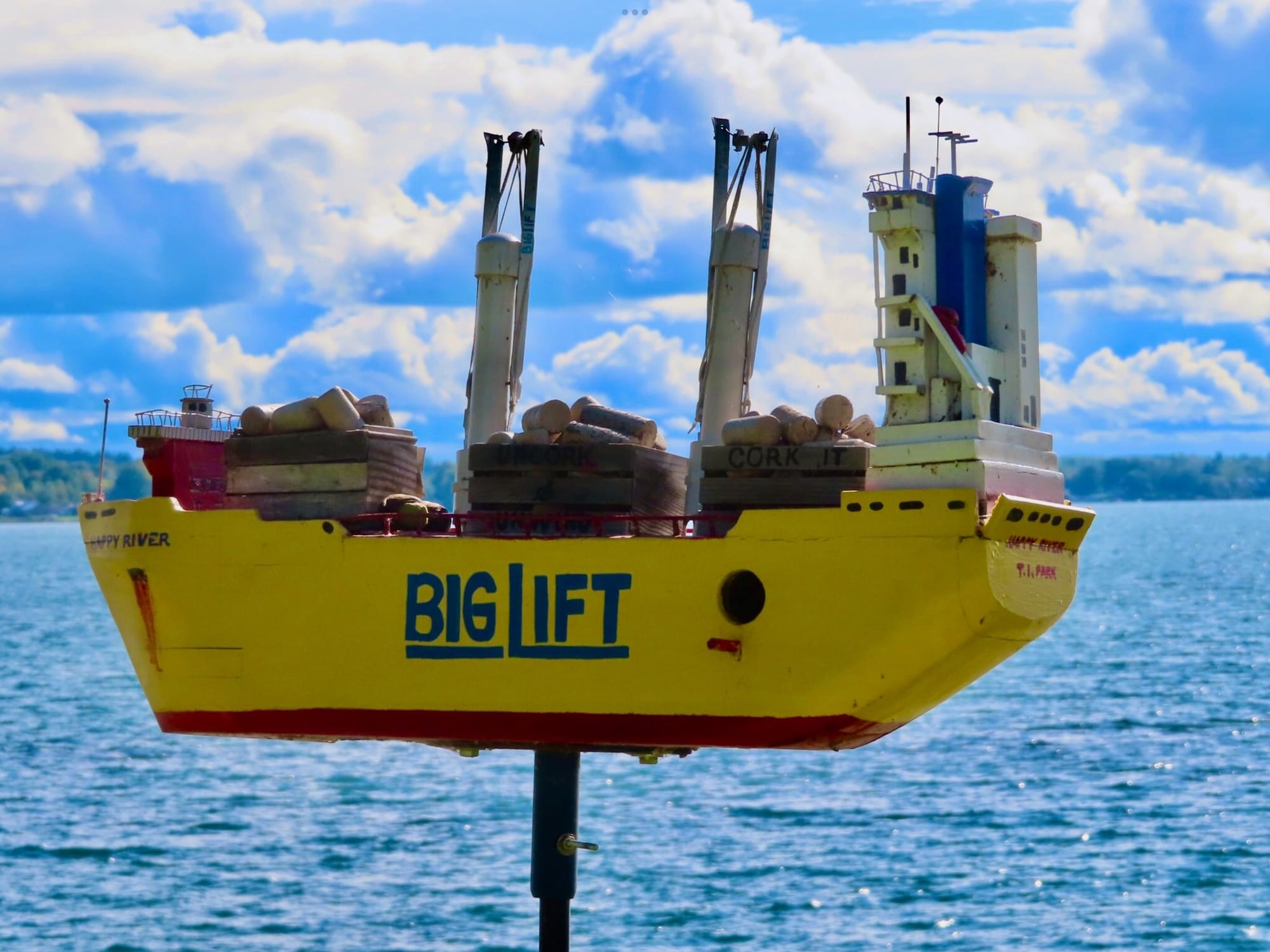
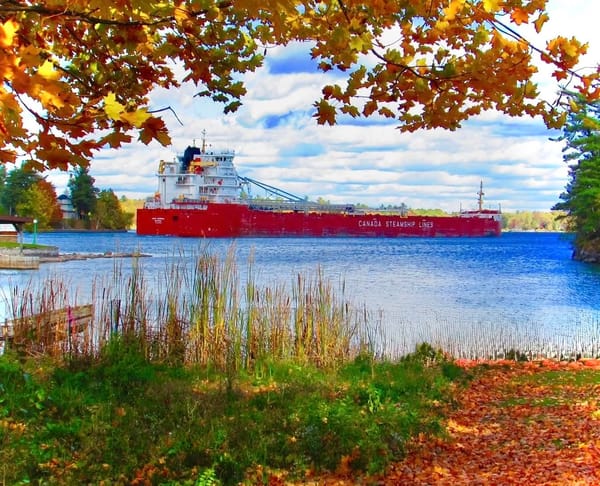
"Big Lift" has been seen often travelling through the St. Lawrence Seaway. This is the T.I. Park version.
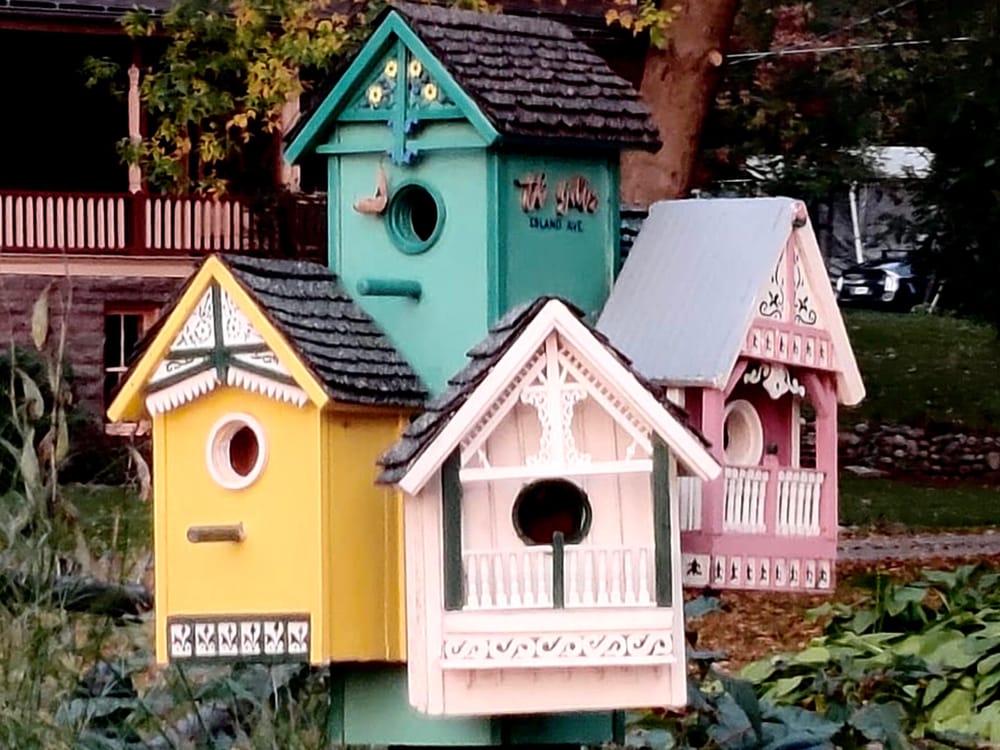
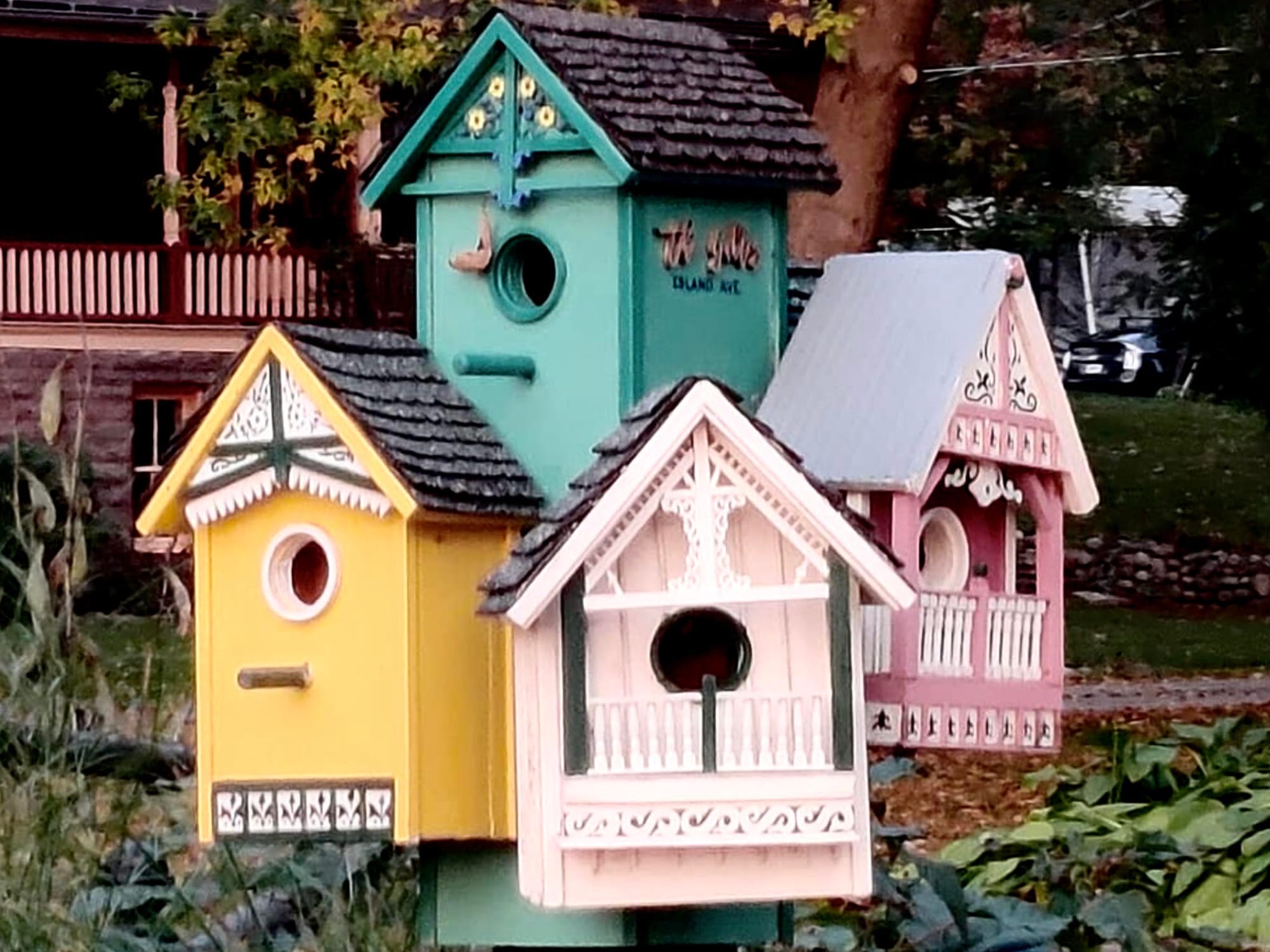
Tweet Me on the Porch and The Gables of Island Avenue
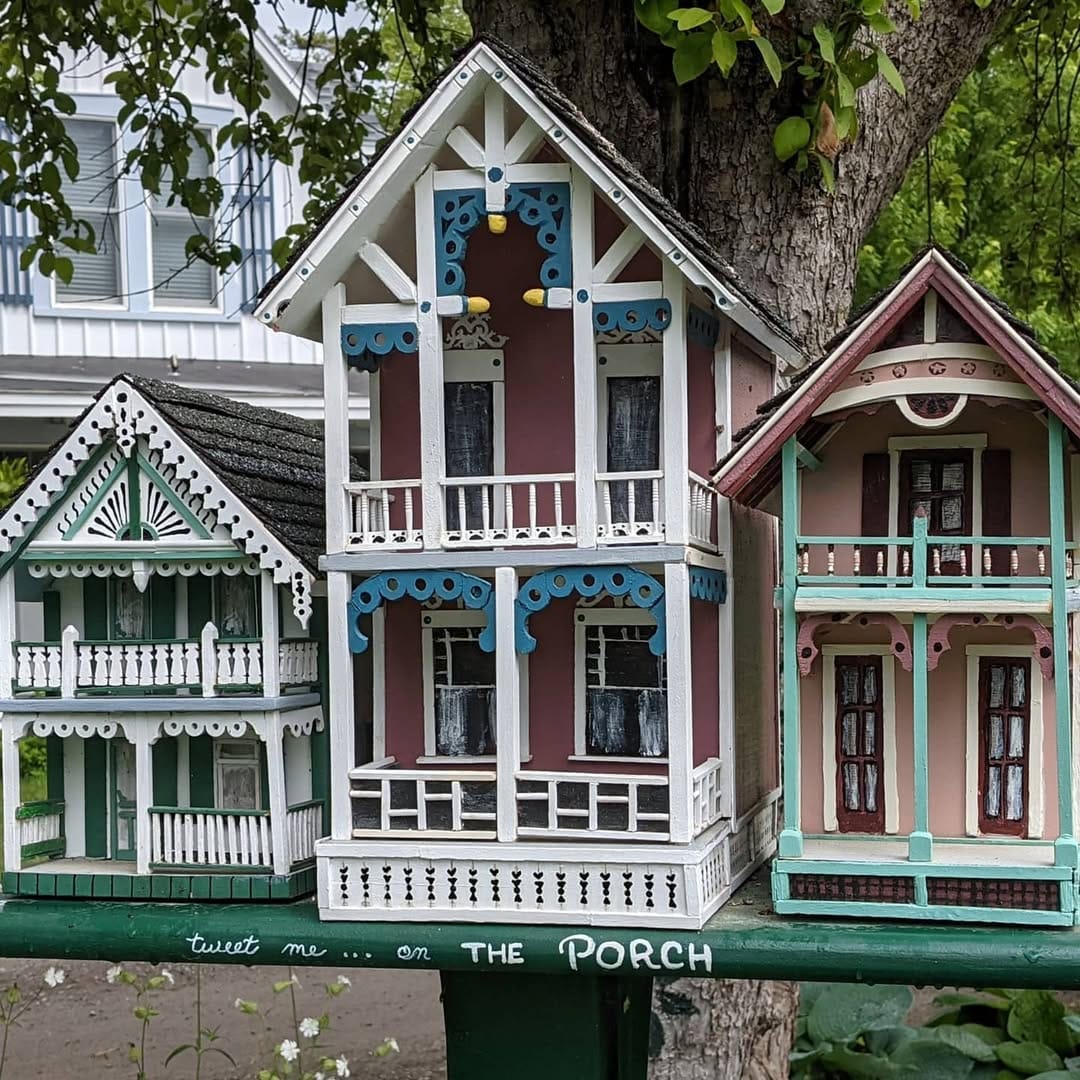
L: Tweet me on the Porch; R: The Gables of Island Avenue.
“Tweet Me on the Porch” arrived in 2023, as a result of the Landmark Society highlighting the beauty of the park’s porches. In 2024, the Landmark’s summer focus on the ornate gables throughout the park led to “The Gables of Island Avenue.”
The words describing the birdhouses are Kathy’s. Give yourself a treat and take a trip to Thousand Island Park and see if you can find all eleven. Take a look at these birdhouses up close as you stroll around, marveling at another wonderful, magical addition to this community, which has existed for more than 150 years.
With information from Thousand Island Park’s history on the park website: https://www.tiparkcorp.com/
In 1874, Methodist Episcopal minister John Heyl Vincent and businessman Lewis Miller organized the New York Chautauqua Assembly at a campsite on the shores of Chautauqua Lake in the state of New York.[5] Two years earlier, Vincent, editor of the Sunday School Journal, had begun to train Sunday school teachers in an outdoor summer school format. The gatherings grew in popularity. The organization Vincent and Miller founded later became known as the Chautauqua Institution. Many other independent Chautauquas were developed in a similar manner.[6]
Wikipedia: This page was last edited on 8 August 2026, at 16:41 (UTC).
By Allison Burchell-Robinson
Allison Burchell-Robinson's great grandfather built a cottage on Wyoming Island in 1910, and five generations have followed. She spent her childhood summers in the River, on the River, or by the River. Eventually, she and her husband moved to an island in the Ivy Lea Group. She happily returns every summer to enjoy, relax, and rejuvenate in an area her son refers to as the most beautiful place in the world. Today, Allison is fortunate to have moved to the North Country, and lives in Clayton. Many will recognize Allison from her many years of service to the Thousand Islands Association (TIA), serving as President, then Secretary/Treasurer, and until recently, editor of TIA's "River Talk." Allison joined the TI Life team last summer and you may see her contributions here. One that is often read is a tribute to John Peach.