The Things a Cottage Holds
by: Mark E. Russell
When people ask where I am going in the summer, I always give the same answer.
“Our family cottage in the Thousand Islands.”
Almost without fail, they ask, “Where is that?”
Being a bit long-winded by nature, I begin with the Great Lakes system. Lakes Michigan and Superior flow into Lake Huron, then Lake Erie, over Niagara Falls, into Lake Ontario, and finally into the St. Lawrence River, which flows to the Atlantic Ocean. Somewhere during the explanation, I pull out Google Maps and zoom in until a tiny green speck appears in the River’s Narrows.
“See there?” I say. “That is Idle Isle.”
Then comes the next question.
“Your family owns an island?”
“Yes, our family does,” I answer, then I inevitably say, “But it is not nearly as glamorous as it may sound.”
That is where the real explanation begins.
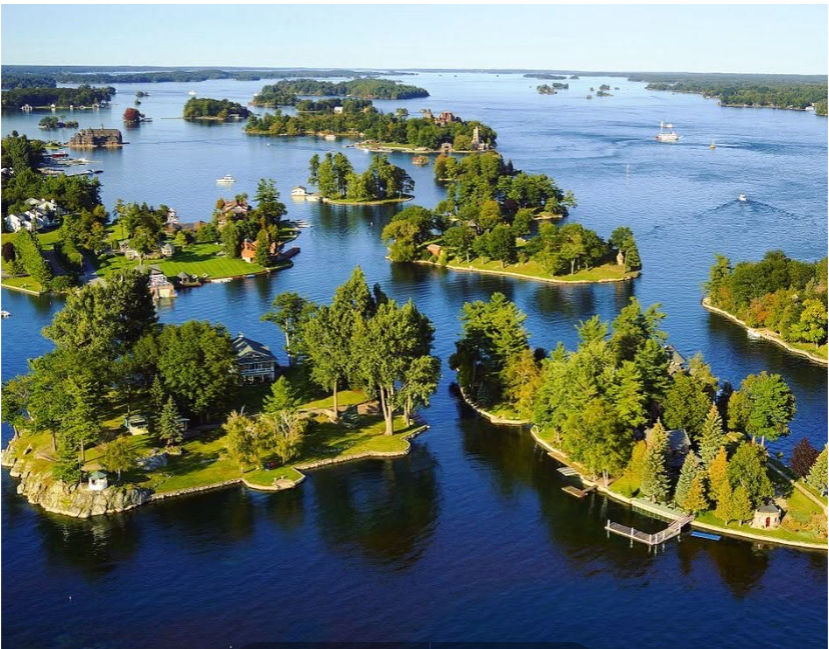
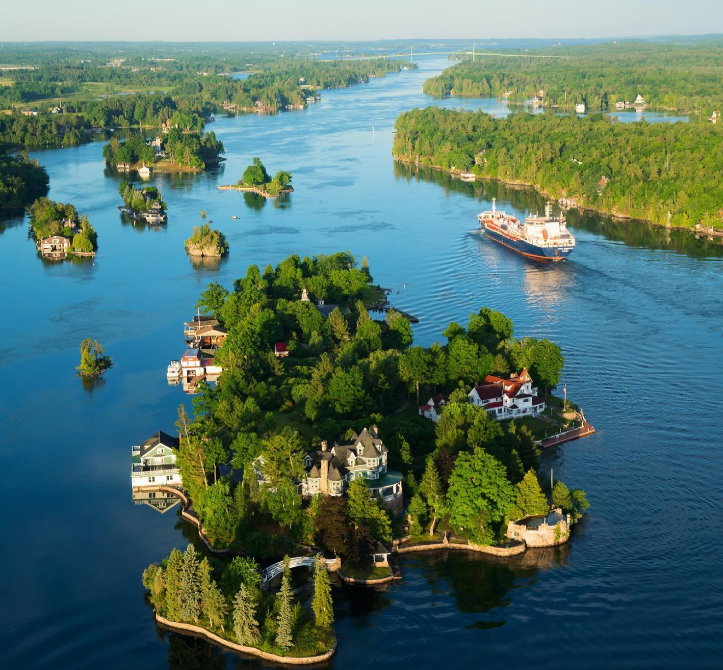
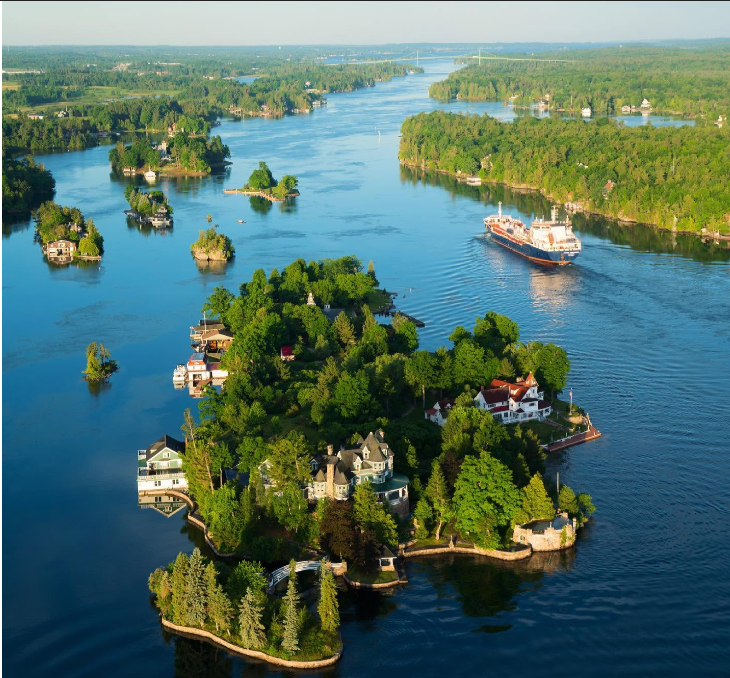
The mainland runs along both sides of the River. There are large islands with roads and communities. There are tiny islands no larger than a house and a few pine trees. Some islands are connected by bridges. Others sit close enough to shore that you can hear someone calling from a dock. Then there are islands farther out, where getting there requires a lot of planning, a boat, fuel, fair weather, and a little faith.
Idle Isle is very close to the mainland, but not connected to it. We reach it by what we call the barge, a small pontoon boat that carries people, groceries, dogs, all kinds of supplies, and nearly everything else island life requires.
All cottages are special in ways difficult to explain to anyone who has never lived in one.
They hold things. Not just furniture, but whole eras.
A maple table worn smooth by elbows. China plates with tiny blue flowers, one or two chipped, but never discarded. Brass hooks polished by decades of raincoats. Old oars above a doorway. Dusty books slightly swollen from damp summers. Wicker chairs that creak in the same place every time someone leans back.
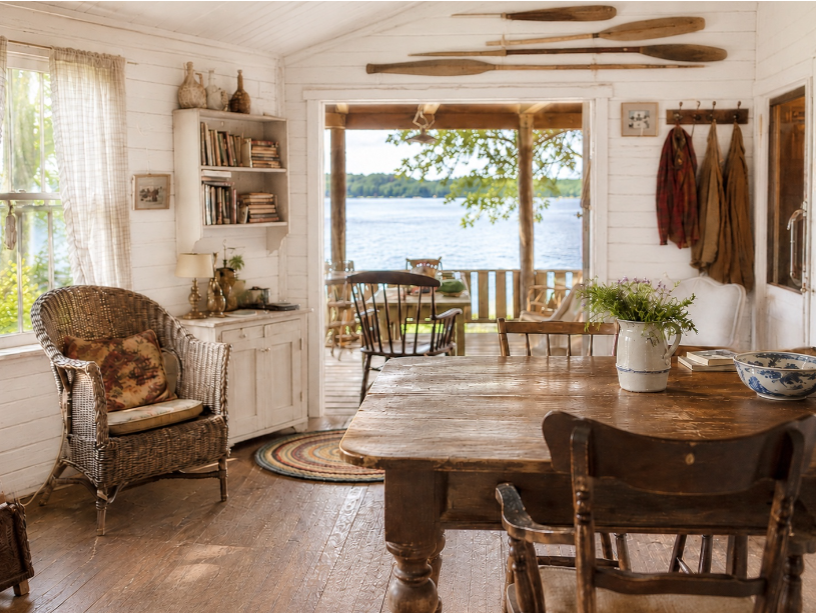
The drawers are full of mismatched utensils, bottle openers from restaurants that vanished long ago, decks of worn cards missing a queen, and keys no one can identify and no one will throw away, in case they one day figure out what they unlock.
Even the smells seem inherited. Pine walls warmed by afternoon sun. Screened porches after rain. Old wood, coffee, River water, and the cool scent of granite the cottages are built upon.
In many cottages, all the things inside and out remain when the property changes hands. A new family does not simply buy a place. They inherit the evidence of other lives, sometimes more than a century of them.
I have often wondered why sellers leave it all behind.
Perhaps those things would only end up in some lonely storage unit somewhere, anywhere, unseen and separated from the place that always gave them meaning. Cottage owners seem to understand this. It is a common language among them.
But I think there is more to it.
Families who sell these cottages are often particular about who comes next. They are not only selling property. They are placing something into another family’s care. They want to believe the old table will still gather people around it. That children will still sleep beneath the same rafters and listen to the same waves against the rocks. They want to know the place will be loved in a way they recognize, in a way that feels familiar.
And so cottages move from owner to owner, family to family, generation to generation, carrying parts of everyone and everything with them.
River life asks something of the people who love it. The same wind reaches every cottage and home, no matter where it sits. The same storms arrive. The same winters work their way into boards, roofs, docks, and stone. Everyone knows the rituals of opening and closing, repairing what the weather has loosened, and preserving places that often demand more than anyone expected. Everyone knows the old tables, the worn steps, the screened porches, and the generations of family stories.
Island life is not more meaningful than any other place on the River. It is simply that the water adds another layer to almost everything.
On the mainland, a car or delivery truck can usually reach the cottage. On an island, every convenience becomes a process.
Every task has one more step. Every project begins with the same question. “How are we going to get it over there?"
There is an unwritten rule that when one thing comes onto the island, another thing must leave. Beds, tables, couches, refrigerators, all of them must cross the water somehow. Nothing can be moved without first considering weight, dock height, boat width, wind direction, and who is strong enough to help.
Anyone who knows the River may smile at that, knowing they have their own long list of River complications. They may not have to move a refrigerator by boat, but they understand firsthand that nothing along the River is ever quite as simple as it first appears.
And yet, the difficulty, for all of us, is a part of what gives the River its meaning.
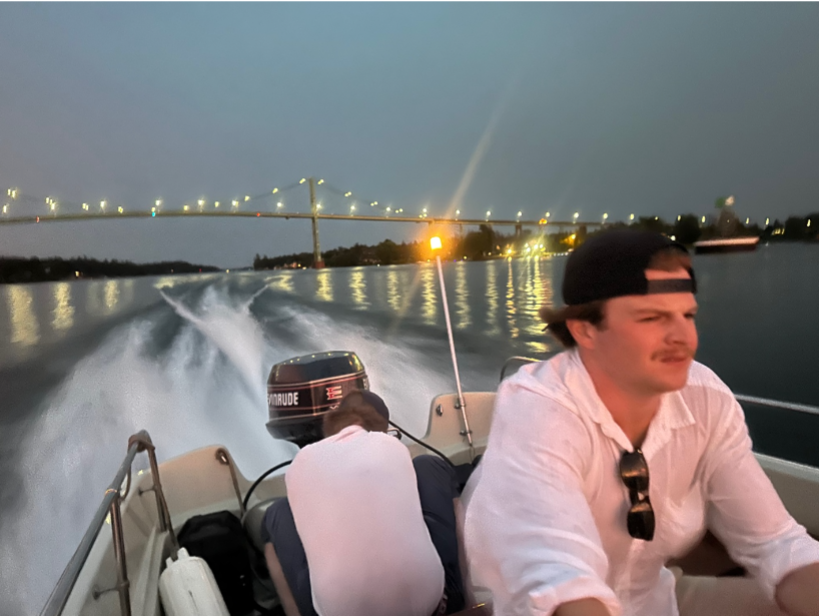
It is in our places that small moments become family stories. A storm rolling across the River. Dinner carried to the porch. Wet bathing suits hanging from hooks. Children running barefoot over old boards. Someone fixing a screen door while someone else holds the screws. A boat arriving late, its lights moving through the deep, dark night.
Cottage life slows things just enough for you to notice them, or at least to try.
You can spend an afternoon replacing a board or tightening a cleat and still feel you have moved the place forward.
I have come to believe that is what stewardship looks like.
Not dramatic change. Not making the cottage new. Just caring for what is already there. Preserving the shape of things. Leaving them a little stronger and still recognizable to the people who loved them before you.
When I return home from the River, I am usually tired from all the work it asks of us, but somehow restored by having done it.
I sit in my favorite chair and listen to the crickets outside. I think about everyone who has carried, repaired, protected, and loved this remarkable place through the generations.
Then, somewhere between the crickets and the quiet, I ask the same question.
How did I ever get so lucky to find the River? Or perhaps the River found me.
By Mark E. Russell
Mark Russell is a graduate of St. Lawrence University and Western New England University School of Law. He has brought legal precision and narrative clarity to every venture he has led, from early-stage companies and global agencies to CatalystXL, the software-as-a-service company he founded to simplify how organizations communicate, operate, and scale. Russell has written for several publications, including Detroit’s "TBD Magazine". He also contributed to "Mastering Communication at Work" and contributed to two chapters for the "New York Times" bestseller "Spend Shift".
He lives in Grosse Pointe Farms, Michigan, with his wife, Amy Saunders Russell. They have three River Rat children: Sam and Trey of Grosse Pointe Farms, and Emma, who lives in Colorado with her husband, Jarrod, and their son, Ronan, the Russell’s first grandchild. Mark and Amy divide their time between their home on Lake St. Clair in Grosse Pointe Farms, and Idle Isle, their summer island retreat on the St. Lawrence River across from Point Vivian.
Comments:
Judy Keeler wrote - What a delightful way to begin a quiet Friday morning! So appreciate the writing and the sentiment. Thank you.
John swift wrote - There is something very special about everything that Mark Russell writes. I look forward to his next one.
"I just wanted to drop a note to say how much I loved your essay "The Things a Cottage Holds". I have sent it to about a dozen people and they all reported back how much it resonated and bought a tear to their eye. Oh and as you might have guessed, I am a long-time River resident. My family has been on Round Island for at least 5 generations and we know a thing or two about cottage life! Best, Jen O’Neill”
What a delightful way to begin a quiet Friday morning! So appreciate the writing and the sentiment. Thank you. Judy Keeler
What a lovely way to to start my morning as we prepare for our annual trip to “family cottage. In the Thousand Islands”. I particularly enjoyed the comment about the creak in the wicker chairs which mimic my ancient bones as I settle in for another glorious sunset. Thank you Mark Russell. Spot on! Beverly Winner Kinkade, Wyoming Island