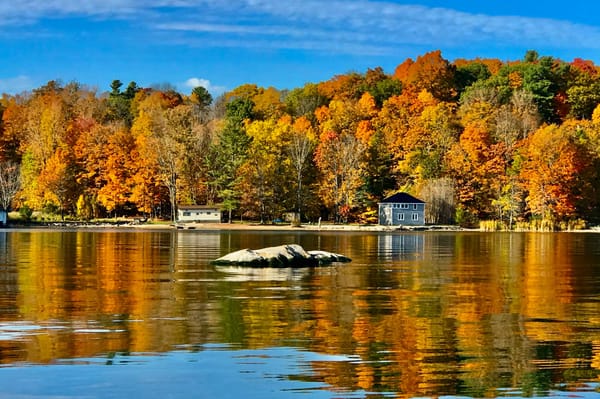
My Favourite Season of the Year
by: Tom King
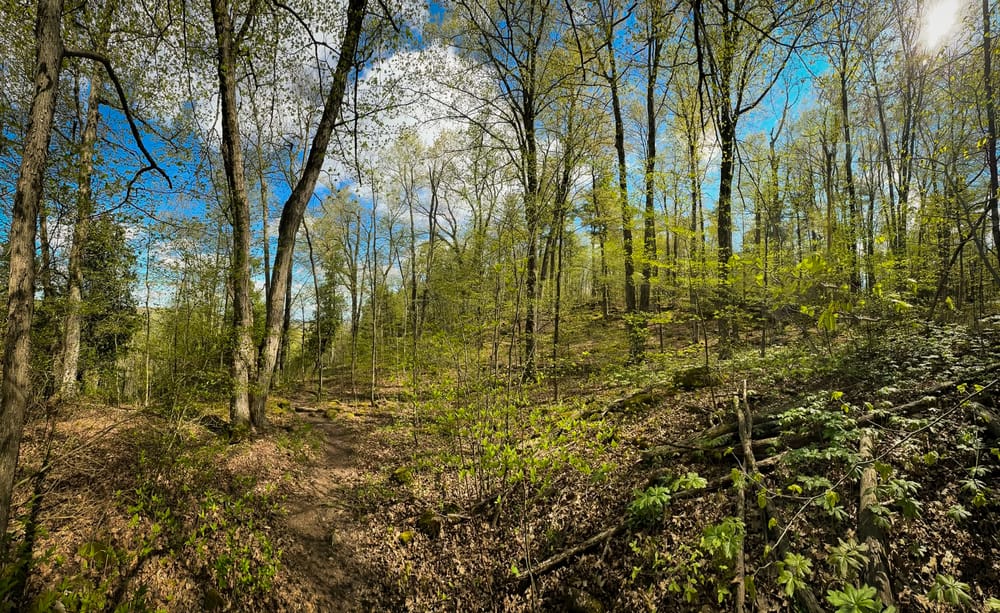
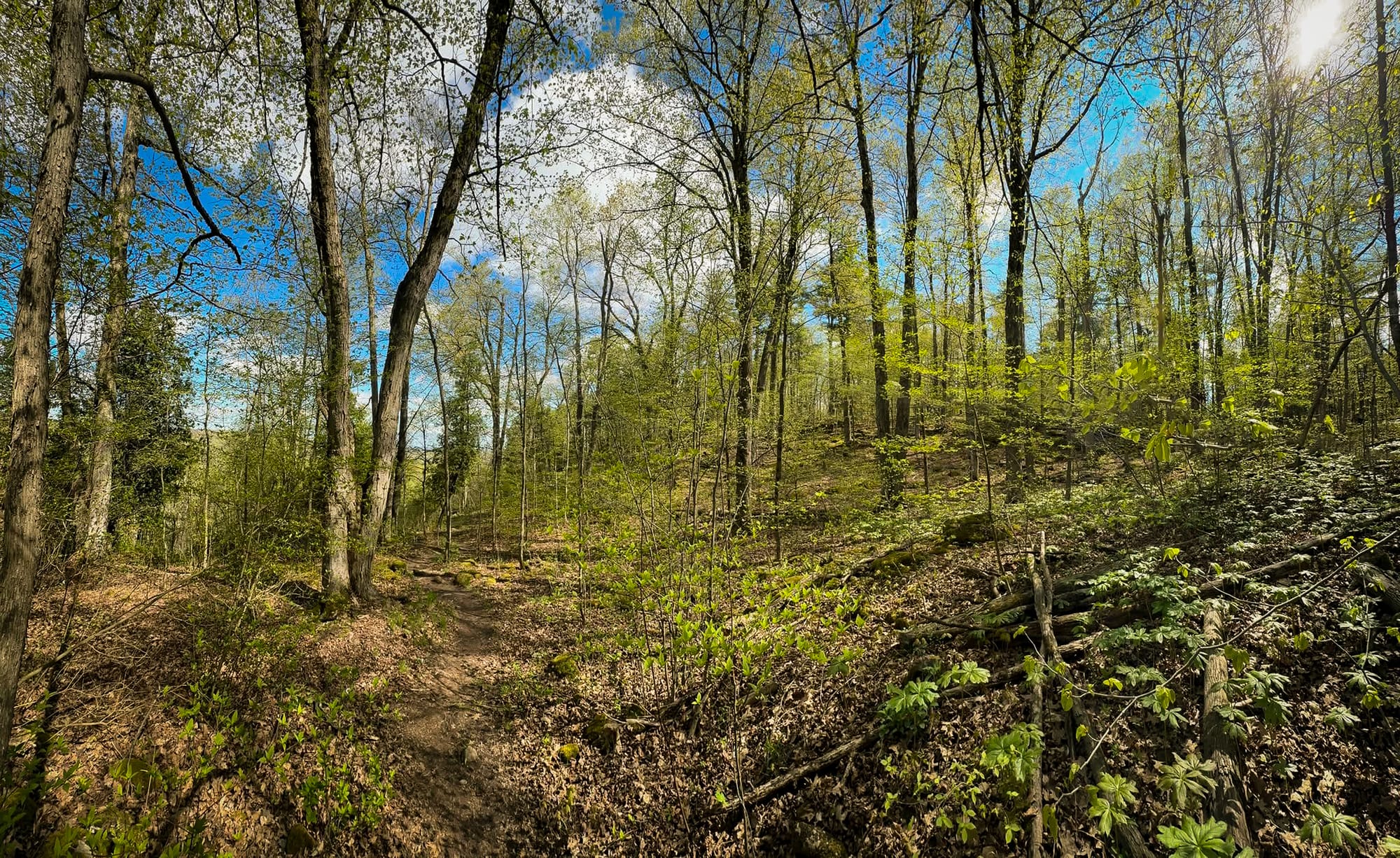
Springtime is when Mother Nature digs deep into her storage closet and brings out a very special palette of colours that she uses to paint the awakening landscape with just about every colour of the rainbow, and more. As the sun gradually climbs higher in the sky, and the days become warmer, the woods take on that beautiful light shade of green of the new foliage and the forest floor comes to life as the spring wildflowers start to grow and bloom. This is my favourite time of the year to hike in the woods, along with my trusty camera, to experience, and capture, these wonders of nature.
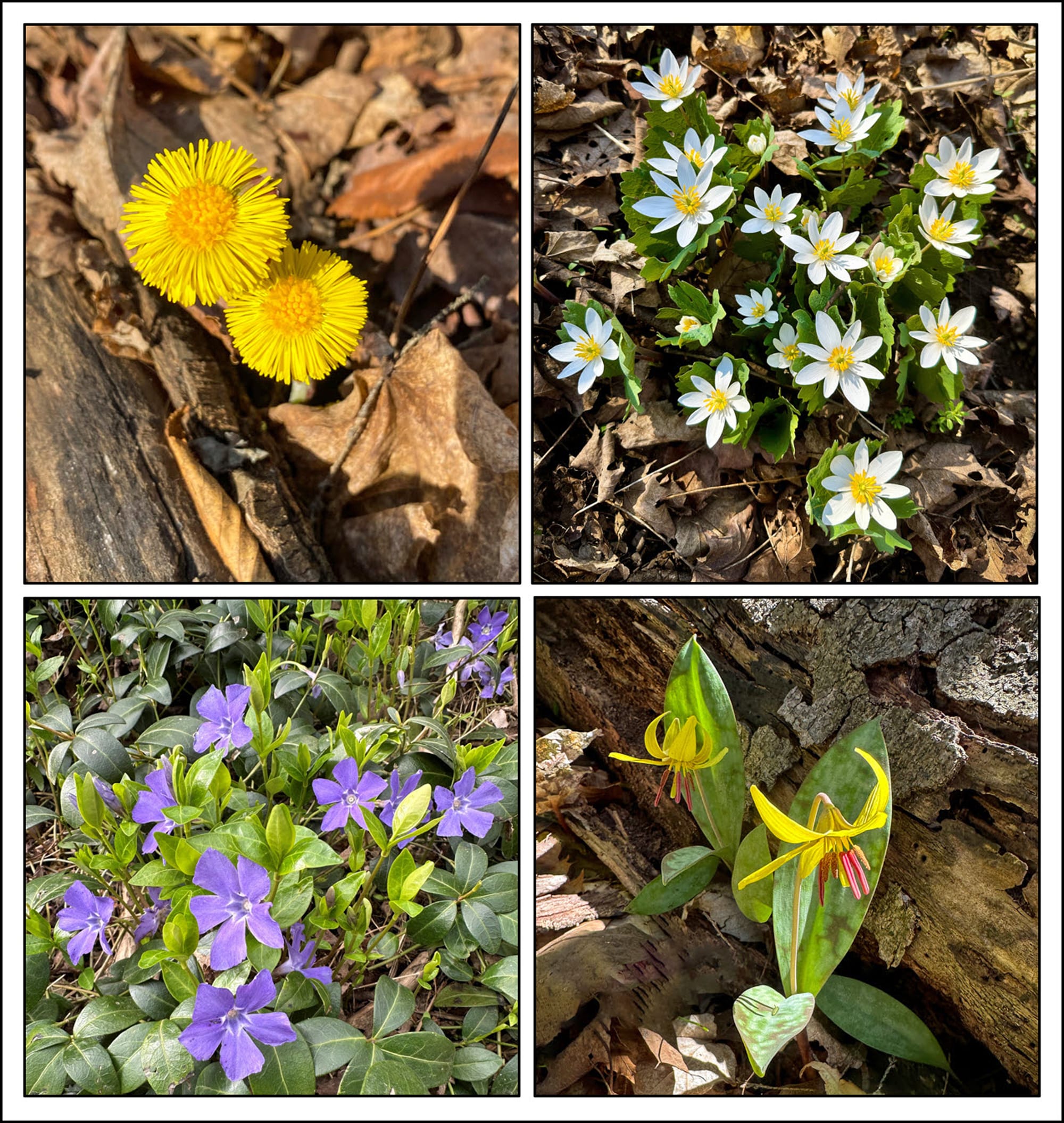
Tucked away in sheltered nooks and crannies, warmed by the sun, the little yellow Coltsfoot plants (Tussilago farfara) are usually the first flowers that I spot each year. Their numbers are definitely increasing, and I have read recent reports that this particular plant is now considered invasive in some regions. Among the other early bloomers are the Bloodroot (Sanguinaria canadensis), named because of their orangey-red sap, the Yellow Trout Lily (Erythronium americanum), or as I always knew them, Dog’s Tooth Violets, and the Periwinkle (Vinca minor), also commonly known as Vinca.
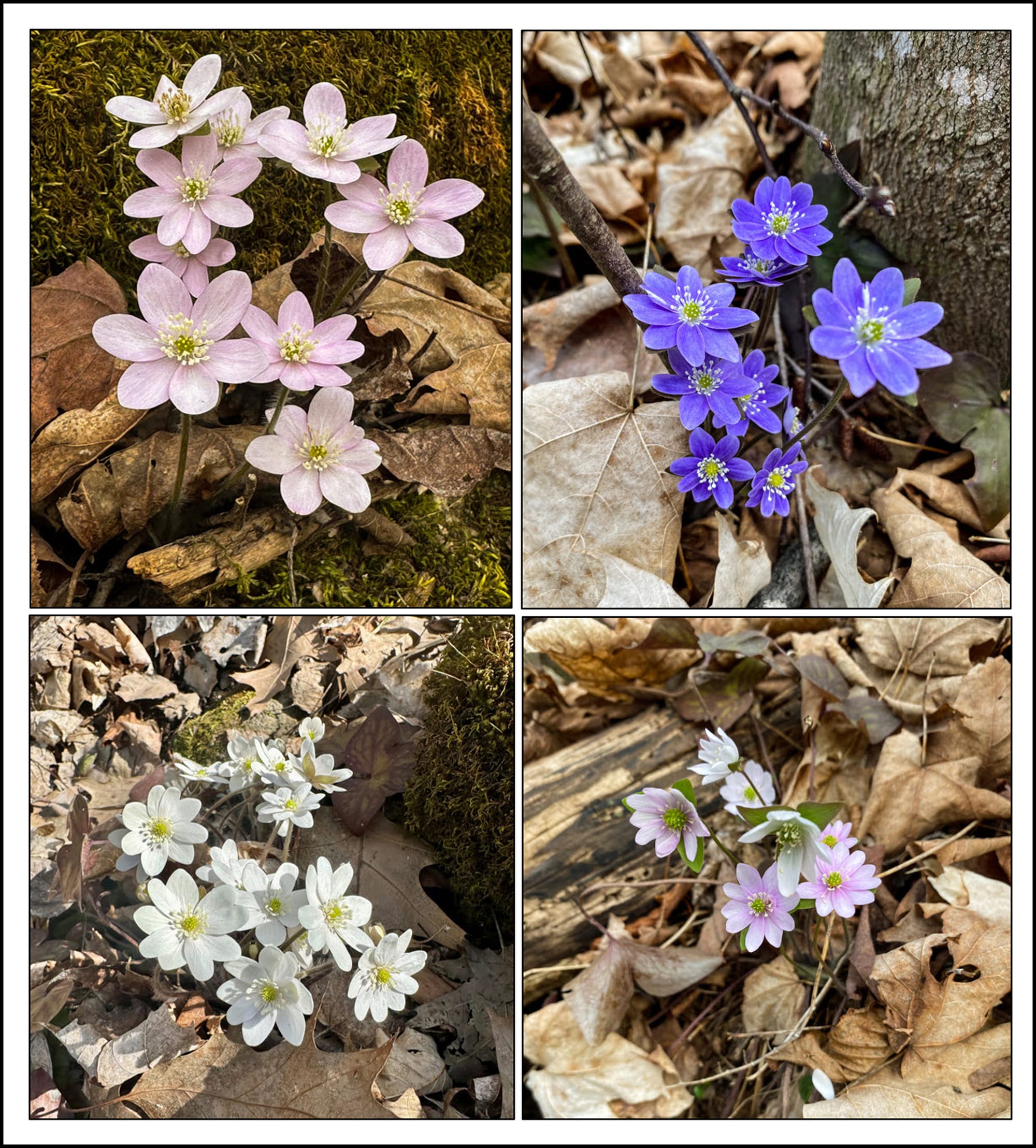
Another in the first crop of spring wildflowers is the Hepatica (Hepatica americana), also known as Liverwort. These can be spotted with a variety of colours of flowers, ranging from basic white to a dark blue, with pink and lavender varieties as well. My personal favourite is a pink and white hybrid flower that looks very elegant. Hepaticas are part of the Buttercup family and are widely distributed throughout the world. They are pollinated mainly by bees and are a welcome food source for many winged insects.
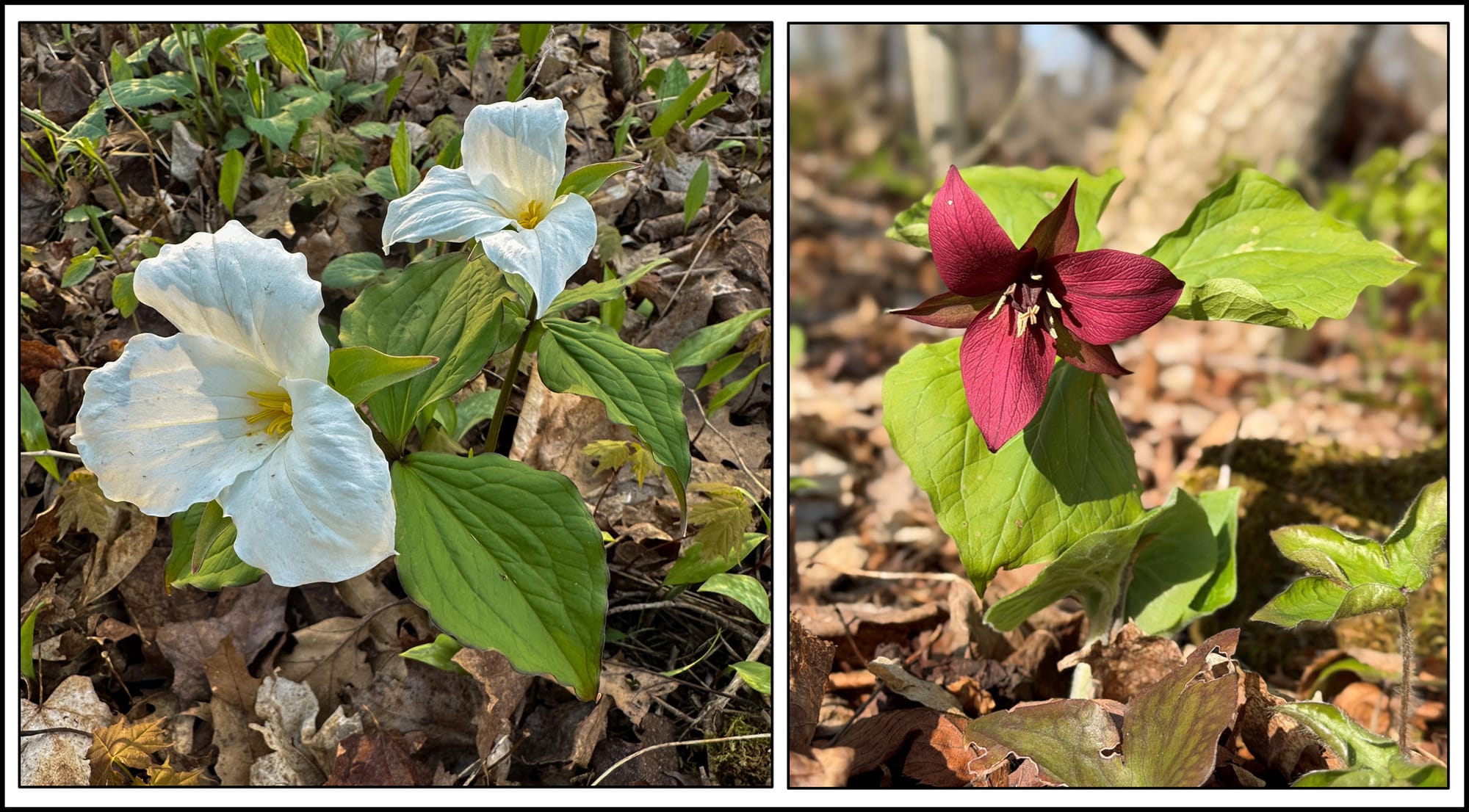
Perhaps the most iconic spring flower is the Trillium, which comes in both white and red varieties. The White Trillium (Trillium grandiflorum) was adopted as the official flower of the Province of Ontario in 1937 and is easily recognizable in the woods. White Trilliums can range in size from quite petite to “giant.” The Red Trillium (Trillium erectum) isn’t quite as common as the white variety, but it also thrives in a deciduous or mixed forest environment. Other names for the red flowered Trillium include Wake Robin and Stinking Benjamin.
Trilliums grow from an underground rhizome and are classified as perennials. Interestingly, their seeds are covered in a sweet, sticky substance, which is attractive to ants who disperse the seeds into their underground habitats where they germinate. Like most of the early spring flowers, Trilliums are considered ephemeral plants, which means that they have a very short life cycle and only grow during brief periods when conditions are favourable, typically before the forest canopy fills out and blocks the sunshine from reaching the ground. There are a total of five different varieties of trilliums found in this region – White Trillium, Red Trillium, Painted Trillium, Drooping Trillium, and Nodding Trillium.
The Drooping Trillium is in serious decline, and efforts are being made to save it before it becomes extinct. The fact that Trilliums are a favourite food of deer means that their populations are affected in areas with large numbers of these creatures.
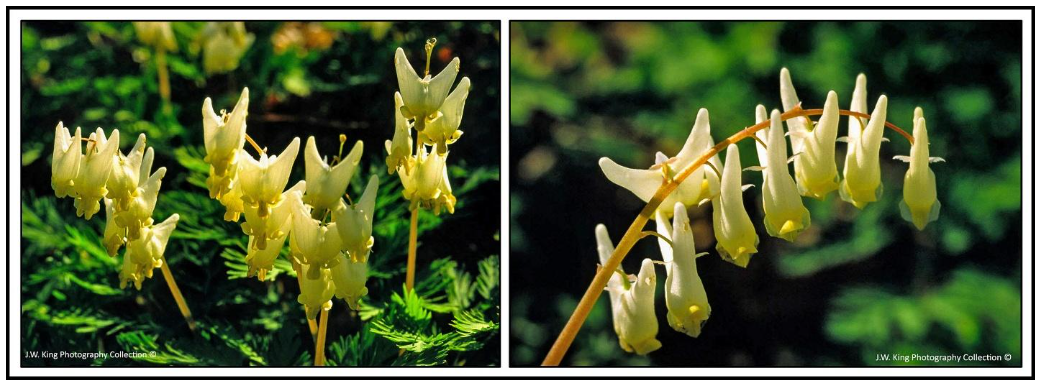
A spring flower that holds special memories for me is the Dutchman’s Breeches (Dicentra cucullaria). These plants grew profusely behind our old family home in Gananoque and were one of my father’s frequent subject matters for his amateur photography hobby.
The images of the Dutchman’s Breeches that I included in this article were scanned from a couple of my dad’s 35 mm slides, which are close to fifty years old. The Dutchman’s Breeches are another plant whose seeds are spread by ants, a process known as myrmecochory. They were given their rather quirky name because of their resemblance to a pair of pants, or breeches, hanging upside down. A member of the Poppy family, the Dutchman’s Breeches is also related to the popular garden plant, the Bleeding Heart.
One of the intriguing things about hiking in the woods in the springtime is discovering what’s new since the last time that you were there. Many plants, given the right conditions, can poke through the covering of leaves and open to a full blossom in a matter of a few days. As a photographer, it is always a challenge to time your visits to capture all the different species of plants at their peak.
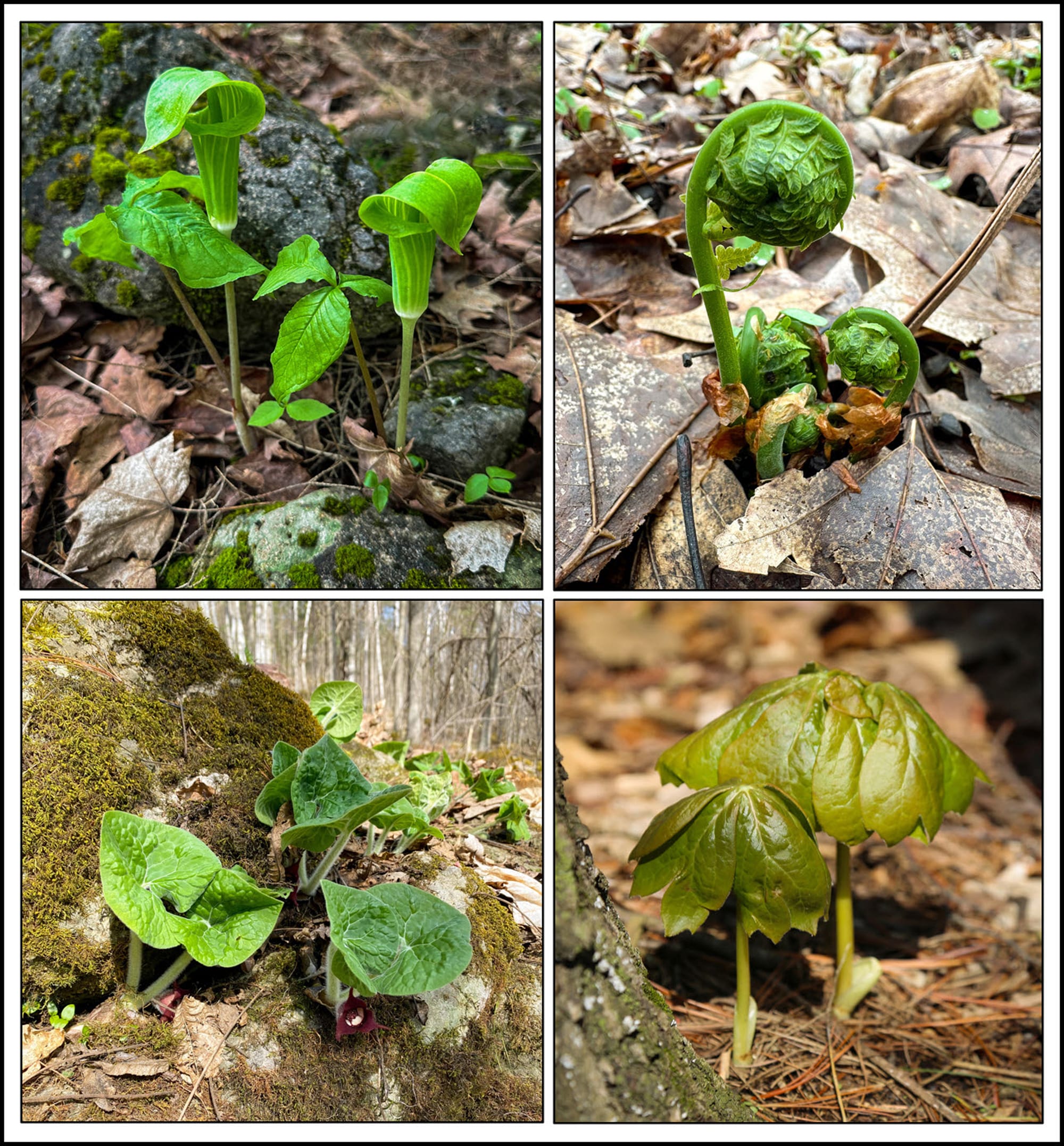
Some of the more interesting plants that I look forward to spotting each year include the Jack-in-the-pulpit (Arisaema triphyllum), Fiddleheads, not technically a flower, but interesting nonetheless, Mayapples (Podophyllum peltatum), and Canadian Wild Ginger (Asarum canadense).
Of these, the Jack-in-the-pulpit is probably the most unique, with its flowers hidden inside a spathe, or “pulpit”. There are several varieties of this type of plant in the region, with colours of the spathe ranging from pure green to a green and purple stripe. In the fall, the Jack-in-the-pulpit produces vibrant red berries that are easily spotted on the forest floor.
A true harbinger of spring is the sprouting of the native ferns that can be found in the woodlands. The initial sprout that pokes through the layer of leaves on the ground is a tightly packed bundle of fronds that will eventually unfurl to create the fern’s foliage. Before they unfurl, the new fern growth looks like a fiddlehead, and that’s where their name comes from. Fiddleheads are considered a delicacy by many people who will collect them in the springtime for consumption.
Mayapples are another plant that starts as a tightly packed chute as it first starts to sprout. Eventually, a large, umbrella-like leaf structure will open up, and a single white flower will grow under it. This flower will mature into a seed pod that is referred to as the “apple.” While most of the parts of the Mayapple are considered toxic, some people do eat the ripe apples, usually in the form of a jelly. Because Mayapples grow from rhizomes that spread underground and produce multiple plants, it often forms dense colonies.
The Canadian Wild Ginger prefers to grow in the shady understory of the forest and is usually found in fairly large patches, although I have seen smaller groupings of this plant growing out of rock fissures. Once considered as a source of medicinal products by native Americans, modern research has found that consumption of this plant may be harmful due to the carcinogenic elements they contain. The dark purple, three-leafed flower, growing on hairy stems, make the Wild Ginger plant visually quite interesting.
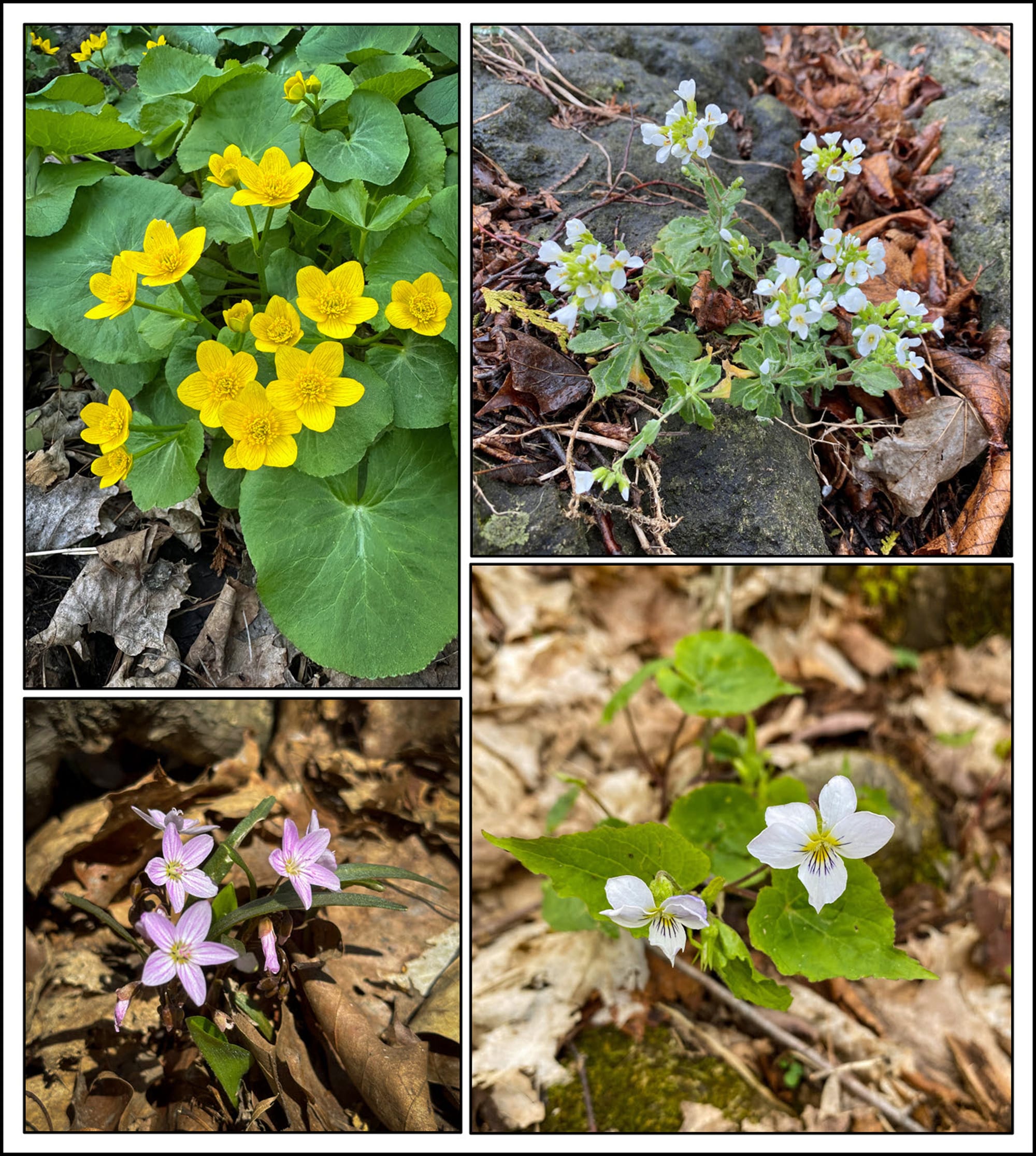
The awakening of the Wood Frogs from their long winter hibernation at a pond in one of the parks in which I regularly hike usually coincides with the beginning of the spring wildflower season. This is certainly true for the Marsh-marigolds (Caltha palustris), which thrive in damp, boggy areas and present with a beautiful bright yellow flower, similar to a buttercup. This plant is sometimes referred to as the Kingcup or Cowslip. The leaves of the Marsh-marigold are considered edible if they are harvested when the plant is young and boiled sufficiently to neutralize the natural occurring toxins found in them. There is a split consensus as to how tasty the cooked greens actually are.
Some wildflowers are found in very specific locations, as is the case with the Alpine Rock-cress (Arabis alpina). These pretty little white flowers are usually found in rock crevices or growing out of exposed rock faces. They are classified as herbaceous perennials and are very attractive to butterflies.
The Common Violet (Viola sororia), also referred to as Wood Violet, is easily recognizable by its distinctive blue or white flowers that grow on relatively short stems. Violets usually bloom in the woods from April until August and thrive in both sunny and shady locations. Currently used extensively for domestic horticultural applications, these plants have historically been used as a food source and for medicinal purposes.
The leaves and flowers, which contain both vitamins A and C, can be consumed, in moderation, either cooked or raw. Some people prefer to use the plant to brew a tea. It is reported that the health benefits include acting as an anti-inflammatory and as a topical treatment for skin irritations. The Violets are also an important host plant for various fritillary butterflies.
Often mistaken for a Hepatica, the Eastern Spring Beauty (Claytonia virginica) has a pink or white flower with five petals and relatively slender leaves. Classified as an herbaceous perennial, the plant overwinters by drawing on the nutrients stored in its tuberous root during the growing season. The Eastern Spring Beauty’s flowers only last a few days so they may be difficult to spot unless you happen upon them at the right time. Both the root and the above ground portion of the plant are considered edible and, as in other cases, Native Americans believed that the Spring Beauty had medicinal value for a variety of maladies.
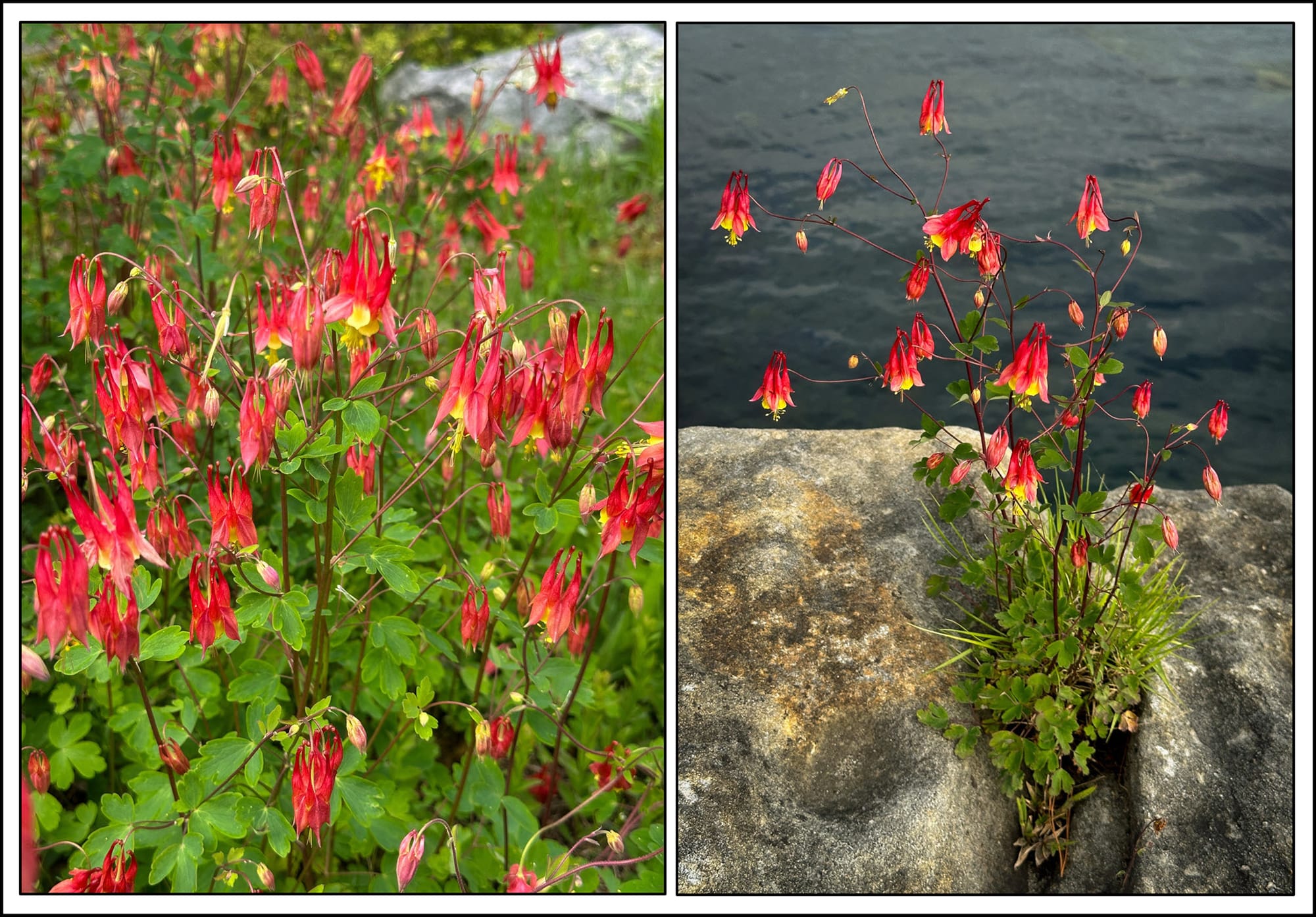
A particular spring wildflower that I associate with the Thousand Islands is the Eastern Red Columbine (Aquilegia canadensis). These beautiful red flowering plants can be found on many of the islands, with their peak blossoms occurring in mid to late May. My wife collected some Columbine seeds in the fall a couple of years ago and planted them in what she calls her “little basement grow-op”. They germinated successfully and flowered after they were transplanted into our garden. Since they are a perennial plant, we now enjoy the colourful Eastern Red Columbine in our home garden every spring.
In Loving Memory of my Sister, Barbara Caiger
I am dedicating this article to the memory of my sister who passed away just before Christmas last year. Barb was a River Rat from early on and spent several summers teaching kids to swim at Gananoque’s Rotary Beach. She and her husband, Chuck, became avid sailors and spent many years sailing in both the Thousand Islands and on Georgian Bay. Later in life, when MS had limited her mobility, Barb received immense pleasure from the large native plant garden that she and her gardener, Chris, designed, planted and nurtured. Many of the wildflowers that are highlighted in this article could be found in Barb’s special garden. I always enjoyed discussing the garden with her and she was always interested in my photographs of the flowers that I took while out hiking. This shared love of the native plants in our region is something that I will always cherish.
By Tom King
Tom King and his wife Marion have lived in Milton, Ontario, for the past 38 years, where they both worked and raised their family of three children: Kris, Mike, and Becca. Tom's many TI Life articles have captured the history of the tour boat industry as well as giving us the best spider story in the past 19 years!
Read more articles by Tom King here in our new format for TI Life, and more articles on our old site.