Balance Between Conservation and Hunting
by: Jim Farrell
Looking out across the River in Clayton the other day, I couldn’t help but notice how much has changed. Though not old enough to claim long-time residence or local status, I’ve been around long enough to remember when the Thousand Islands Inn sign shone from its metal roof, when the Clayton Bait Shop was open, and when the town was more of a quiet stop than the vibrant hub it is today.
Growing up in a family of biologists, the River was never just a vacation destination, it was part of everyday life. Multiple times, my family discussed moving to Clayton, but to my disappointment, it never came to fruition. My father worked here “ice out to ice in,” and our family conversations often circled back to wildlife, wetlands, and the future of this place we loved. That upbringing shaped how I first encountered the Thousand Islands Land Trust (TILT).
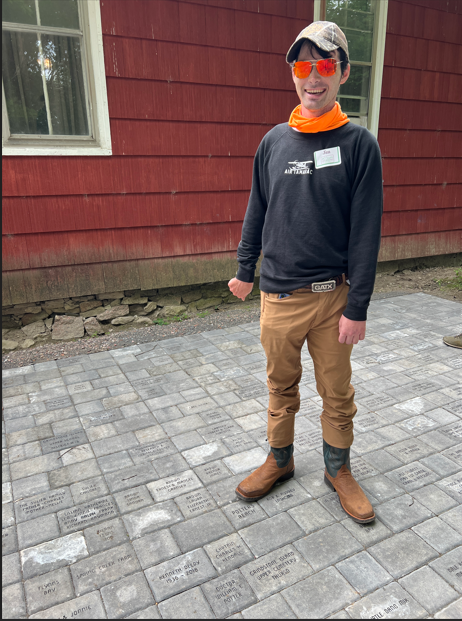
Like many, I knew TILT conserved land on Grindstone Island. As a young hunter, my first experiences there were a learning curve, but the pull of the River and my love for hunting brought me back season after season. Over time, I began to realize what makes Grindstone so special: it’s a place where conservation and hunting don’t compete but work hand in hand. The protection of habitat ensures that deer, waterfowl, and countless other species thrive, and in turn, hunters remain part of the natural cycle, deeply connected to the land and its stewardship.
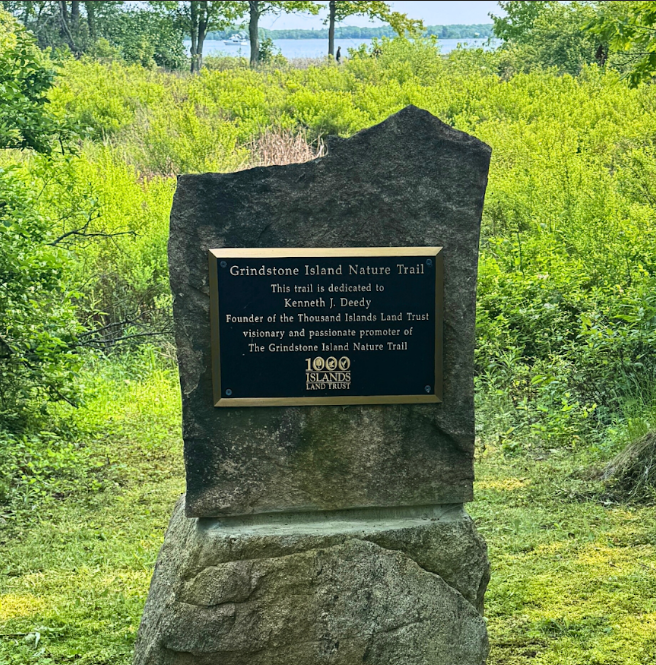
It was during one of those early seasons on Grindstone that I had the chance to sit down with one of TILT’s founders, Ken Deedy. Sitting on his porch with a cup of coffee in hand, I found myself drawn into the timeless ritual of conversation and camaraderie, and already, Grindstone had me hooked. Over that cup of coffee, I began to understand the bigger picture—how conserving land on the islands wasn’t just about protecting scenery or rare habitats, but about ensuring that timeless traditions like hunting could continue. Although my hunt was not successful that day, I gained something wonderful from that conversation between Ken, myself and my father from earlier in the morning: a deeper respect for the land.
Since then, I’ve hunted Grindstone every fall, and each season has strengthened my appreciation for the Island. Hunting is more than pursuing game—its’s about immersion in the land itself. Long sits under towering oaks, the sudden flush of a flock of mallards, the quiet moments spent watching the sunrise over the River—all of these experiences come together into a tradition that feels both timeless and alive. What makes the Thousand Islands and its conserved land so unique, is that it allows these moments to last, and to be passed from one season to the next and one generation to another. I have come to understand that conservation and hunting are interconnected, and naturally compliment one another.
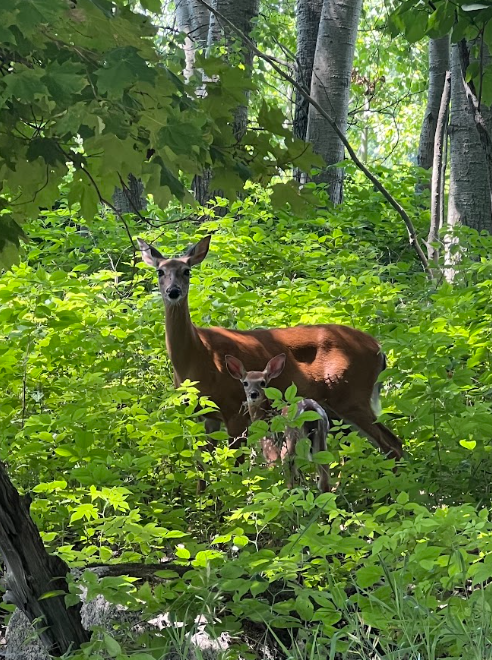
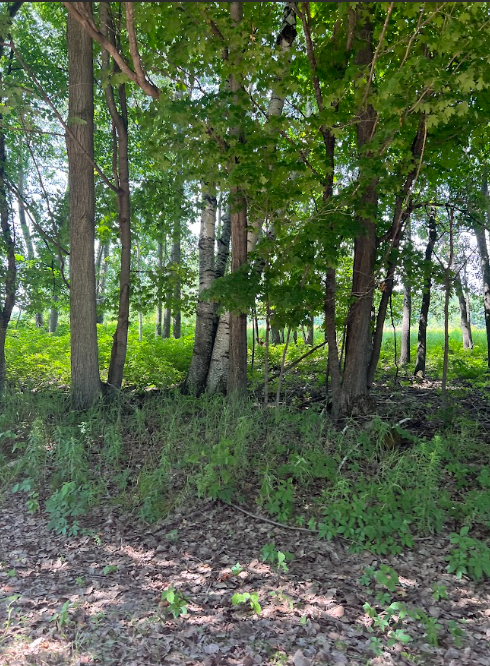
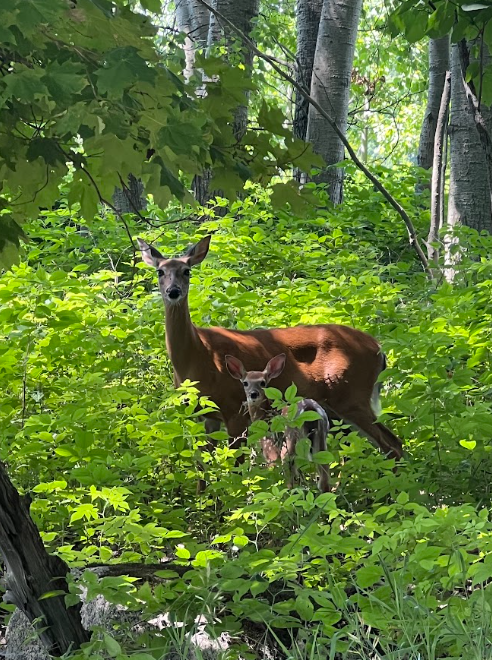
L: Deer are a common sight on Grindstone Island, where open spaces and woodlands provide plenty of habitat. [Photo Credit Terra Bach]; R: A variety of habitats on Grindstone Island—woodlands, wetlands, fields, and shorelines—remain protected thanks to TILT’s conservation efforts. [Photo Credit Terra Bach.]
Each season I return to Grindstone, I notice how the Island seems to stand still while the rest of the world around it moves and changes. The old cheese factory still stands, the historic schoolhouses mark the Island’s past, and the wild woods still stretch out far and wide as they always have. In contrast, the Village of Clayton, a quick boat ride away, has grown and evolved with new stores, new buildings, and new ideas. That balance—between what changes and what holds fast—is part of what makes this region so remarkable.
Working as the Kenneth Deedy Environmental Intern at TILT this summer gave me a deeper understanding of what he helped to set in motion more than forty years ago. I was proud to work for TILT in a position created in Ken Deedy’s legacy. I had always loved the River, and I didn’t realize it until that summer, but Ken was the reason I had come to love Grindstone and why I had found so much enjoyment in TILT Preserves each year.
Thanks to the Land Trust, the Thank you to Susan Smith and the author for bringing this topic of conservation and the issue of hunting to the readership. As this is a comment to an article, I will keep it appropriately short. I recognize the need to expand on these points. Believe me. I can’t wait to do so and will submit an article of my own. I feel strongly, that when the words conservation and hunting are used together I become concerned. First, it is beyond me how people can “love” hunting. You are literally saying you love to murder animals and birds. Second, do you really think that without hunting, nature would be unable to manage and conserve itself? It seemed to manage well enough in the millions of years before modern humans came on scene. This obsession with a tradition of murdering defenceless animals and birds needs to stop - Enjoy wildlife on the animals terms. If you have to shoot something do it with a camera. Thank you,
Rob Bickertonwild places of the Thousand Islands will remain—not only for hunters like me, but for anyone seeking a lasting connection to the land and the River. For me, Grindstone is more than a hunting ground; it’s where tradition, conservation, and community come together, and where I’m reminded that the future of this region depends on how well we honor its past.
By Jim Farrell
Jim Farrell has an impressive background in wildlife biology and a deep passion for the outdoors. Originally from Marietta, NY, Jim earned his degree at Clemson University. His experience includes interning with the South Carolina Department of Natural Resources, earning the 2024 Outstanding Field Training Award, and even co-authoring articles and research posters on wildlife ecology! Whether presenting on feral hogs in the Clemson Experimental Forest or writing about wild places for South Carolina Wildlife, Jim brought both knowledge and heart to his work with TILT.
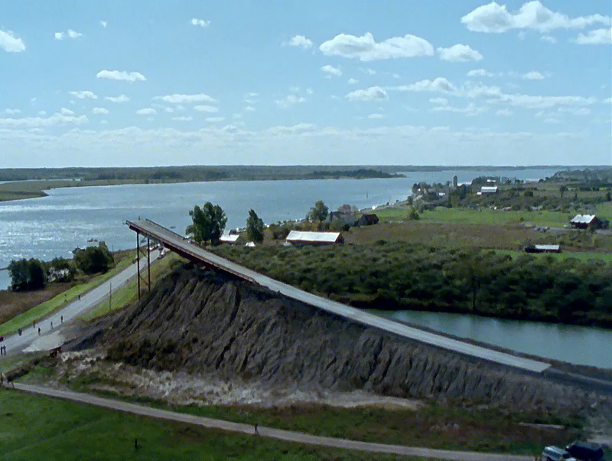
Header photo: The untamed beauty of Grindstone Island—protected and preserved through the conservation efforts of TILT. [Photo Credit Terra Bach]
Comments
Rob Bickerton writes: Thank you to Susan Smith and the author for bringing this topic of conservation and the issue of hunting to the readership. As this is a comment to an article, I will keep it appropriately short. I recognize the need to expand on these points. Believe me. I can’t wait to do so and will submit an article of my own. I feel strongly, that when the words conservation and hunting are used together I become concerned. First, it is beyond me how people can “love” hunting. You are literally saying you love to murder animals and birds. Second, do you really think that without hunting, nature would be unable to manage and conserve itself? It seemed to manage well enough in the millions of years before modern humans came on scene. This obsession with a tradition of murdering defenceless animals and birds needs to stop - Enjoy wildlife on the animals terms. If you have to shoot something do it with a camera. Thank you.