The Pike-Edick-Hudon Field Guide
by: Brian Hudon
The Architect’s Edition: The Dedication
This work is dedicated to the memory of my grandmother, Ruth Pike Edick, the "Bridge," who connected our pioneer ancestors to our modern lives, and her husband Harold Edick (The Corner Pharmacy), located where ??? I also dedicate this to my mother, Susan Hudon, and my father, Glenn Hudon.
To my two daughters, Kiah and Taylor, I say: This is your history. You come from a line of builders and explorers. To my grandchildren, Krew, Laker, and Everest: Carry this grit with you in everything you do.
To my siblings—Teri, Julie, Renee, and Bruce, I say: We share this blood and this story. From the first Pikes in 1635, to our family today, we carry the blood of a man who helped shape America and who is a hero.
CHAPTER 1: THE VOYAGE OF THE JAMES (1635)
The Foundation of the Pike Name
The story of our bloodline in the New World begins with a pioneer named John Pike. In the spring of 1635, John Pike boarded the ship James in Southampton, England. He was fleeing a country in turmoil to build a legacy based on law, land, and independence.
Upon landing in the Massachusetts Bay Colony, John Pike became one of the original 91 settlers of Newbury, Massachusetts. He was a laborer, but also a magistrate—a man of high standing who helped draft the very rules the community lived by. He understood the "Architect’s Rule" centuries before we named it: he didn't wait for a town to be built for him; he drew the maps and laid the stones himself. This 1635 foundation is the bedrock that eventually led the family toward the military greatness of the generations to follow.
CHAPTER 2: THE REVOLUTIONARY ROOTS
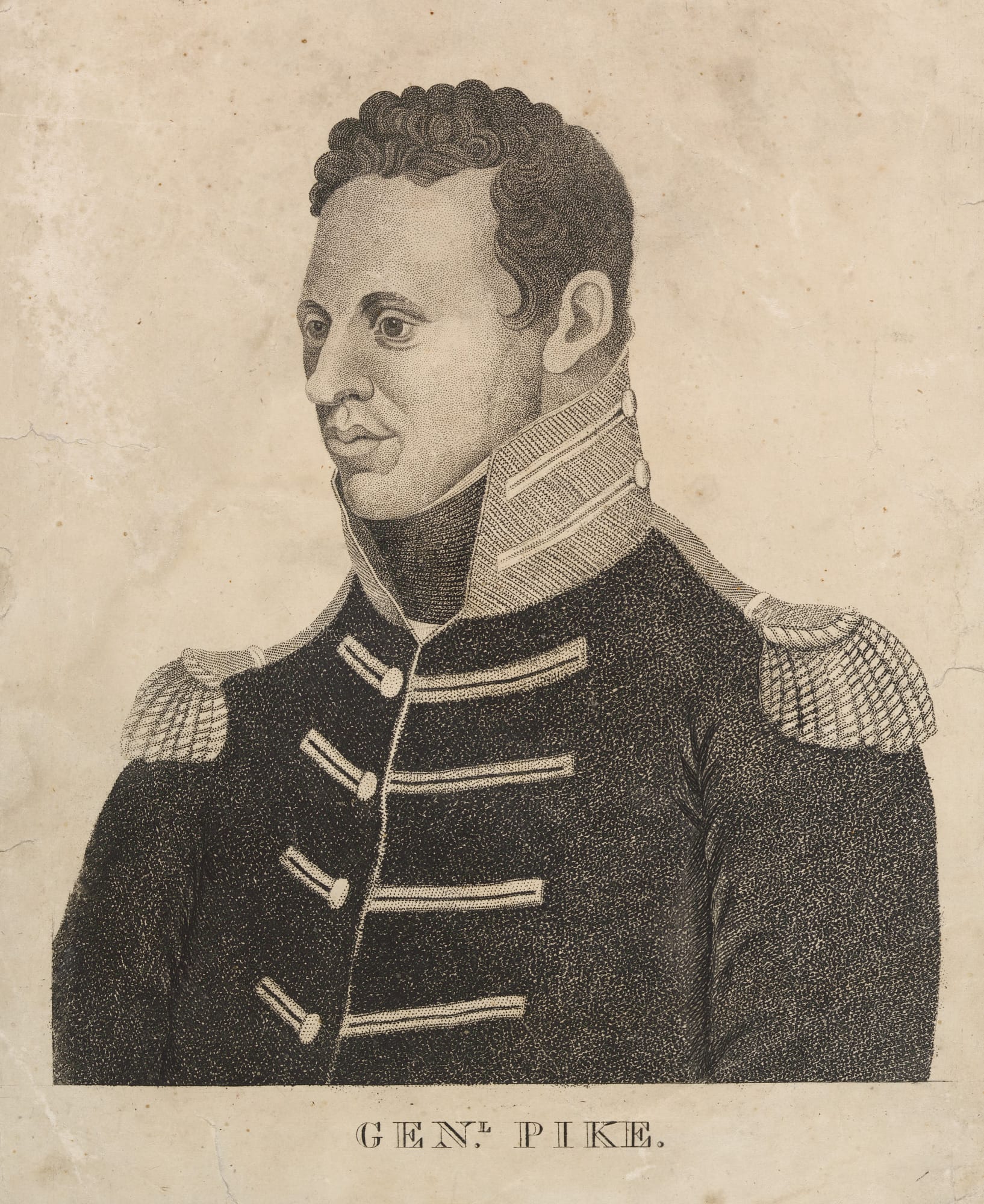
Major Zebulon Pike Sr.
Before the General made history, his father fought to create the country. Zebulon Pike Sr. was a career military officer and a veteran of the American Revolutionary War. He served in the 4th Continental Dragoons, a light cavalry unit that was essential to the fight for independence.
Major Pike Sr. raised his son, Zebulon Montgomery Pike Jr., in the harsh environment of frontier army posts. The General didn't learn about war from books; he learned it from watching his father lead men through the birth of a nation. It was Major Pike Sr. who taught his son how to read a landscape and how to command respect—tools the General would use to survive the frozen North and the Spanish deserts.
CHAPTER 3: THE MISSISSIPPI TRIAL (1805)
The Search for the Source
In 1805, Lieutenant Zebulon Montgomery Pike was ordered by the U.S. government to find the headwaters of the Mississippi River. While others might have turned back when the winter ice began to crush their boats, Pike ordered his men to build a blockhouse and continue on foot.
The Winter Grind: They hauled supplies on hand-made sleds through waist-deep snow.
The Grit: Pike’s journals tell of days with no food, where the only thing keeping them alive was his refusal to fail. He hunted for his men while his own feet were nearly frozen.
The Diplomacy: He negotiated with the Dakota and Ojibwe nations, securing the land that would eventually house Fort Snelling.
He proved that a Pike could survive where the land itself was trying to kill them. This mission set the stage for his greatest—and most dangerous—adventure into the Southwest.
CHAPTER 4: THE SPANISH CAPTURE (1806–1807)
The Peak and the Prison
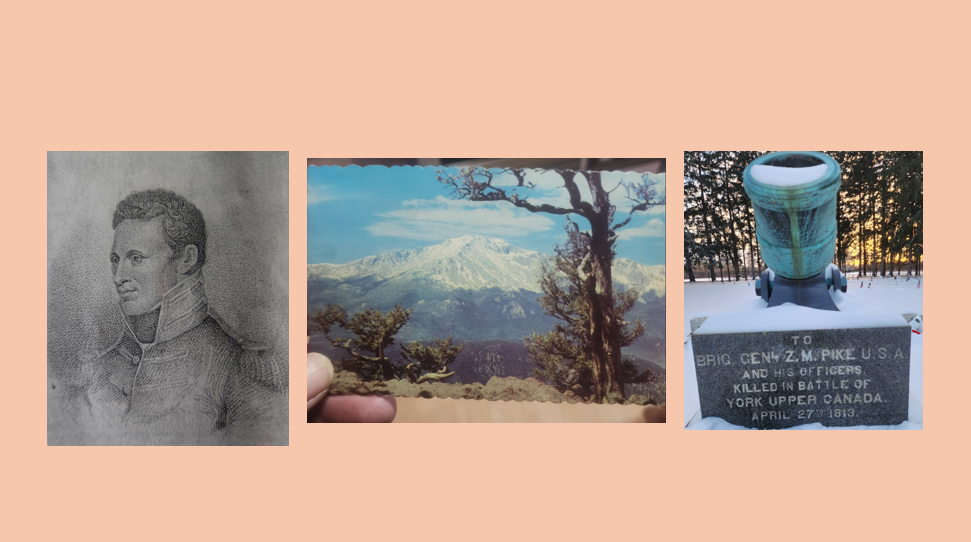
In 1806, Pike was sent southwest to explore the Arkansas and Red Rivers. This was "The Big One." It was on this journey that he sighted the mountain that would eventually bear his name: Pikes Peak. He attempted to climb it in waist-deep snow, without winter clothing, and though he didn't reach the summit, his courage in the face of the elements became legendary.
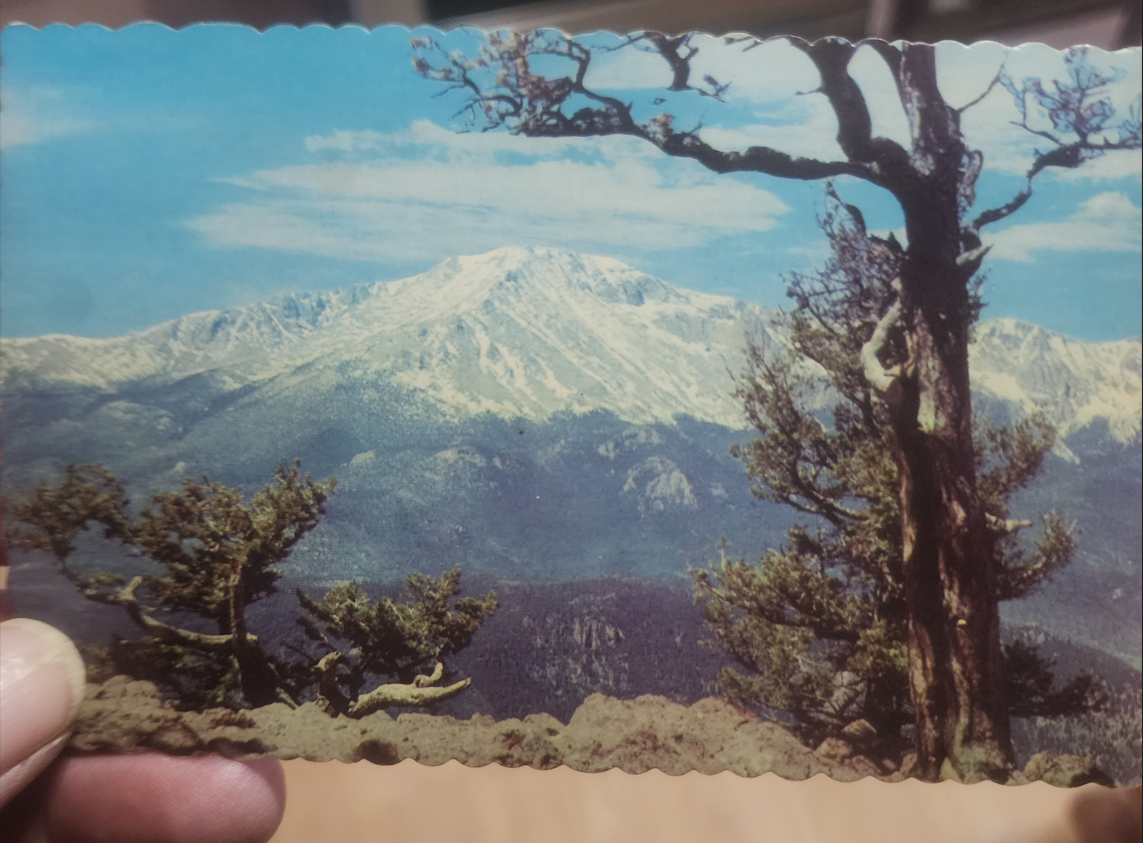
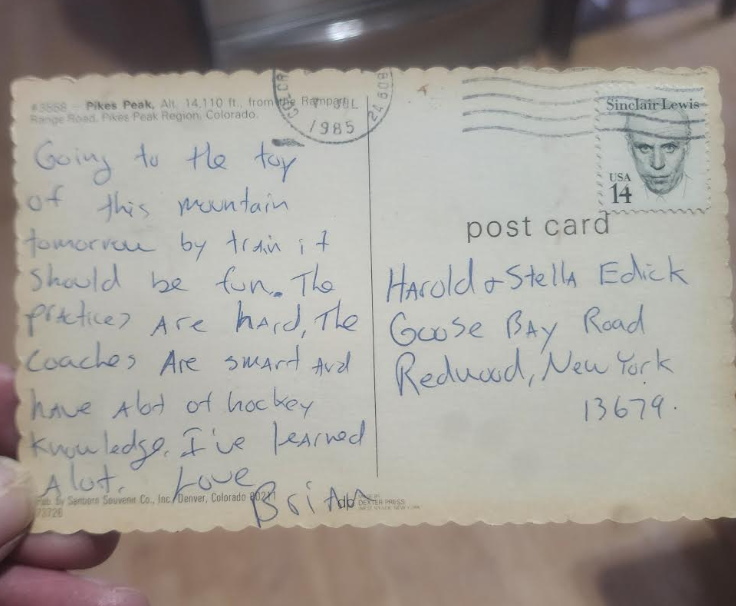
Two family postcards sent by the author to his family in 1985.
However, the mission took a dangerous turn. Pike and his men accidentally (or perhaps intentionally, under secret orders) crossed into Spanish Territory (modern-day Colorado/New Mexico). They were intercepted by one hundred Spanish dragoons.
The Gun Barrel Secret: Knowing the Spanish would confiscate his maps and journals as evidence of spying, Pike acted quickly. He and his men took their most important hand-drawn maps and documents, rolled them up tightly, and shoved them down the barrels of their rifles.
The Deception: While the Spanish searched their bags and pockets, the men stood at attention, holding the very "stolen" secrets the Spanish were looking for right in their hands.
The Long March: They were taken as "guests" (prisoners) to Chihuahua, Mexico. Even while captive, Pike spent his time memorizing the landscape, counting the Spanish troops, and noting their weaknesses. When he was finally released and escorted back to the U.S. border, he wrote everything down from memory and from the papers he had hidden in the guns. He provided the U.S. with the first real intelligence on the American Southwest.
CHAPTER 5: THE FINAL BATTLE (1813)
Death of a Hero at the Battle of York
By the War of 1812, Zebulon Montgomery Pike had been promoted to Brigadier General. He was a rising star in the American military. In April 1813, he led an assault on York (now Toronto, Canada).
He was a leader who stood at the front. As his troops were securing the British fort, the retreating British army set fire to their own gunpowder magazine. The explosion was massive, raining heavy stones and debris across the battlefield. A large piece of rock struck General Pike in the back, mortally wounding him.
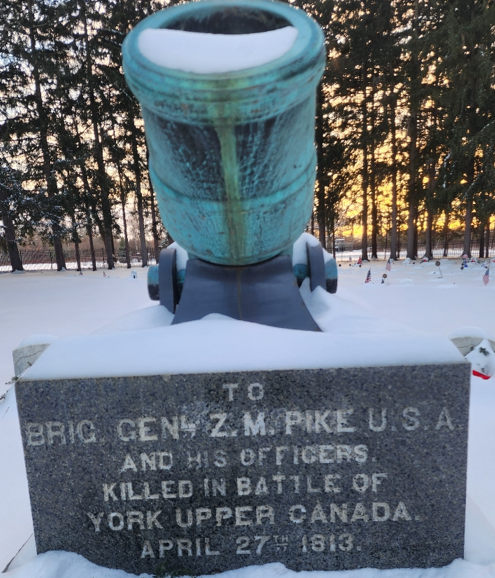
The Architect’s End: As he lay dying on the ground, his men brought him the captured British flag. According to legend, he asked for the flag to be placed under his head as a pillow. He died knowing he had won the day. He was only 34 years old.
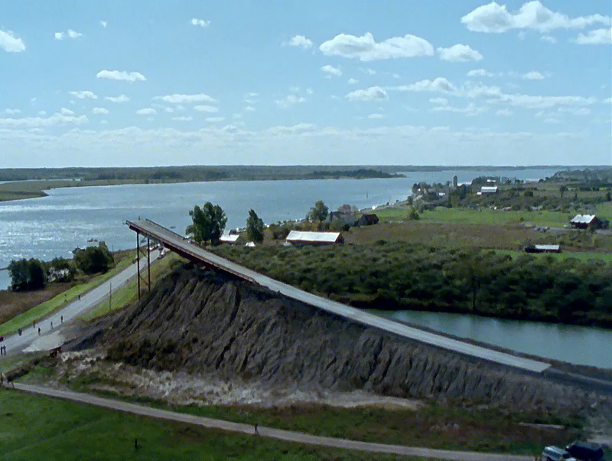
Legend has it that his body was placed in a whiskey barrel for the trip back to Sacket’s Harbor so the body could be preserved for burial. A full military burial with honors took place; it was a very somber day.
In 1909, a new burial site was erected and the bodies were moved. It was reported at the time that they found Brigadier General Pike's body placed in a glass coffin and his body looked the same as the day he was buried. When the men went to move the glass coffin, it cracked, exposing his body to the air. It was told that his body instantly turned to dust and that the only thing left in the coffin was his uniform. His grave site can be found on Dodge Ave, Sackets Harbor.
CHAPTER 6: THE PIKE LEGACY IN THE NORTH COUNTRY
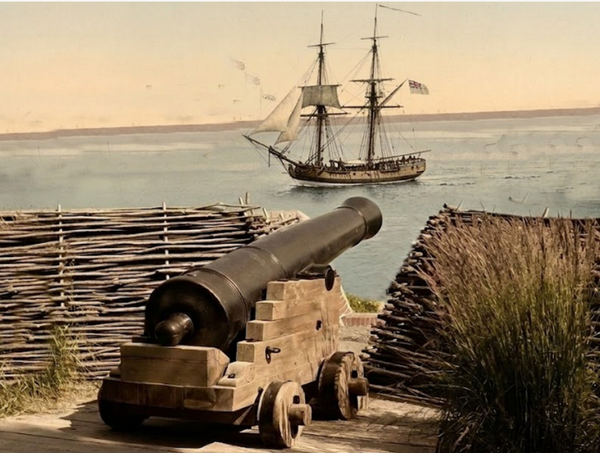
From the Colorado Rockies, to Chihuahua, Mexico, to the St. Lawrence River, all on horseback and river vessels, Zebulon packed in a lifetime of adventures during his short life.
The General’s death didn't end the Pike story; today that lineage continues along the River and in Sackets Harbor, with a new generation just beginning their life adventures.
The grit that saw John Pike across the Atlantic, and Zebulon Pike through the Spanish desert and over the Rocky mountains, lived on in Ruth Pike Edick (Mimi).
Mimi was the "Bridge." She lived through the Great Depression and the transformation of the 20th century, holding the family together, gave birth to Susan Jane Edick, who married Glenn Hudon, which continued the Pike bloodline through myself and my four siblings – Teri, Julie, Renee, and Bruce Hudon.
What will this next generation discover, lead or bridge, I do not know, but I am proud to be part of this family and to share our story.
By Brian Hudon
Brian Hudon, School teacher, hockey coach, and hobby farmer, enjoys nature photography, painting, and building rock cairns. Brian reports he is thrilled to have several grandchildren now, who will carry on the adventures. He was was born and raised in Alexandria Bay. Luckily for us, Brian has not stopped researching his ancestors and that means we can look forward to more.
* the Architect’s Rule is to build your life and your character according to your own internal standards and long-term vision rather than seeking the temporary approval or comfort of those who are only passing through.