Royal Highland Emigrants at Carleton Island
by: Dennis McCarthy
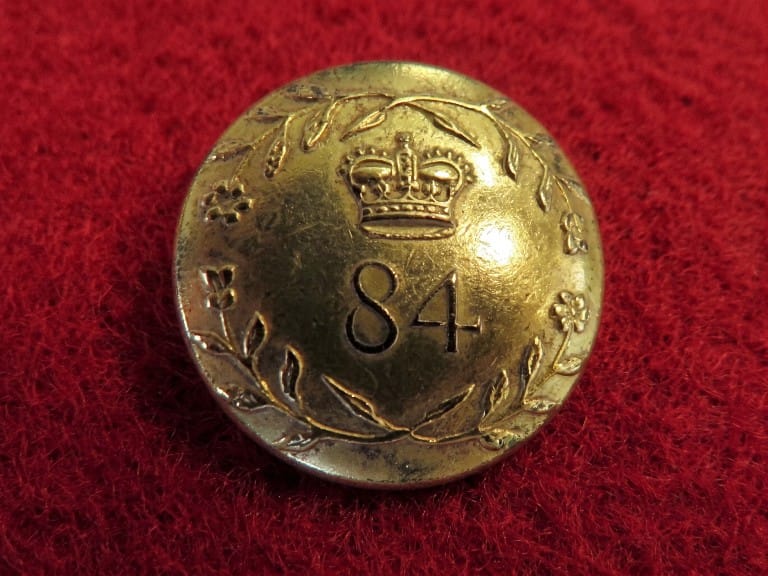
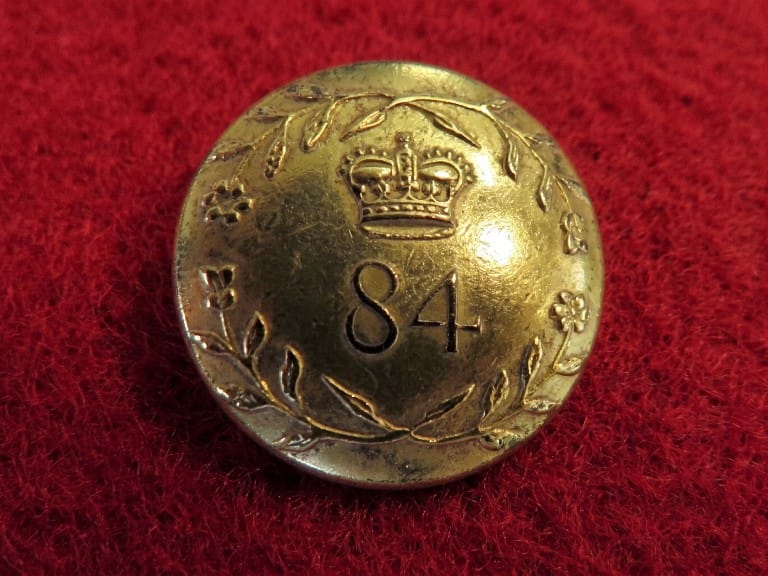
Behind glass in the Cape Vincent Historical Museum rests a small, gilded artifact that was recovered near the remains of a chimney: a single, polished officer’s button bearing the insignia of the of the 84th Regiment of Foot. While buttons were standard military issue, this particular relic carries an uncommon history. It is one of the few tangible traces left by a small cadre of Highland officers who held the northern frontier for the British Crown—and it very well may have been worn by a direct ancestor of former U.S. Secretary of State Hillary Rodham Clinton.
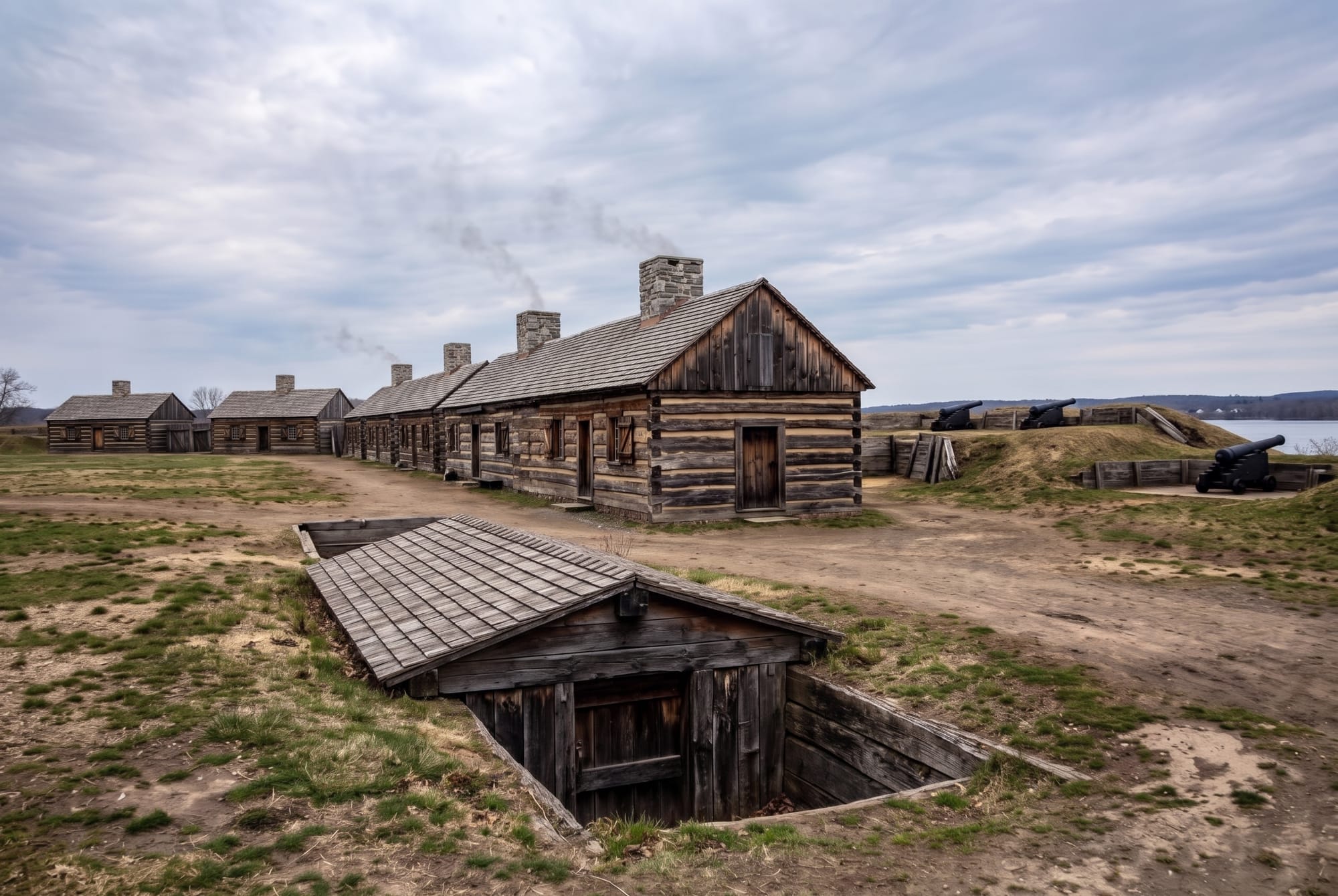
Raised in 1775 to defend British North America during the American Revolutionary War, the 84th Regiment of Foot (Royal Highland Emigrants) played a crucial role in securing the northern frontier. Recruited primarily from Scottish veterans and Highland immigrants who had settled in Quebec, Nova Scotia, and New York, the regiment’s 1st Battalion was dispatched to the head of the St. Lawrence River in 1778. To safeguard the vital supply line between Montreal and the upper Great Lakes posts, British forces established a key naval and military post on Carleton Island (now part of Cape Vincent, NY), and constructed Fort Haldimand. Soldiers of the 84th Regiment formed the backbone of this frontier garrison, serving alongside Loyalist provincial units, British regulars, and Native American allies.
Born in Scotland around 1732, George McDougall forged a career on the volatile edge of the British Empire. Commissioned as an officer in the 60th (Royal American) Regiment of Foot, he was stationed at Fort Detroit during Pontiac’s War in 1763. Sent under a flag of truce to parley with Chief Pontiac, McDougall and Captain Donald Campbell were seized as prisoners. While Campbell met a grim fate, McDougall orchestrated a daring escape through enemy lines, slipping back into the fort to survive one of the longest, bloodiest sieges on the frontier.
McDougall soon rooted himself firmly in frontier society, marrying Marie-Françoise Navarre, a daughter of Detroit’s prominent French-Canadian habitant nobility. In 1768, McDougall set his sights on Île aux Cochons (Hog Island) in the Detroit River—the expanse now known as Belle Isle Park. Striking a direct treaty with Ottawa and Ojibwe leaders in 1769, he purchased the island with tobacco, rum, vermilion pigment, and an ornate wampum belt. Despite fierce protests from local French settlers who had used the island as common grazing land, British Commander-in-Chief Thomas Gage upheld McDougall’s claim, securing the property as an elite private estate for his family.
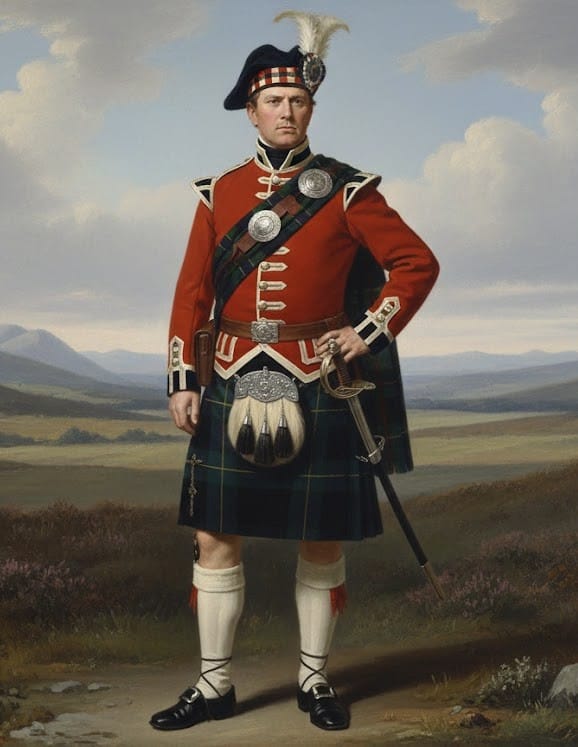
When the American Revolution broke out, McDougall’s fierce loyalty to King George III never wavered. He secured a commission as an officer in the newly raised 84th Regiment of Foot (Royal Highland Emigrants), joining a proud battalion of Scottish veterans and Loyalist emigrants assembled to defend British North America. By 1778, the 84th’s 1st Battalion was deployed to the head of the St. Lawrence River to construct Fort Haldimand on Carleton Island. Positioned at the threshold of Lake Ontario, the island became a massive, fortified transshipment hub, guarding waterborne supply lines, harboring naval gunboats, and staging Loyalist and Native American raids into the Mohawk Valley.
Stationed at this remote outpost, McDougall briefly took command of the garrison. The harsh winters, isolation, and disease common to the St. Lawrence borderlands quickly battered his constitution. Records confirm that McDougall’s health collapsed, forcing him to relinquish command before he died on Carleton Island in the spring of 1780. Following military protocol of the frontier garrison, he was buried there in the windswept earth near the fort's ramparts.
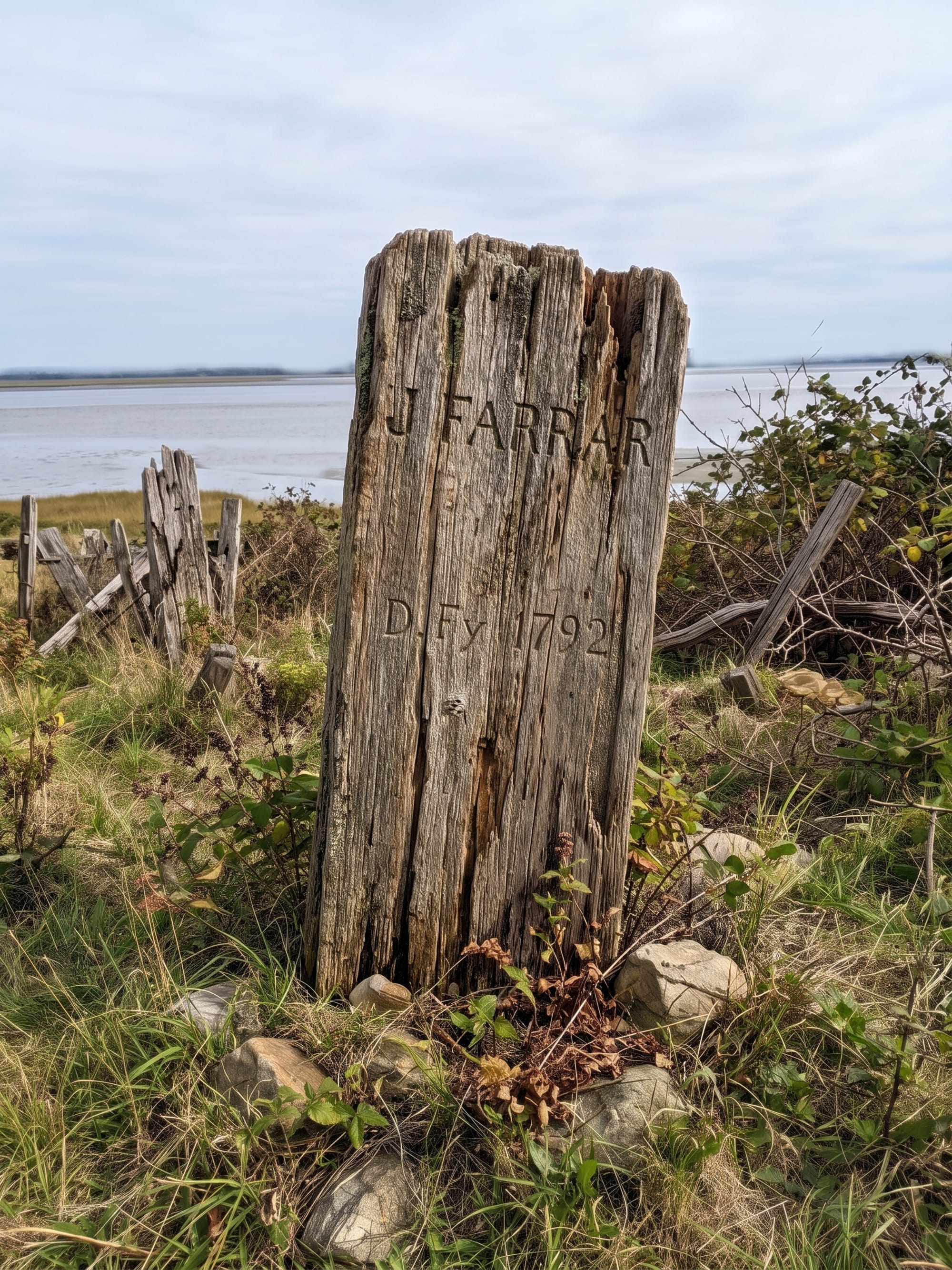
With cramped barracks and brutal winter exposure, disease proved far deadlier than rebel musketry. Severe outbreaks of scurvy, dysentery, and fevers swept the island, claiming scores of lives—particularly during the cruel winters of 1779 and 1780. The garrison’s dead were interred in a military burial ground established on the island's high ground near the earthworks. Interments were frequently placed into shallow limestone cuts and marked with simple wooden headboards or carved oaken planks that eroded long ago. Although surface markers have vanished and subsequent disturbances have affected portions of the terrain, the burial ground remains an undocumented site. It endures as a silent, solemn testament to the British regulars, Loyalists, and camp followers who perished holding this isolated frontier outpost.
When the Revolutionary War concluded, the 84th Regiment disbanded, leaving behind the chimneys and earthworks of Fort Haldimand. McDougall's children remained in the borderlands, with his son George Jr. serving as a magistrate in the Michigan territory. Over successive generations, the McDougall bloodline merged into the Howell family line of the Midwest and passed down through Dorothy Howell Rodham to her daughter, Hillary Rodham Clinton.
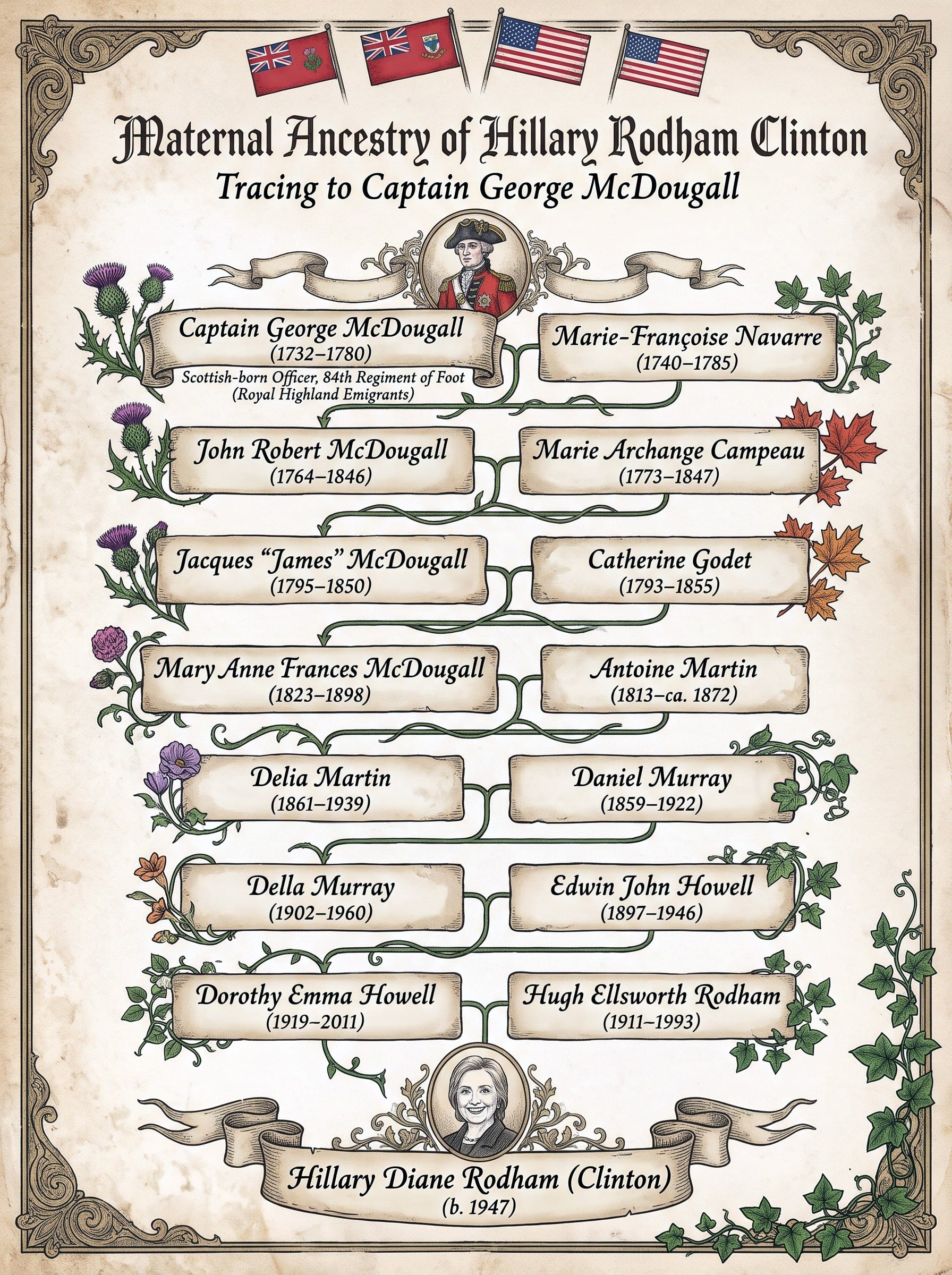
Because Carleton Island hosted only a small handful of 84th Regiment officers during its brief, intense wartime existence, historians and local preservationists maintain that the gold 84th button preserved at the Cape Vincent Museum likely belonged to Captain George McDougall himself—a solitary keepsake from an officer who helped shape the frontier, died in service to the Crown, and lies buried in an unmarked island grave just across the channel.
By Dennis McCarthy
Dennis R. McCarthy lives in Cape Vincent, NY, along with his wife Kathi. He is a graduate of the Rochester Institute of Technology with a degree in electrical engineering. A diver, he co-founded the St Lawrence Historical Foundation Inc. and serves as one of its directors. He is a member of the Advisory Council for the NOAA Lake Ontario National Maritime Sanctuary and serves on the board of the Cape Vincent Historical Museum and Fort La Présentation Association. He is an author and co-author of numerous articles, websites, and history books focusing on local US and Canadian shipwrecks. Dennis has written (2019+) several (pre 2019) important and popular articles for TI Life over the years.
Editor's Note: Originally published in the Kingston Historical Society's newsletter, Limelight, November 2026. For more information https://www.forthaldimand.com/ and https://www.lulu.com/shop/kathi-mccarthy/the-old-fort/paperback/product-20576661.html?page=1&pageSize=4