Regatta Breaks Records at Crystal Lake
by: Martha Grimes
The Fishers Landing Racing Club was established by a group of young racers in 1949. Races were held in the River, in the New York River Communities of Clayton, Fishers' Landing and Ontario's Gananoque and Brockville. The popularity of the races attracted contenders from both sides of the border, the Great Lakes, and Atlantic seaboard. The open waters of the St. Lawrence River became the location of the first Thousand Islands International Marathon in 1954, a 100-mile race starting in Alexandria Bay, advancing to Clayton, on to Brockville, and ending back in Alexandria Bay. Drivers mainly stuck to the River channel, but were known to take short cuts, weaving among the islands.
The development of the International St. Lawrence Seaway and increase in recreational boating, eventually ended the run of this 63-year long event in 1972. The FLRC racing club was dormant until a new generation of racers reorganized the club in 1992 and began competing in races along the east coast. The club hosted the first closed-course Crystal Lake Regatta in 1997, an annual contest now held on the second weekend in September, near the hamlet of Redwood, NY.
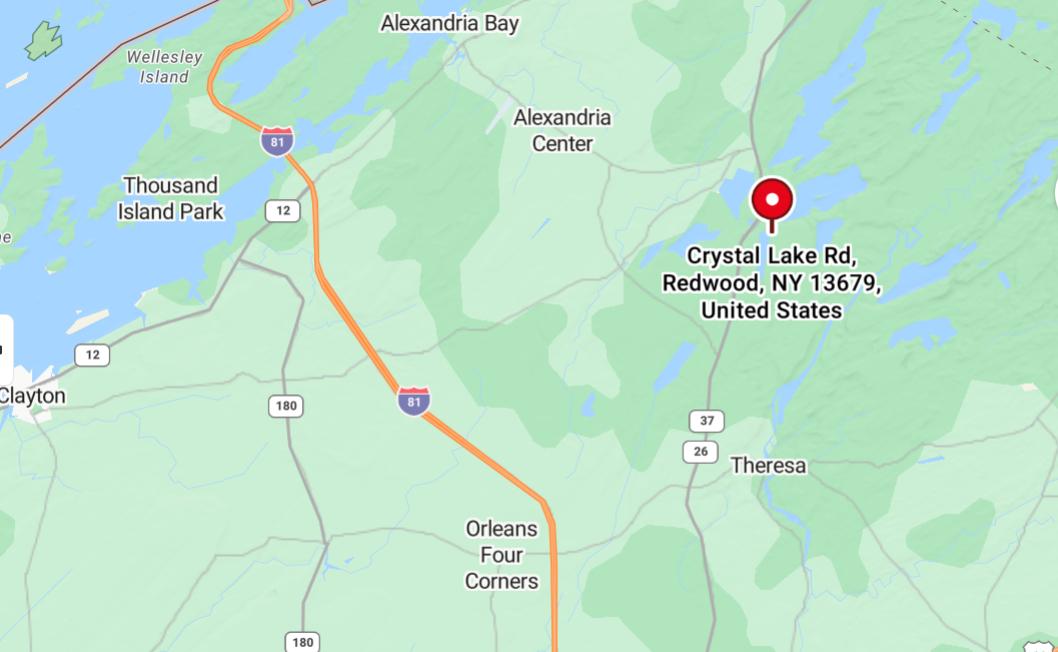
Driver and boat registration records were set on the 28th anniversary of the race, which was held September 13th and 14th at Crystal Lake. Sixty-five drivers from New York, Pennsylvania, Ohio, Massachusetts, New Hampshire, Maine, Virginia, Florida, and the provinces of Ontario and Quebec competed. Members of the following racing clubs travelled to the two-day event: South Shore Outboard Association, Carolina-Virginia Racing Association, Delaware Valley Racing Association, Toronto Ontario Racing Club, The Ottawa Valley Power Boat Club, and Junior Racer Canadian Hydroplane League. The youngest J Class driver was 9, and the most mature driver was 78. There were 11 female drivers. With some drivers entering more than one class, a record 108 boats were registered, including one Pro Outboard international class, OSY-400.
Qualifying races for Stock Outboard Northeast Division were held Saturday for A Stock Hydro, A Stock Runabout, 20 Super Stock Hydro, C Stock Hydro, and C Stock Runabout. Each contender qualified to double their point standing.
Ideal weather and no delays allowed the club to complete 41 heats of racing on Saturday and 33 on Sunday.
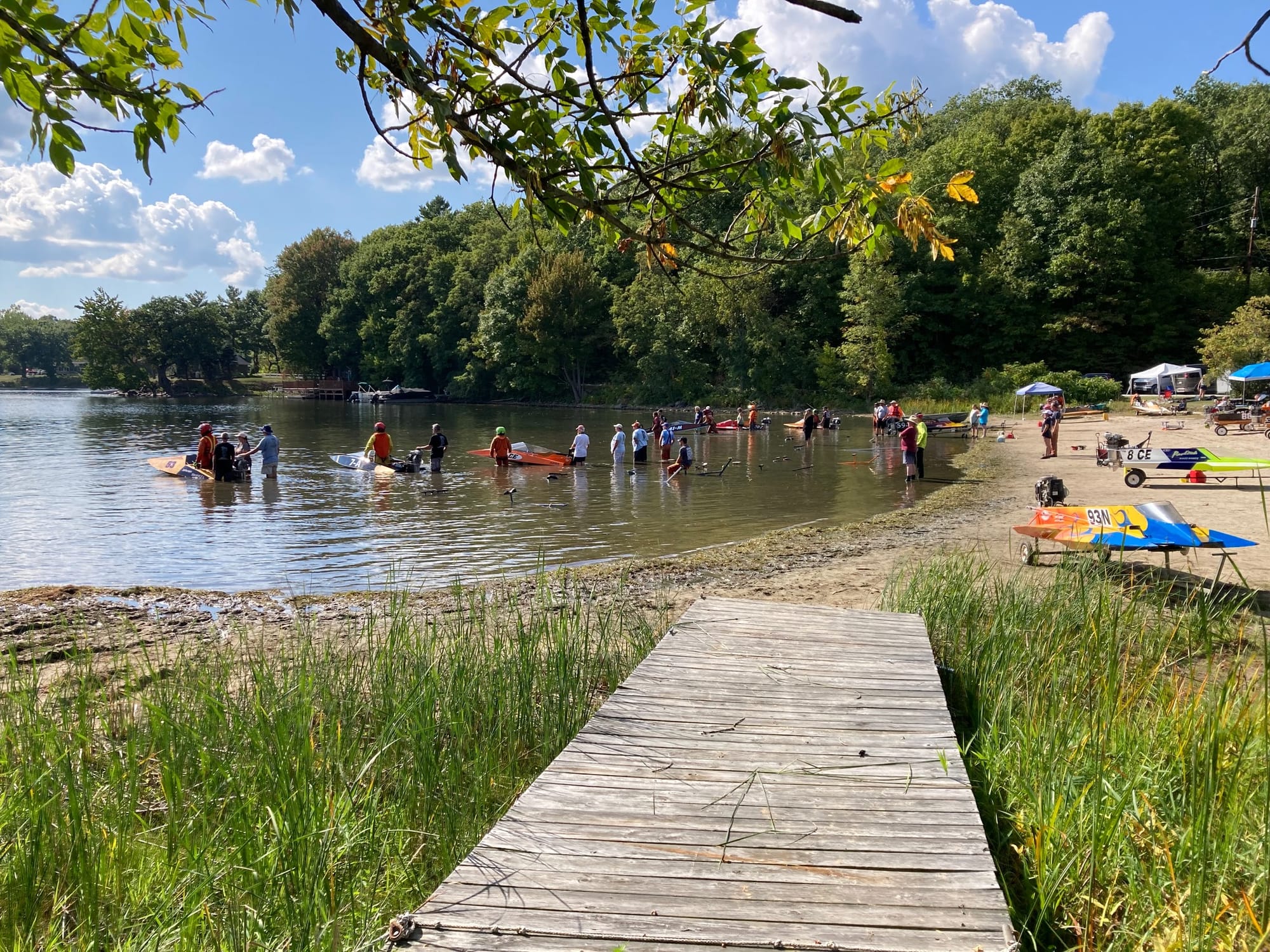
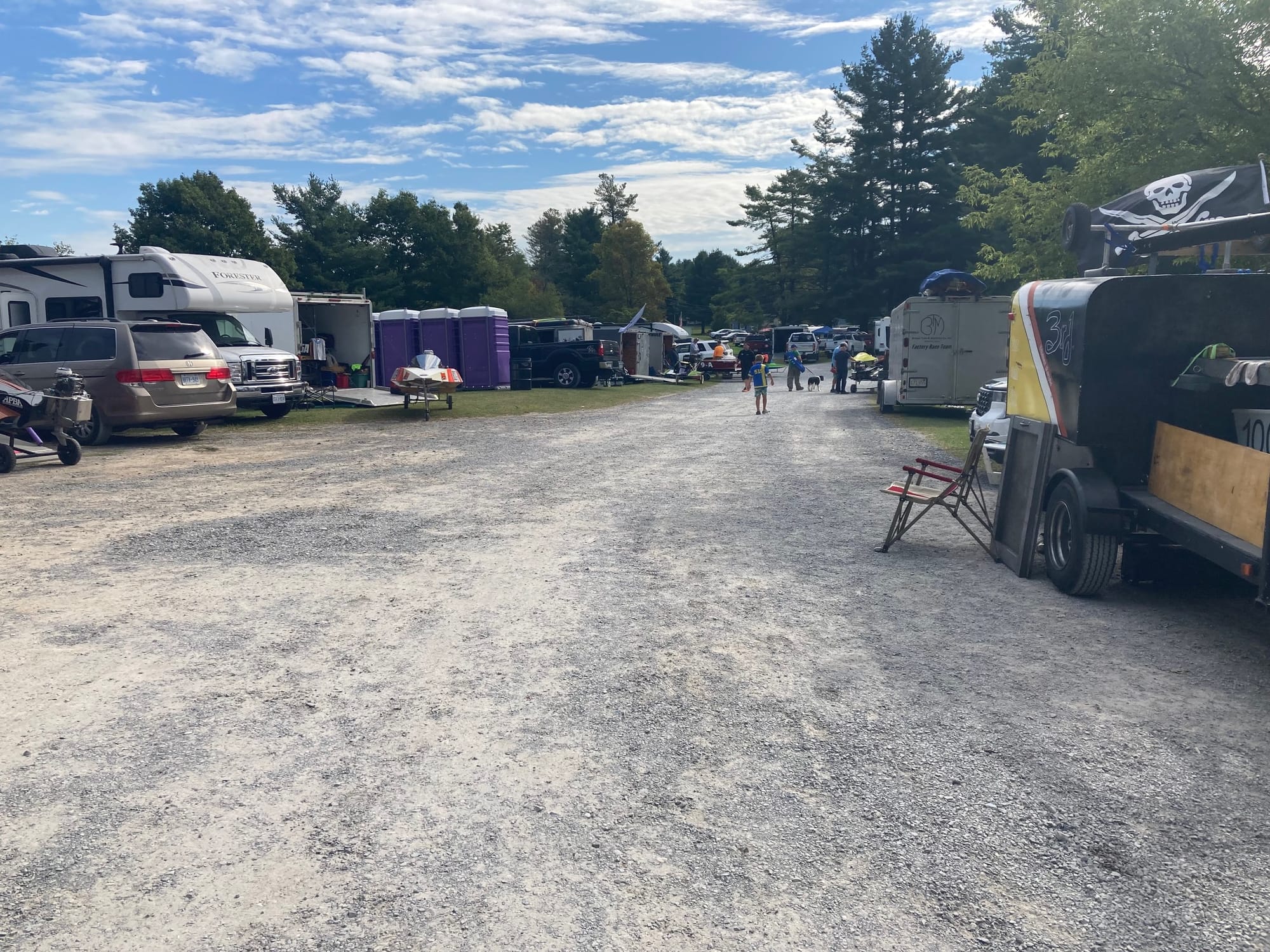
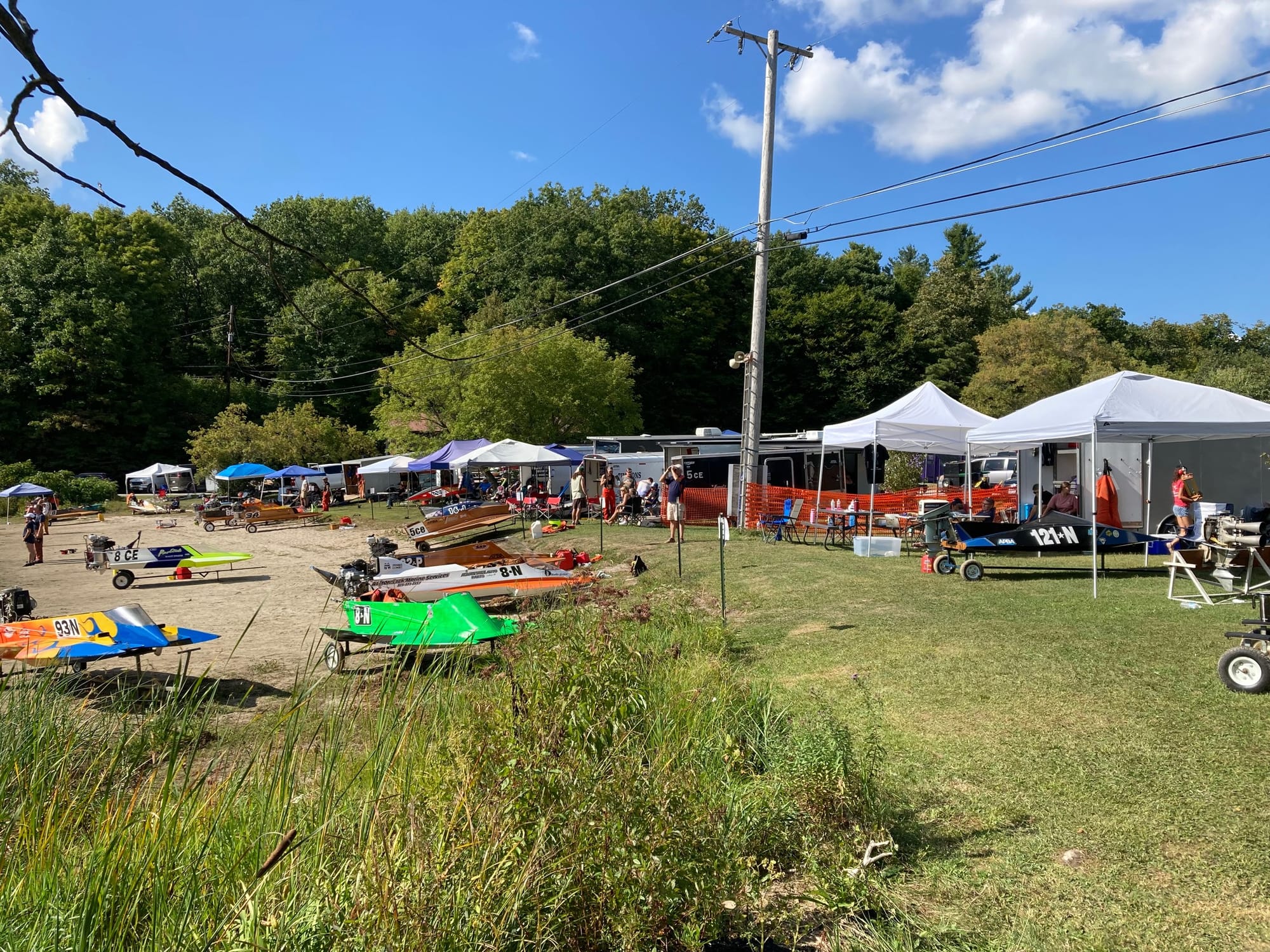
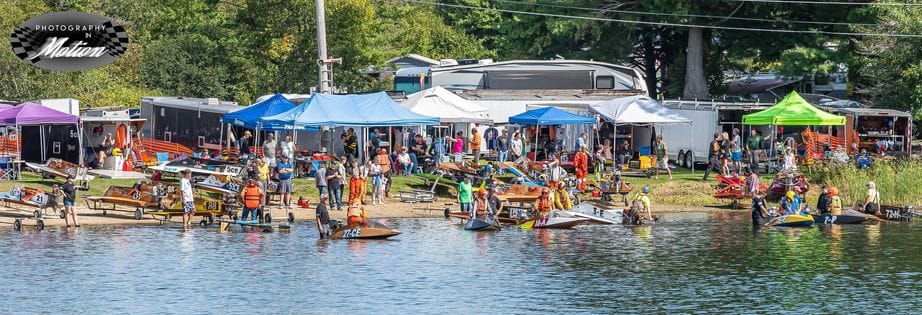
Excitement grows as the drives set up their weekend campsites. [Photos courtesy of the author]
The Folsom family, owners of the lake and surrounding property, has accommodated the racing club, making the success of the event possible. Drivers travelling from near and far begin arriving late Thursday and straggle in until late Friday evening.
Imagine the drone of 10,000 bumble bees with megaphones disrupting the serenity of this lake front community and you will recognize the sound of testing and trial runs that began Friday, followed by two days of non-stop racing from 10 am until late afternoon Sunday. Nearly all children and many adults wear ear protectors. Most of the lake community seem to enjoy the excitement and some even are called upon to participate.
One family provides power hook-up and space on their dock, which happens to be the perfect vantage point for race officials and score keepers to monitor the course. Another area of shoreline has ideal positioning for the start clock. Parking space for drivers and race fans is at a premium. The ‘Lakers” are accommodating to make space available.
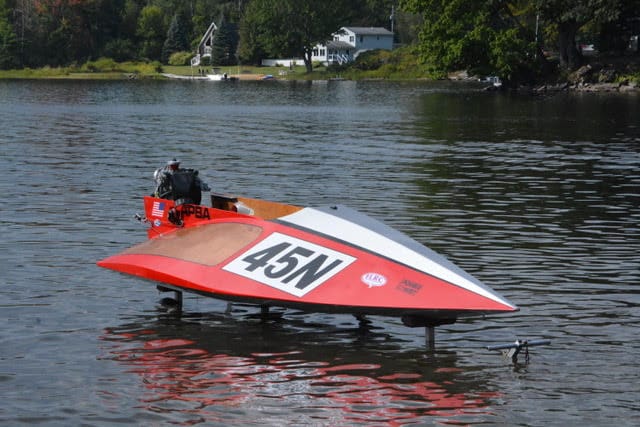
Boat racing is a family affair, often involving several generations. Some drivers, accompanied by extended families, arrive in luxurious motor homes, others in a variety of travel trailers. All are hauling boat trailers. Others may tow the boat trailer behind their personal vehicle. Then, once boats, motors, tool kits, and all the paraphernalia is unloaded, convert the trailer into a comfortable sleeping area. Family vehicles with boats strapped to the top are common, with tents pitched among the parked vehicles. Saturday night families gather in the club house for a traditional pot luck supper, followed by groups congregating around camp sites to catch-up with old friends; the drivers and crews “talking shop” about getting better performance from that motor.
Race day begins with a drivers meeting, where roll call and boat numbers are verified. Race rules and any changes are reviewed, and Patrol Boat Safety training is held. A solemn tradition takes place in the pit area with all observing the Canadian and American flags while both national anthems are played over the loudspeaker system.
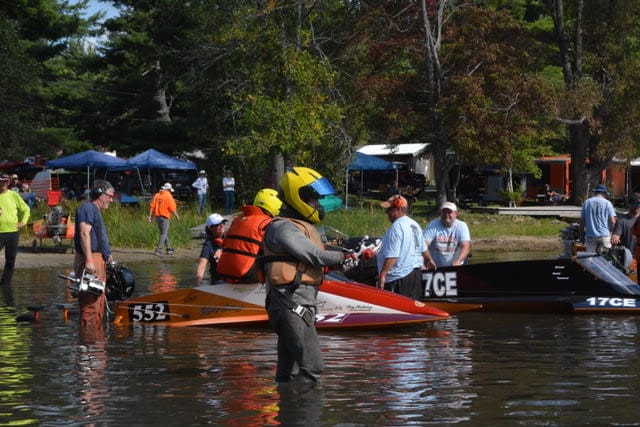
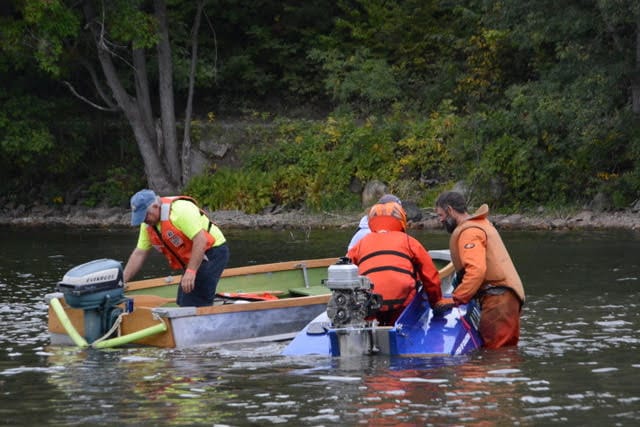
L: This driver could be a model for the perfectly protected racer, from head to toe.; R: Patrol Boat in tow; R: The Patrol Boat gives a courtesy tour to this racer who didn’t make it to the finish line. [Photos courtesy of the author]
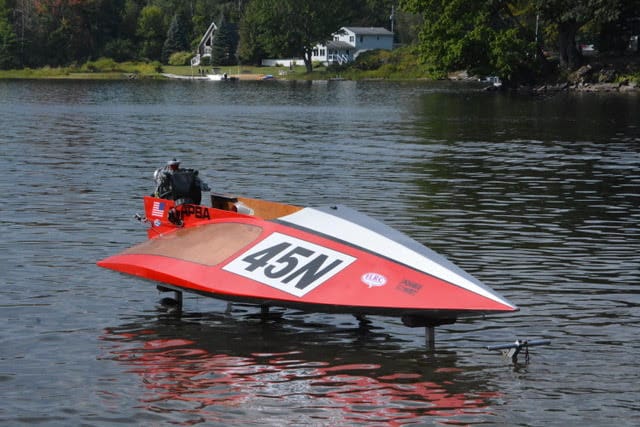
Once spectators have signed in to the admission free event and received an identifying bracelet, they are welcome to tour the pit area, speak with the drivers, and get a close-up look at the variety of boats and motors. Speed of the different classes ranges between 25 mph to over 100+ mph. All boats and motors meet the standards of Modified Outboard as required by the American Power Boat Association (APBA). Many drivers kneel on the floor of the boat, one hand gripping the steering wheel, with one hand on the lever that controls the gas. Others lie in a prone position on the floor while steering and controlling the fuel. Mandatory equipment includes Kevlar lined cut suit, full helmet with face shield, and regulation life jacket. Kevlar neck collars are optional.
Drivers rotate volunteering to man the three patrol boats on the course. Two turn boats with a driver and a turn judge are positioned on the course between the first and second turn, and third and fourth turn. Their job is to monitor the turns. The turn judge will display the following flags to drivers: white flag – drivers may enter the course; green flag – three minutes remain on the clock before the race begins; blue and white flag – use caution, reduce speed; and, red flag – the race has ended. The rescue boat is positioned in the center of the course and will respond as needed to unsafe circumstances. For this race, the Indian River Rescue Team was present on shore in case of an emergency.
Crystal Lake’s sandy beach curves around the northeast end of the lake, making an ideal pit and launch area. Races are divided into sets with each class racing two heats in a set. Safety on the course and in the pit area is a priority for drivers, pit crews, and spectators. Only drivers and pit crew may enter the water. All must wear closed-toe shoes.
Once the racing begins, it is a continuous rotation of boats beginning and ending a race. The white flag signals one class to leave the shore as soon as all boats from the previous class have returned. Drivers have three minutes to enter the course. Unless a driver falls out of the boat, they usually remain relatively dry. The pit crew is not so lucky. They are often waist to chest high in water getting the driver underway. Many wear ear protectors. Once the motor starts, they get the wash of the boat surging forward. If a boat conks out before reaching the course and there is still time on the clock to enter the race, some swim out and drag the boat back to re-start and try again. As one class returns to the pits another is waiting to leave. If a driver is racing two boats back-to-back, it’s a scramble to transition, but it is done all the time, thanks to expert pit crews and many volunteers ready to lend a hand.
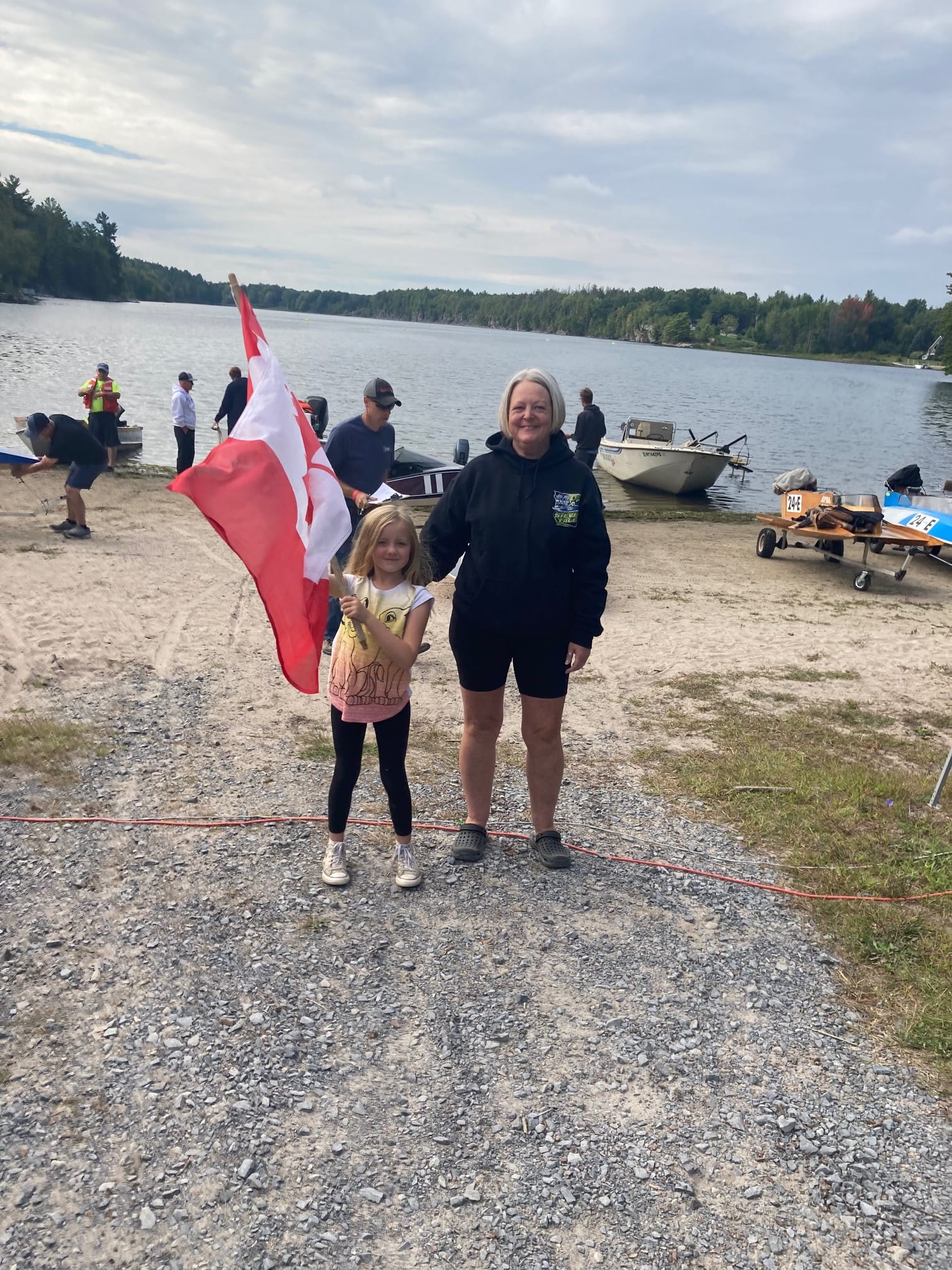
Meanwhile, back on the beach, J drivers are listening carefully to sage advice being passed on by veteran drivers. The victor who beat his disappointed rival in the first heat is now headfirst in the oily motor trying to figure out why it quit in turn 2. This “surgeon-mechanic” is calling out, “Give me a wrench. I need a clamp!” determined to get his competing friend back on the water for the second heat.
The Grub Hub Food Truck from Ogdensburg is packing up after feeding the crowd’s breakfast and lunch treats and quenching thirsts for two days. The FLRC volunteers are breaking down the table of commemorative T-shirt sales and preparing to announce the winner of the 50/50 raffle.
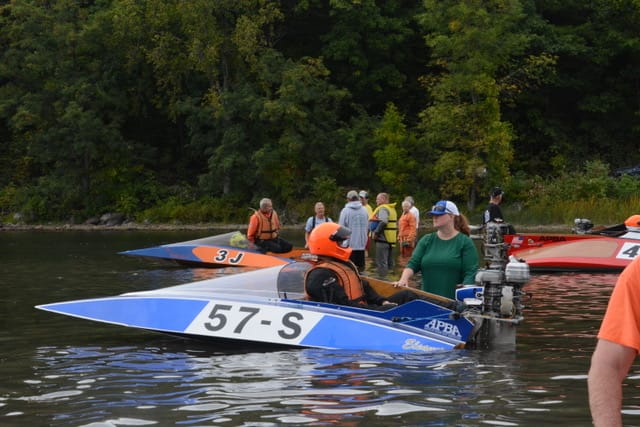
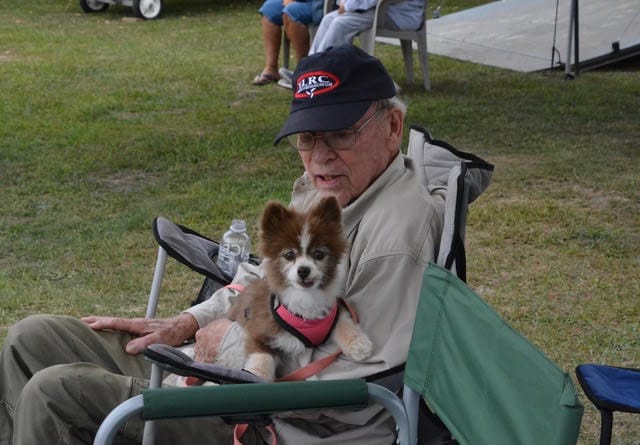
Whatever the sport, moms always have your back, or boat. [Photo courtesy of the author]
When the final race results are tallied, the following FLRC memorial trophies are presented: The Donnie Reed Trophy, Eric Wolf Trophy, Bill Turgeon Trophy, Hunter Grimes II Trophy, and the Gerald Reed Trophy.
Drivers who finished racing earlier are already pulling out of the parking area, waving to friends they hope to see at the next race when the circuit begins again in 2026. By 7 p.m., the parking area will be empty, the residue of the hectic weekend will be mostly cleaned. The lake will once again be serene, as dusk settles on another successful regatta and great memories.
By Martha Grimes
Martha Grimes is a storyteller from Alexandria Bay. She was born and raised in Alexandria Bay. She and her late husband Hunter, raised a son and daughter to love and appreciate the River as much as they do. During her career as an educator, Martha taught various Primary Level grades at Alexandria Central School. Since retiring she has been actively involved with the Alexandria Township Historical Society and the interpretation of the Cornwall Brothers Store & Museum, in Alexandria Bay, NY. See all of Martha Grimes TI Life articles here and here.