Gitana – Lost within sight of the Tibbetts Point Lighthouse
by: Dennis McCarthy
The steam yacht Gitana, a vessel of a modest five tons, was launched in 1888 in Buffalo, NY. She was a steam launch, forty-six feet long, with a beam of eight feet ten inches and a shallow three-foot draught. Her engines, crafted by Dempster Bros., with a robust steel boiler from Buffalo Boiler Works, promised a respectable speed of twelve knots. With her pristine white hull and matching smokestack, she was a graceful sight on the water.
Initially owned by W.B. Smith of Auburn, NY, the Gitana was purchased for $2,100 by George B. Sloan Jr. of Oswego, NY, in 1890. Sloan, a young and ambitious Princeton '87 graduate, who was the manager of the Oswego Car Spring Works, used the Gitana for cruises among the Thousand Islands.
In 1895, George B. Sloan, Jr. planned a trip to Alexandria Bay, not just for pleasure, but also to exhibit samples of his car-spring products at a convention. He traveled by train to Clayton, and then on to Alexandria Bay. The yacht was to follow.
On Thursday, June 6, 1895, the Gitana departed Oswego at seven o'clock in the morning, bound for Alexandria Bay. Aboard were Captain John E. Blackburn, a venerable sixty-eight-year-old lake captain, known for his thirteen years of heroic service as captain of the U.S. Life-saving Station at Oswego. The engineer, John Sprague, thirty-nine, was a native of Henderson Harbor who had spent his life on the water. Lastly, John Donnelly, a bright, industrious, and cheerful seventeen-year-old office boy from Sloan's Car Spring Works.
The Gitana carried car spring samples of 618 pounds in weight. George B. Sloan, Jr. had given Captain Blackburn explicit orders not to attempt to cross the lake unless the water was perfectly smooth. As the Gitana steamed out of Oswego, Captain Andrews of the life-saving station observed at her departure that the lake was calm, with only a light breeze from the southwest.
However, the tranquility was deceptive. As the morning wore on, the wind began to rise, and by noon, a heavy sea was running. Even large boats were struggling. Fishermen outside of Oswego's East breakwater were forced to abandon their lines. One young man recalled seeing the Gitana, three or four miles out, attempting to turn back towards the Oswego harbor. She headed for the lighthouse, but the waves were too strong, and she seemed unable to make headway. After a time, she turned and headed down the lake again, disappearing from sight.
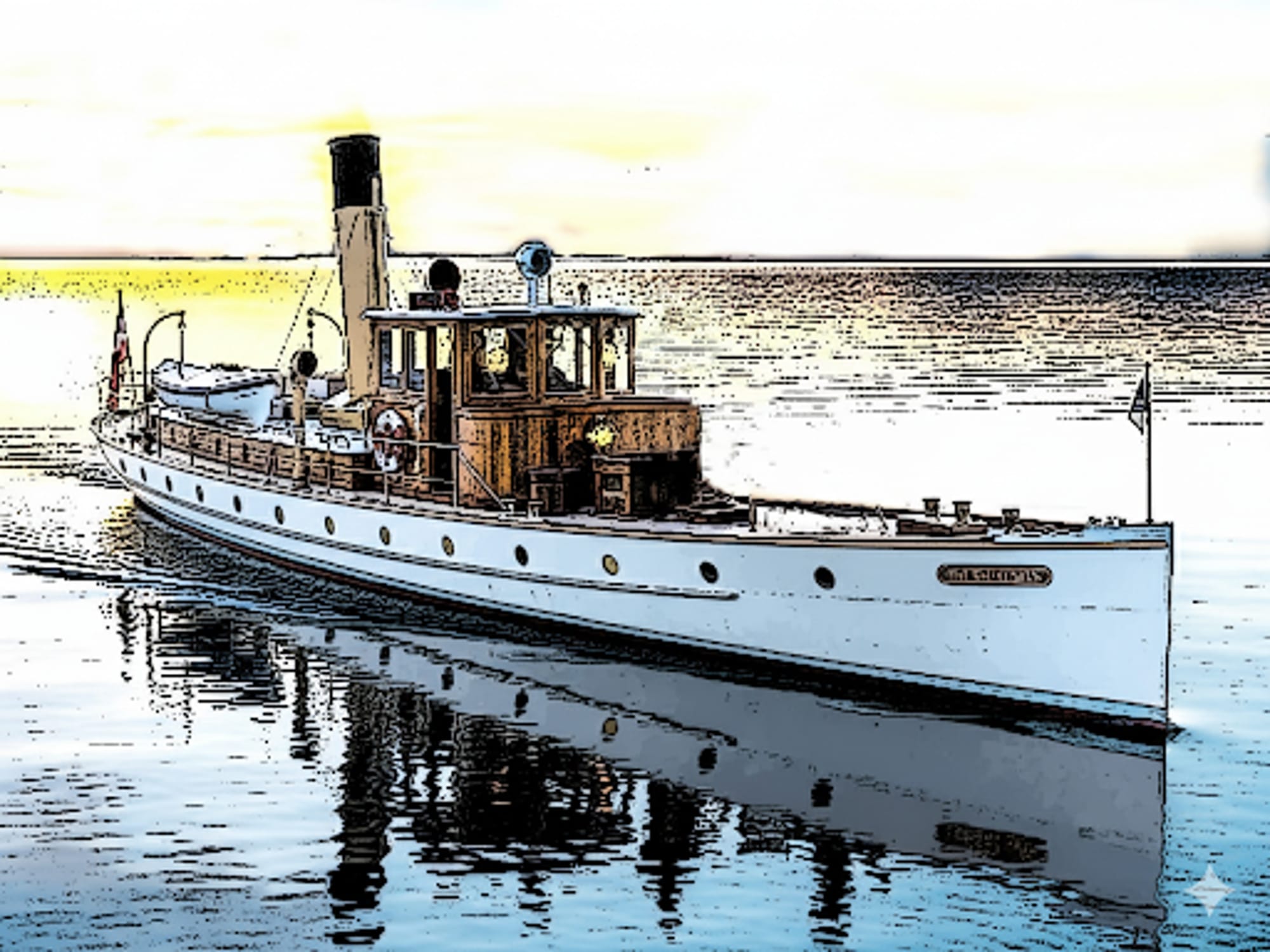
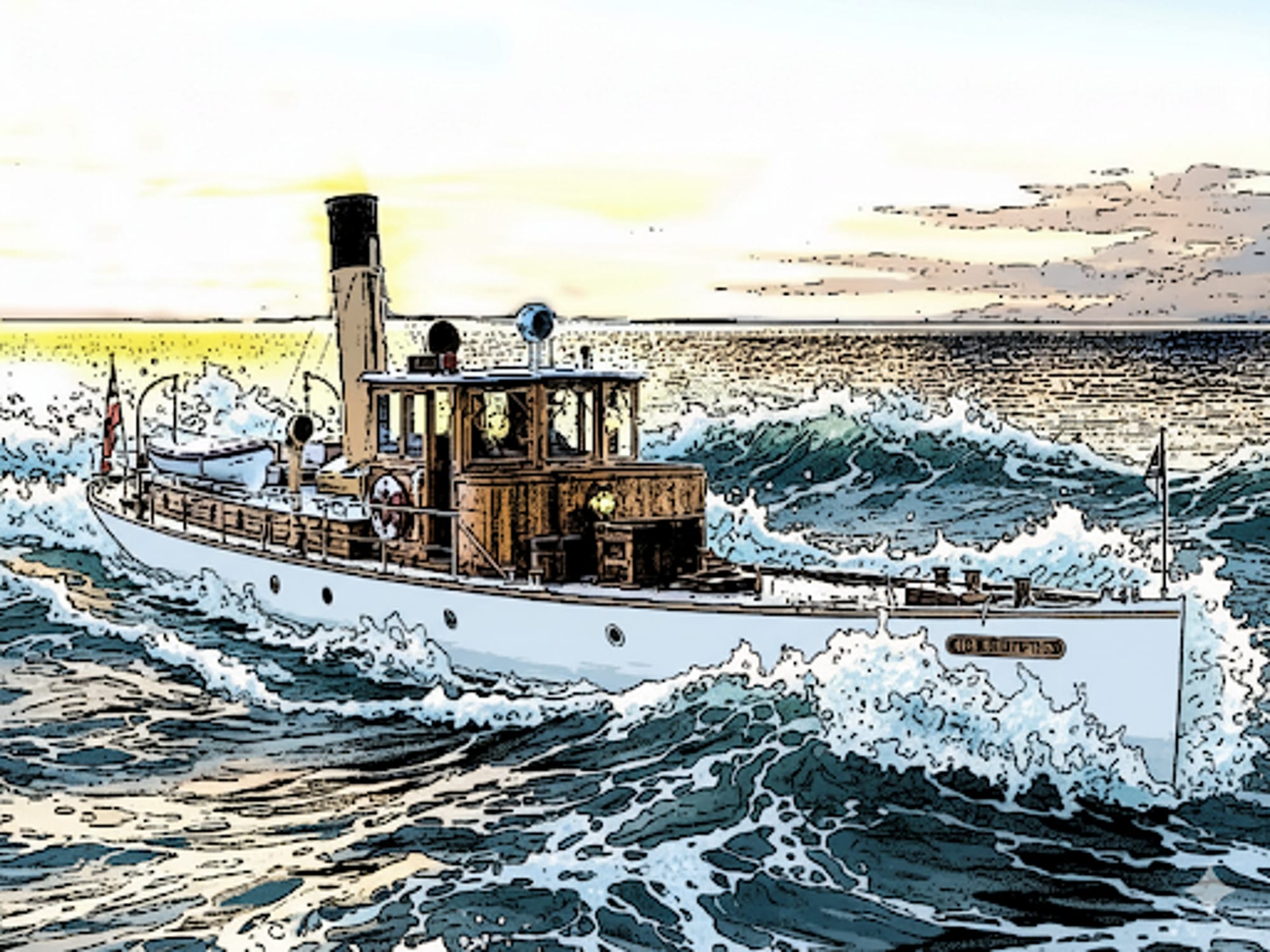
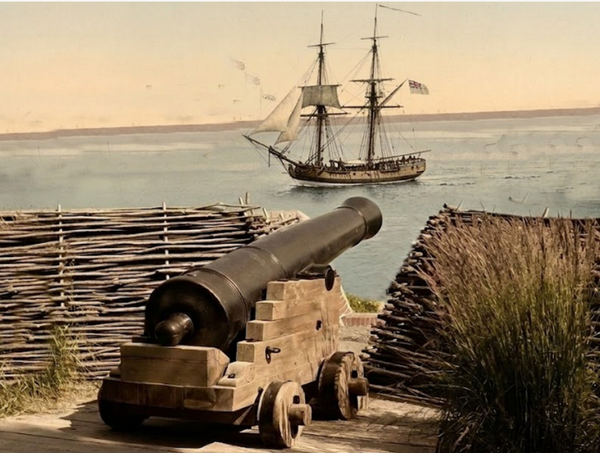
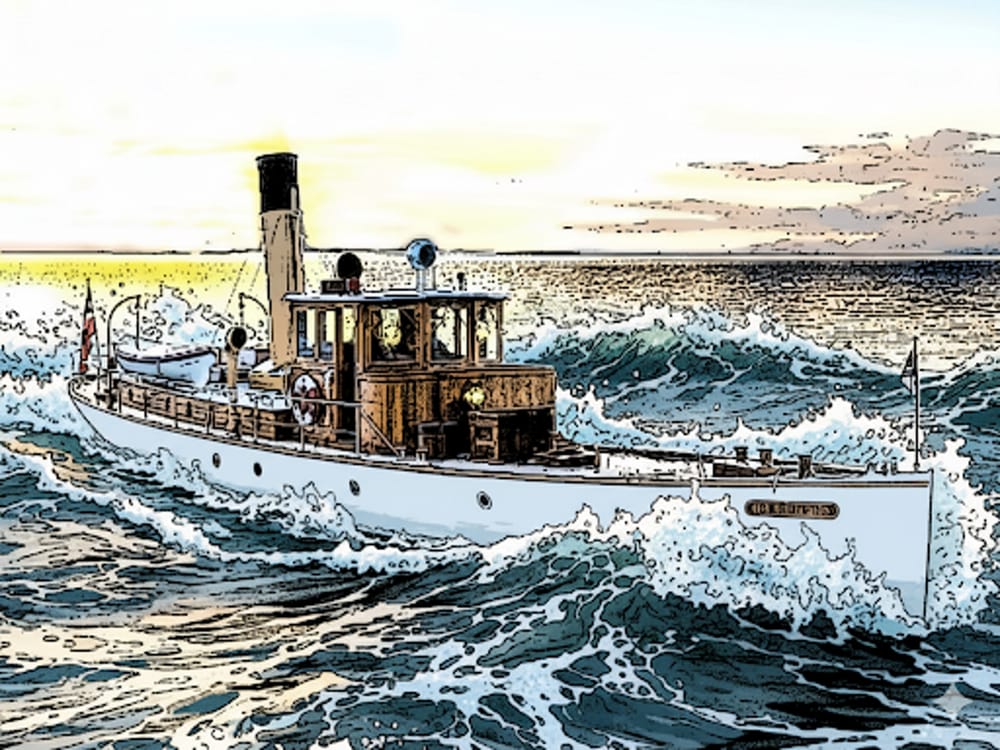
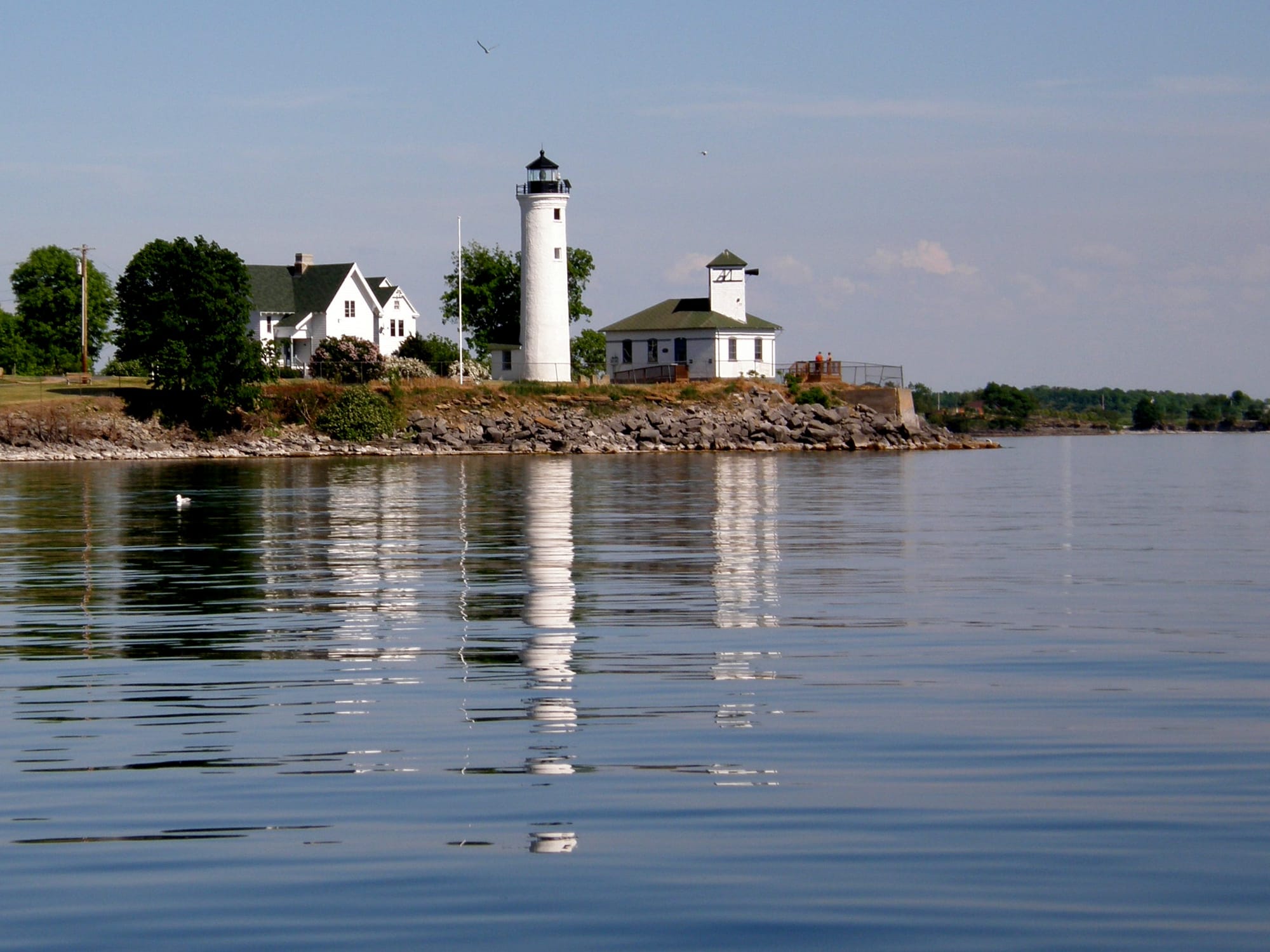
Both illustrations are AI Gemini Generated, Images as examples of an 1890s steam yacht. [Note: there is no copywrite on AI images.]
Concern for the Gitana
By Saturday, June 8th, a deep concern began to set in. There had been no communication from the Gitana. George B. Sloan, Jr., who had arrived in the Islands by rail, became frantic. He chartered a boat and rushed upriver, searching as far as Cape Vincent and Stony Island. At midnight, a search party from Sacketts Harbor reported that their efforts had been in vain. Telegrams were dispatched to every port along the lake, but no one had seen a boat matching the Gitana's description—her distinctive white hull and smokestack.
Reports trickled in, contradictory and agonizing. Some claimed she was seen off Stony Island on Thursday morning, "floundering in a heavy sea," suggesting she might have foundered just fifteen miles from Oswego. Others on Stony Island were positive they had seen her pass Thursday afternoon, headed towards Grenadier Island. If so, she must have been lost between Stony Island and Cape Vincent, in full sight of land.
The search intensified with several boats tirelessly scouring the shores, inlets, and islands. Drags were towed over suspected areas. Fishermen and friends kept a grim vigil along the beaches, hoping for any sign.
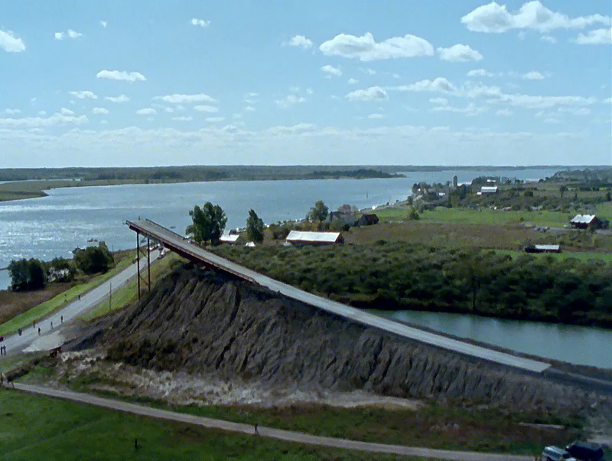
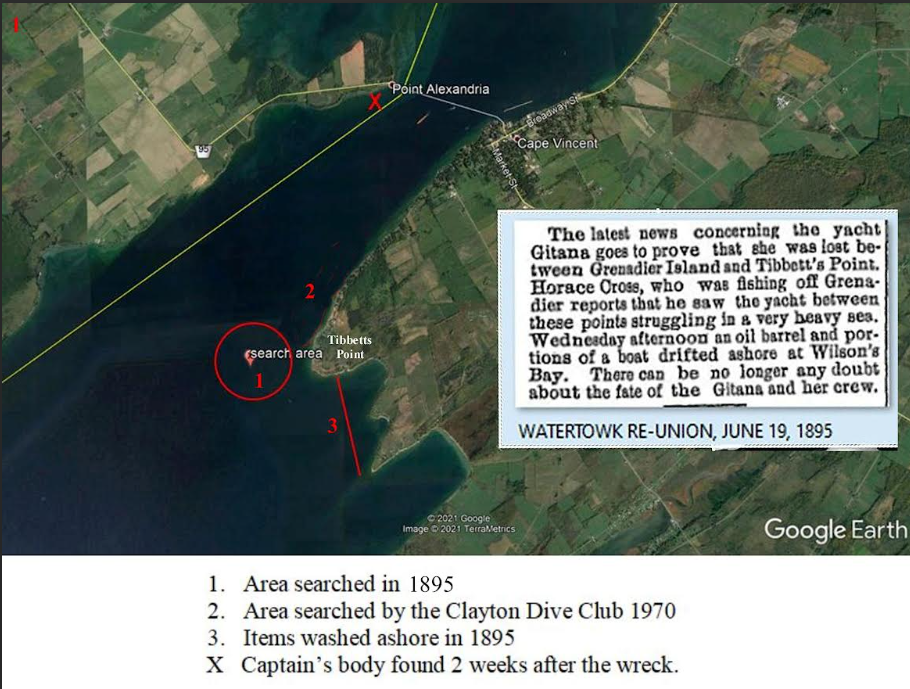
A search was initiated for evidence of the wreck near Tibbetts Point lighthouse. A small boat was discovered, with its oars lashed, which had come ashore near the Tibbetts Point lighthouse around 4:30 PM on the day the Gitana floundered. Mr. Montonda, the lighthouse keeper, retrieved the boat and stored it in his barn. The flagstaff and oil cans were found on O'Neil's farm (or Wilson's Point), approximately half a mile east of Tibbetts Light. A large, canvas-covered life preserver was located in Fuller's Bay, adjacent to Wilson's Point. The caps were found east of Tibbetts Light, one approximately half a mile east away and the other a mile away.
Sad conclusion
Alfred Marlow, a farmer on O'Neil's farm, was the last shore-based witness to the Gitana. He observed the boat in heavy seas, noting it was "making bad weather." An unnamed woman in a farmhouse west of Wilson's Point also observed the Gitana through binoculars. She noted its disappearance but initially believed it might have entered smoother waters.
On June 23, 1895, Captain Blackburn's double-breasted coat was found on Wolfe Island, seven miles below Cape Vincent. The coat, which had "Capt John Blackburn, H, 27, 94" inscribed on it, contained papers and tobacco, suggesting he might have removed it to stay afloat.
On August 4, 1895, Captain Blackburn's body was recovered near Cape Vincent. He was identified by an India ink tattoo of his name on his arm, as well as Masonic emblems and $40 in his possession.
It was believed the Gitana sank approximately half a mile west of Tibbetts Lighthouse in 30 to 40 feet of water, within a five to six-minute run to smoother water. No trace of the hull of the Gitana or the bodies of the other two men were ever found.
The story of the Gitana was documented in both newspaper accounts as well as oral tradition. At the time of her sinking, grappling hooks were used in an attempt to locate the wreck. Either the wreck was not where it was thought to be, or it was not intact and not large enough to be hooked. In either case, after a period of time, she was forgotten about, and life moved on.
At the time, the only way to dive to the depths where the Gitana was thought to be would have been with a hard-hat diver, which would have been very costly and not effective over a large area. This changed with the invention of the on-demand regulator that used compressed air in SCUBA tanks.
The Clayton Dive Club, organized in 1967, started exploring the many stories about shipwrecks that had been handed down by oral history. Members of the Club were told about a wreck called the Carriage Spring Wreck. At the time, all they knew was that the ship had been wrecked near Tibbetts Point Lighthouse near the turn of the century, and they were told that some of its remains were along the shore.
The Clayton Dive Club spent most of a summer searching along Tibbetts Point using dive planes. These planes are wooden panels that can be towed by a boat with a diver holding onto it. When the diver saw something interesting, he would drop off the plane and release a marker buoy. This allowed a large area to be searched but unfortunately the Gitana was not found. Once again, the Gitana was forgotten.
The Search Starts Again
In 2010, while researching shipwrecks for their book Shipwrecks of the Thousand Islands, Dennis McCarthy and Skip Couch discovered the story of the Gitana. With side-scan sonar, an underwater imaging system used to create detailed pictures of large areas of a water body, the search for the Gitana started again. No wreck was found in the area a half a mile west of Tibbetts Lighthouse, where it was believed the Gitana had sunk in 1895. The elusive Gitana still proved difficult to find.
The Gitana, being a finely built, small craft, would not present a large image to a side-scan system. Only the boiler and possibly the metal from the engine or cargo would still survive after 120 years.
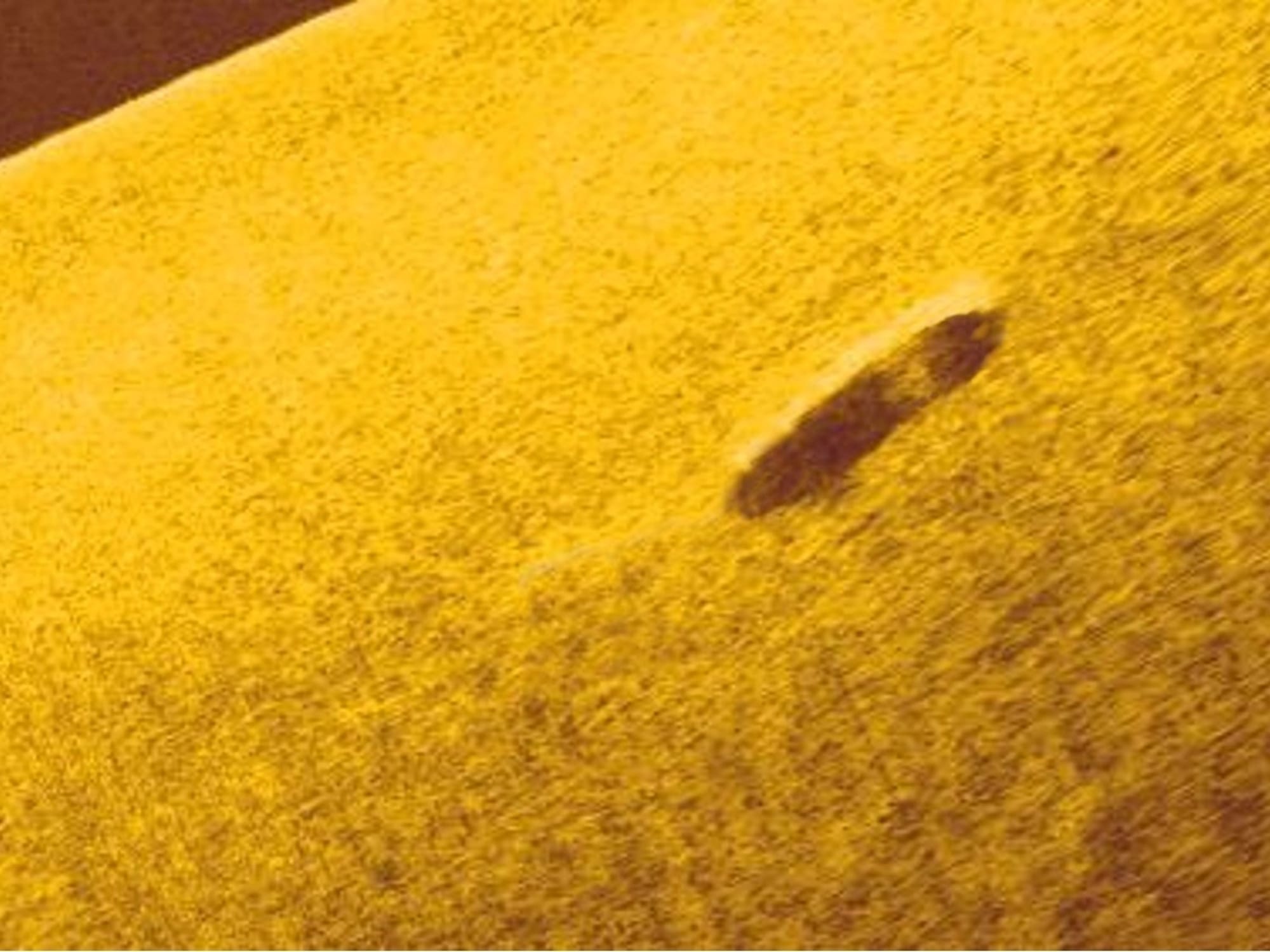
Off Tibbetts Point, toward Mud Bay, a small sidescan target was discovered and publicly announced by shipwreck explorers in 2016. SonarGuys, the shipwreck exploration team, named this fantail launch the "Rum Runner" Lake Ontario - Rumrunner - 3D model by Capt. Tim Caza (@Capt.Tim) [a1abf52] due to the large number of bottles found in its hull when it was first located. Other discoveries included a lone boiler near Fox Island and wreckage that washed ashore near Wilson’s Point.
The "Rum Runner" wreck, however, does not match the dimensions of the Gitana, and there's no evidence of a steam engine or boiler within its structure. This doesn't rule out the possibility that the boiler might have separated from the main wreck. What appears to be a structure in the hull, could potentially be carriage spring samples, weighing 618 pounds.
To confirm if the wreck is indeed the Gitana, a full archaeological investigation would be necessary. Since the location is within the NOAA Lake Ontario National Maritime Sanctuary, such an investigation may be possible in the future. Until then, the fate of the Gitana remains a mystery.
By Dennis McCarthy
Dennis R. McCarthy lives in Cape Vincent, NY, along with his wife Kathi. He is a graduate of the Rochester Institute of Technology, with a degree in Electrical Engineering. Dennis has been diving since 1971. He co-founded the St Lawrence Historical Foundation Inc. in 1994 and currently serves as one of its directors. His memberships include the Nautical Archeological Society (where he holds an NAS 2 certification) and the Ordnance Society of Great Britain. He is a past president of the Clayton Diving Club. Both Dennis and Kathi serve on the board of the Cape Vincent Historical Museum and are past members of the Advisory Council for the Proposed NOAA Lake Ontario Sanctuary.
See past articles by Dennis McCarthy here and here.