Conservation and Community Growth Can Work Together
by: Jake Tibbles
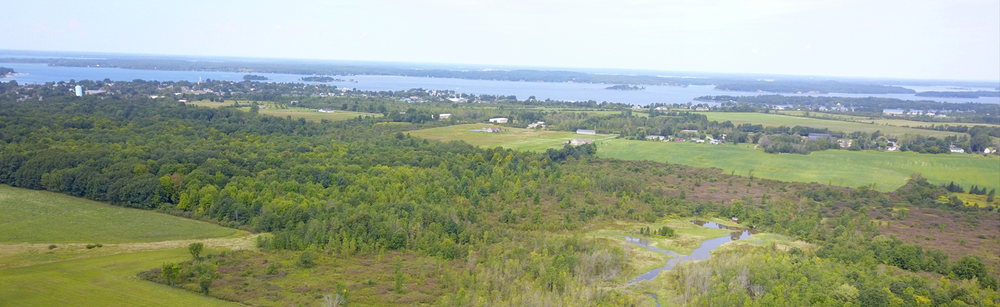
For generations, the Thousand Islands region has been defined by its extraordinary natural resources: the St. Lawrence River, its islands, forests, farms, wetlands, wildlife, and scenic landscapes that shape not only the beauty of this place, but also our economy, culture, and shared quality of life.
Protecting those resources has always been at the heart of the Thousand Islands Land Trust (TILT)’s mission. At its core, conservation is also about people. This work helps ensure that future generations can enjoy the same clean water, healthy landscapes, outdoor experiences, and sense of place that make the Thousand Islands so special.
Across the region, communities are having important conversations about housing, economic development, recreation, infrastructure, and environmental protection. Too often, these topics are viewed as competing priorities. In reality, they are closely linked.
Successful communities do not have to choose between conservation and growth. When done thoughtfully, they can — and should — strengthen one another.
More than a decade ago, TILT undertook an extensive community engagement effort to better understand how residents viewed conservation and the future of the Thousand Islands. In 2011, the Land Trust conducted a survey to identify the River community’s priorities, concerns, and expectations for TILT’s role in the region.
The message was clear: residents overwhelmingly valued protecting the region’s natural resources, scenic beauty, water quality, and open spaces — not only for today, but for future generations.
At the same time, community members raised thoughtful questions about the relationship between conservation and the local tax base, including how protected lands influence municipal revenues and future opportunities for growth. Those were fair questions, and they helped shape how TILT approaches conservation today.
Conserve Smarter
The answer was not to conserve less. The answer was to conserve smarter.
Since 2012, every TILT conservation project has been evaluated individually with the goal of achieving a positive outcome — environmentally, socially, and economically.
Contrary to a common perception, conservation does not necessarily mean removing developable land from future use. In many cases, the lands most appropriate for conservation are the areas least suited for development: wetlands, stream corridors, steep slopes, sensitive wildlife habitat, and interior forests.
Meanwhile, lands better suited for homes, agriculture, or other community priorities can remain available for private investment and future growth.
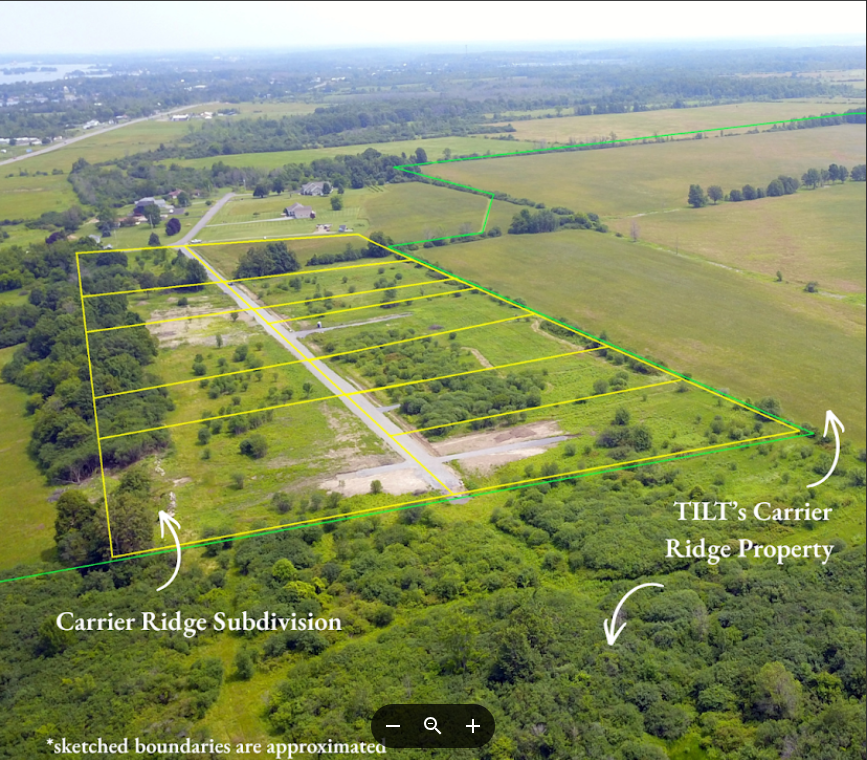
Increasingly, TILT structures conservation projects in ways that balance these goals. Sometimes the Land Trust acquires a larger property and strategically separates conservation lands from residential or non-conservation areas. Existing homes and structures may be resold, and appropriate acreage may return to private ownership and the tax rolls with permanent conservation protections in place.
These approaches can preserve important natural resources while maintaining — and in many cases increasing — taxable value within a township. It is also important to recognize that conservation takes different forms, but always depends on partnership.
Every conservation easement and donated property reflects a landowner’s decision about the future of their land. TILT works with willing landowners who care deeply about the places they have stewarded and want to see protected for future generations.
Local Tax Base
Conservation is not about stopping growth; it is about shaping it wisely. In Clayton, protected open spaces adjoin thoughtful developments on McCarn Hill and Carrier Ridge, working together to preserve the community’s rural character, scenic beauty, and quality of life.
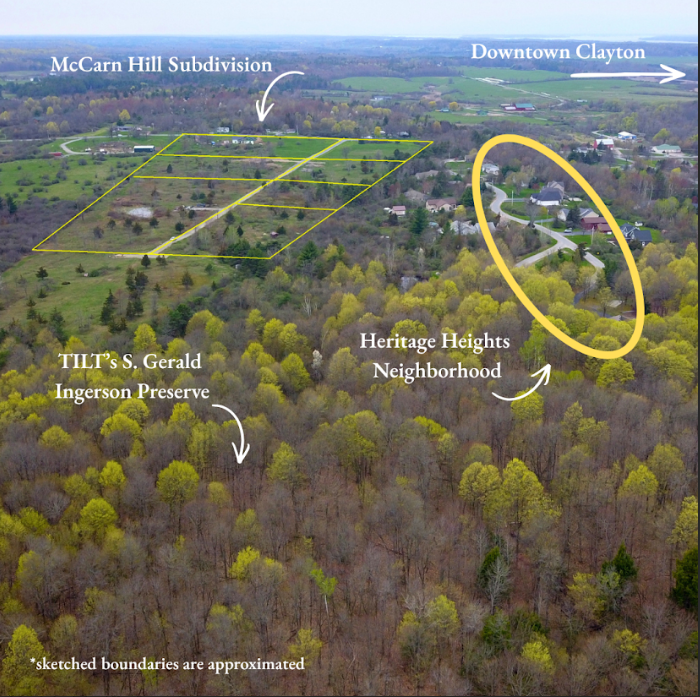
When discussing the local tax base, it is helpful to look beyond a single transaction and consider the broader picture.
The relationship between conservation and economics deserves a long-term perspective. At the moment a property is conserved, it is natural to look at the immediate transaction. How many acres were protected? What changed? But the decisions we make today shape our communities over decades.
Research and experience have shown that protected lands, trails, and access to outdoor recreation contribute significantly to community vitality. They help attract residents, visitors, businesses, and private investment. They support tourism, help maintain property values, and preserve the qualities that make communities desirable places to live, work, and vacation.
People come to the Thousand Islands because of its beauty. They visit because of the River, its islands, wildlife, trails, open spaces, and the unique character of its waterfront communities. They come to relax, reconnect with family and friends, enjoy local traditions, and experience a pace of life that is increasingly hard to find. They spend money in local restaurants, shops, hotels, marinas, and businesses. Many ultimately choose to invest, retire, raise families, or build their lives here because of the quality of life this region provides.
Conservation of these landscapes helps protect the foundation upon which much of our economy depends. Clayton and many surrounding communities are currently examining important questions about future growth, including the need for additional housing opportunities.
This Conservation Matters
Like many communities across New York, the Thousand Islands region is exploring how to create additional housing opportunities while maintaining the character that makes this area such a special place to live. This is a dialogue that conservation organizations, like TILT, should be part of.
A thriving community needs places for people to live. It needs businesses, infrastructure, and investment. It also needs clean water, public access, outdoor recreation, and protected landscapes.
These goals are not mutually exclusive. Thoughtful conservation helps guide where and how growth occurs. It protects the most sensitive and valuable natural resources while allowing appropriate development to happen in places where it makes sense.
That balance creates stronger communities. One of the most exciting opportunities ahead is the ability to connect conservation lands directly with everyday community life. Across the Thousand Islands, there is growing recognition that protected lands are not separate from where people live and work; they are part of what makes communities strong.
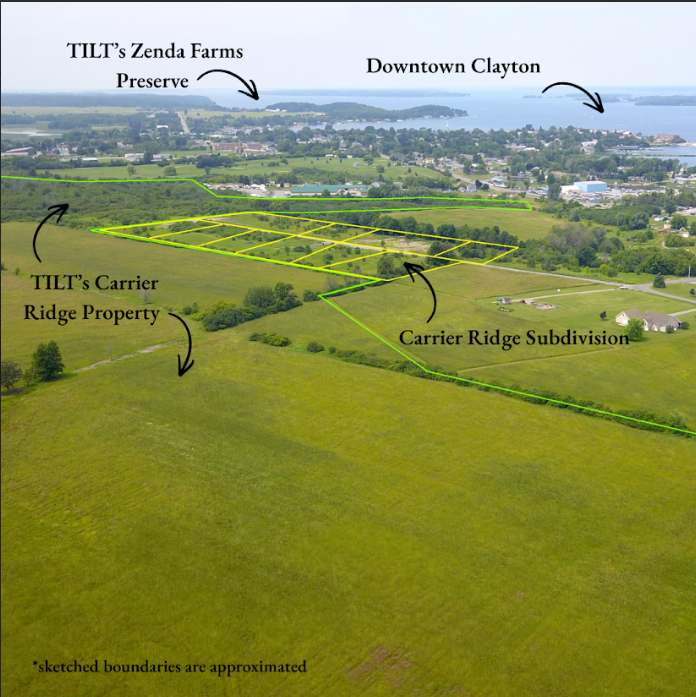
Trails, pedestrian corridors, biking opportunities, and protected open spaces are not separate from neighborhoods; they are part of what makes neighborhoods desirable.
Through thoughtful conservation, these places can provide opportunities for residents and families to walk, bike, explore nature, and enjoy the outdoors as part of their everyday lives.
Whether it is walking a protected forested trail after work, biking to a local business without needing a vehicle, spending time with family outdoors, or accessing the River directly from a nearby trail, conservation can be woven into the fabric of everyday life.
Together, these connections do more than enhance quality of life; they strengthen local economies and help sustain the character of the region.
That vision is becoming a reality across Clayton and throughout the Thousand Islands. It reflects the kind of connected community many residents have said they want to see in the years ahead. It is rooted in the understanding that the landscapes that define the Thousand Islands also sustain the communities that depend on them.
Ultimately, land conservation comes down to values and vision. What is the value of clean water, clean air, wildlife habitat, scenic beauty, and trails accessible to everyone?
What is it worth to live in a place where the surrounding landscape remains healthy, beautiful, and connected to our daily lives? Roads, schools, utilities, and infrastructure all play essential roles in supporting our communities. But the River, islands, forests, farms, grasslands, wetlands, and wildlife form the foundation of our shared quality of life — and are the very reason so many of us choose to call the Thousand Islands home.
It is that foundation the Thousand Islands Land Trust seeks to protect.
Not in place of community growth.
Not at the expense of economic opportunity.
Alongside it.
By Jake Tibbles, Executive Director, Thousand Islands Land Trust
Jake Tibbles was appointed Executive Director in May 2012. He earned a bachelor’s degree in environmental science from the State University of New York at Cortland, majoring in both Biology and Chemistry. He first came to the Land Trust in 2007 in a research internship and continued on as Director of Stewardship. Since being appointed Executive Director, he has overseen TILT's Reaccreditation by the Land Trust Alliance Accreditation Commission, in 2014, 2019 and most recently on May 29, 2026. The Accreditation demonstrates TILT's growth in conserved lands, in developing educational programs, and staffing.
Photographs provided by Thousand Islands Land Trust.