A Promise to the Land
by: Bridgett McCann
For some landowners, conservation begins with something very simple: knowing that there is a place you want to keep the way it is.
When Jeremy Foltz was growing up on Grindstone Island, he and his brother had a lot of land to explore. They didn't have a map. They didn't have a cellphone. They would head into the woods and eventually find their way home by looking toward the River.
There were big pink granite outcroppings to climb over, oak trees to wander beneath, and the open water of Eel Bay to use as a landmark. Along the Bay, a rocky point of land the family calls Pike Point became one of the places they knew well. It was the kind of place kids could spend an afternoon exploring; climbing over the rocks, wandering through the woods, and looking out across the water.
It was beautiful then. It is beautiful now.
As Jeremy’s family considered where they might build on the property, one thing was clear: Pike Point would remain undeveloped. “We said, well, we’re not going to put anything here,” Jeremy recalled.
It wasn't part of a formal conservation plan. There was no legal agreement requiring them to leave it alone. It was simply something the family wanted to do.
They wanted a place to build, a place to call home, but they also wanted to leave some of the land just as they found it. “We like having it wild,” Jeremy said. It was as place where memories would be made; the kind of place whose beauty becomes woven into a family story.
From Family Agreement to Conservation Easement
The Foltz family eventually made that promise formal through a conservation easement with the Thousand Islands Land Trust (TILT).
The easement was completed only a few years ago, but the idea had been part of the family’s thinking for more than two decades. Over those years, they developed a clear sense of what they wanted the property to look like in the future.
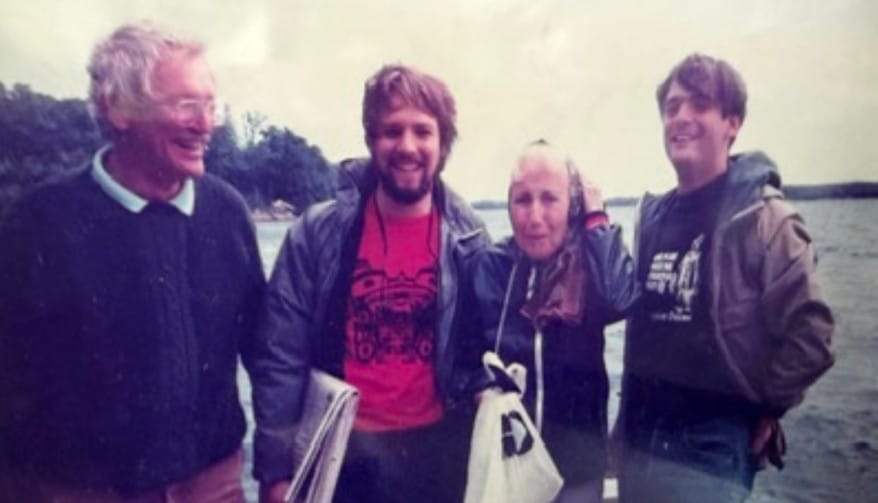
That is often where conservation easements begin: not with a desire to give up land, but with a desire to make a long-term decision about what happens to it. It is a decision rooted in care, a commitment to the land, and to the memories, experiences, and sense of place it holds. In that way, protecting the property becomes more than a legal transaction; it becomes a way of carrying a legacy of stewardship forward.
A conservation easement is a voluntary legal agreement between a landowner and a land trust that permanently limits certain uses of a property to protect its conservation values. The landowner still owns the property and can pass it on to family or sell it. The easement stays with the land. The details of what is protected—and what remains available for the landowner to use—are shaped around the property itself and the landowner's goals.
For the Foltz family, the decision was fairly straightforward.
Their home sits outside the easement. The conserved portion begins around Pike Point and includes roughly 150 feet of shoreline, forest, marsh, and the rocky areas the family had always wanted to leave natural.
A conservation easement doesn't have to mean a public trail, a preserve sign, or a piece of land that people can visit. Across the Thousand Islands, privately owned conservation easements protect all kinds of places: shorelines, wetlands, forests, working lands, and wildlife habitat.
Sometimes they protect something a family simply doesn't want to lose. For the Foltz family, that something was Pike Point. Some places become part of a family’s story. And sometimes, protecting them is how that story continues.
What You Notice Over Time
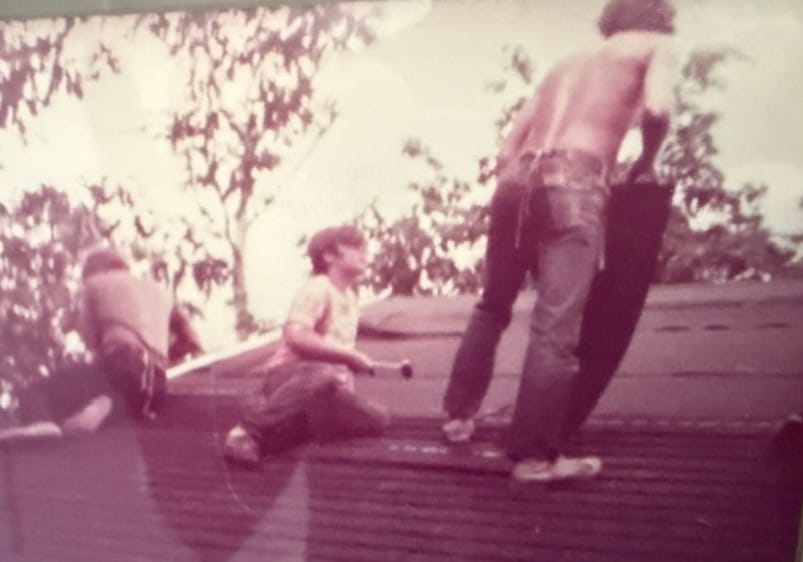
Jeremy has had enough time on Grindstone Island to see the landscape change in ways he never could have predicted.
When he was a child, Eel Bay was full of weeds, and he remembers frequently pulling them from the boat’s propeller. The water wasn't clear, either. Jeremy remembers a time when he couldn't see the bottom. Now, his young son can.
The trees have changed, too. He remembers stretches of exposed pink granite that are now covered by trees having grown within his own lifetime.
And the wildlife is different. When Jeremy was a child, blue herons were unusual. There were no eagles or osprey, and loons were scarce. Today, they are familiar sights.
The changes in the water are part of a much larger story, including improvements in water quality and wastewater treatment. But the Foltz family has also watched what happens when individual families decide to leave parts of the shoreline and forest alone.
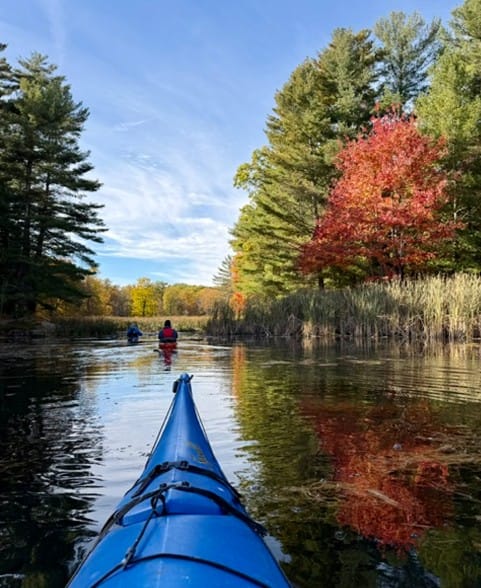
From the Foltz property, one can look across the water and see stretches of shoreline that have remained undeveloped and protected over the years. For Jeremy, those views are a reminder of how much the River has changed. The undeveloped shorelines that seemed commonplace when he was growing up are becoming less common.
“That was a thing that there were lots of as a kid growing up,” he said. “I think that is increasingly becoming a rarity on the River.”
Making the Decision Last
The Foltz family had been making careful decisions about the property for years. They came to understand which parts of the land they wanted to shape and which they wanted to conserve.
“We would conserve it anyway,” was essentially the thinking. What changed was the question of what might happen much further down the road. The property would one day belong to someone else. A future owner might see an opportunity to build where the family had always chosen not to. The family could make decisions based on what mattered to them now, but they couldn't know what future generations might want, or what they might choose to change.
A conservation easement gave them a way to make some of those decisions permanent. The people who live there will change. What they wanted was to make sure that the landscape would not.
The rocks at Pike Point.
The shoreline.
The marsh.
The woods.
The view.
The places Jeremy and his brother knew as children, and that his son can now know, too.
The Next Person to Find His Way Home
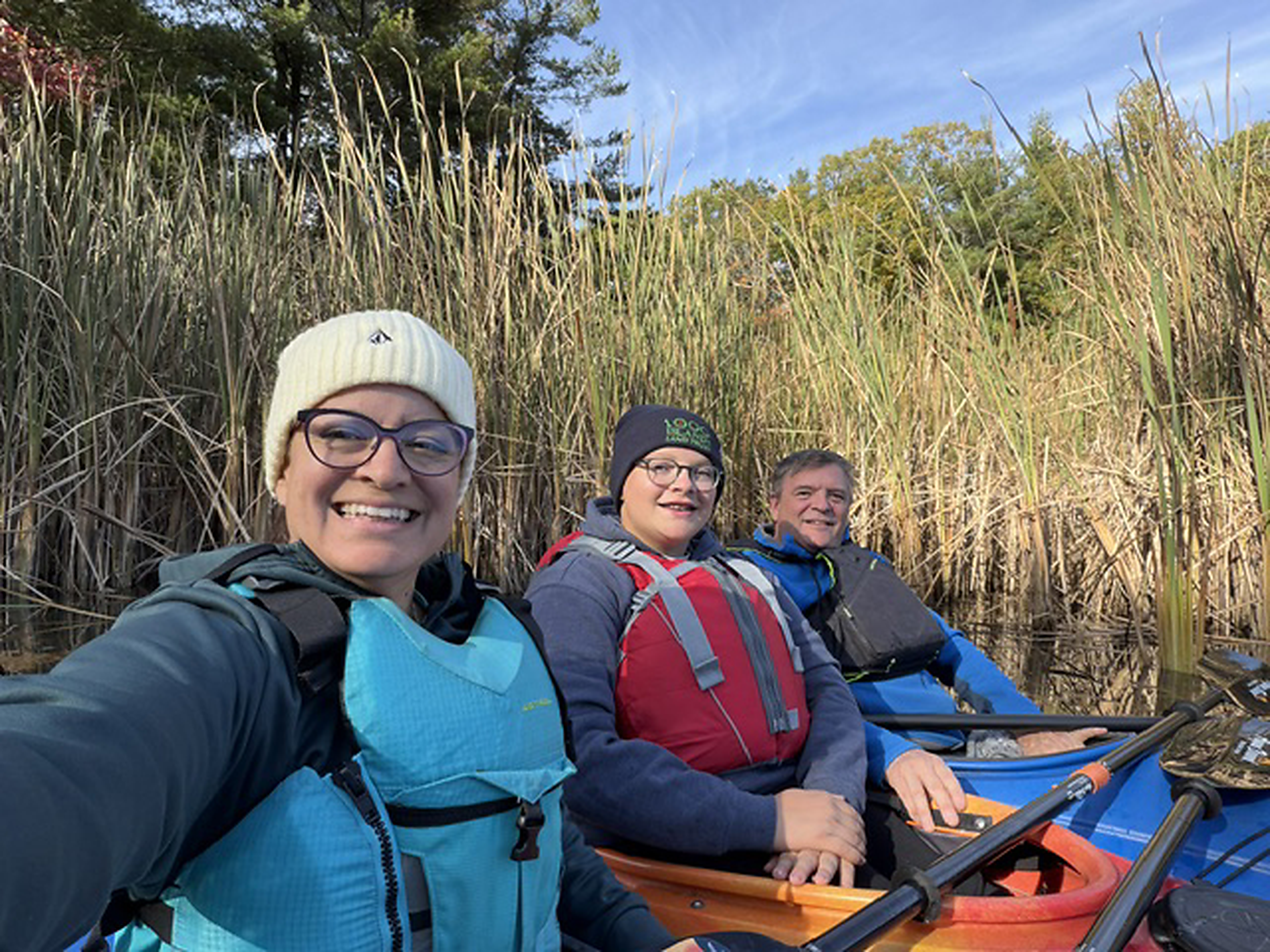
Jeremy's grandfather first came to the Thousand Islands in the 1930s. His father spent summers here. Generations later, Jeremy is watching his own son grow up on Grindstone Island. That makes the decision feel less like an ending and more a continuation.
The River will keep changing. The trees will keep growing. Wildlife will come and go. His son will experience this place differently than Jeremy did. But he will still have the rocks. He will still have the woods. He will still be able to stand at Pike Point and look out across the River. And maybe someday, he will wander those woods the way his father did: without a map, without a phone, using the River to figure out how to get home.
The Foltz family didn't conserve their land on Grindstone Island exactly as they found it. They made a deliberate choice about what they wanted to carry forward, and put a lasting commitment behind it. That is what their conservation easement protects: a place to come back to.
By Bridgett McCann
Bridgett McCann recently joined TILT as Communications Specialist. She is a graduate of St. Lawrence University with a Bachelor of Arts (B.A.) degree in Government and Environmental Studies. As a copy editor with experience communicating about conservation topics, she looks forward to making a positive impact in the Thousand Islands region, a place close to her heart. Originally from Rochester, NY, Bridgett spent many summers in the Thousand Islands. Outside of professional pursuits, she enjoys spending quality time outdoors and on the River with her family, friends, and two rambunctious black labs named River and Rosie.